


We set out to explore the quintessential masterpiece of homegrown hip-hop, the album that sits at the very center of the Italian map of the genre. We'll look at the origins of that work and the long dynasty linking a 1994 album to the present day
The Italian scene was often left on the margins by radio and TV: treated with skepticism, misunderstood […] Even a perfect, avant-garde album like 'SxM' by Sangue Misto wasn't celebrated everywhere the way it deserved. And even today, not much has changed.
(Paola Zukar on Sangue Misto, from "Rap – Una storia italiana")
Back in the spotlight after the new wave of rappers and trappers at the tail end of the 2010s, the Italian hip-hop scene deserves to be rediscovered at its roots. There were certainly plenty of homemade efforts too, often slavishly similar to the American giants, more living legends than actual musicians among our country's first rappers. Alongside these raw, imitative and largely forgettable early works, though, there are a few gems that deserve a place among the Italian musical classics of the era.
If, already with the turn-of-the-millennium generation, the importance of certain albums that have since become classics of the national scene was made clear, the resurgence of rhymes on the radio, on YouTube and on Spotify offers an opportunity to go back in time, diving into the past to better understand the present. More specifically, we set out to discover the masterpiece par excellence of Italian hip-hop, the album that sits at the very centre of the genre's map.
So we won't just try to analyse the work that, on its own, marked a "before" and an "after": in reconstructing the origins of a group and then following its solo and side developments, we'll try, more ambitiously, to map out an entire long dynasty — one capable of unexpectedly and surprisingly linking rap's earliest cries to its most pop-facing manifestations, the experience of the posse crews to that of self-produced mixtapes distributed exclusively online. More than the reconstruction of a career, then, this is a cross-section of the history of Italian music, in a microcosm with a single, brilliant sun, called Sangue Misto.
Isola Posse All Stars is one of the historic crews of the Italian hip-hop and raggamuffin scene, the one that, more than any other, has the right to call itself seminal. It was formed at the end of the 1980s as an expression of the Isola Del Kantiere social centre in Bologna, and is rightly considered one of the main Italian posses, even though its output in terms of records has left very little material to pass down to posterity. Isola Posse All Stars' success is due above all to a single that was a hit within the underground world, titled "Stop al panico", which effectively captures the climate of tension in the city of Bologna after the Pilastro massacre, the grim crime attributed to the violent hand of the so-called "Uno Bianca gang".
It was precisely during this period, marked by a repressive climate that was highly charged from a political standpoint, that some of the city's occupied social centres were cleared out by the police, in search of a demonstrative act that might help ease the sense of danger and threat that hung over the streets and homes.
It is precisely "Stop al panico" that stands as the anthem seeking to turn this moment of hardship and suffering for the Isola Del Kantiere social centre into an artistic and musical spark, one from which came one of the scene's essential singles of the era. During the period of the evictions, the artists who frequented the Isola's hip-hop jams banded together under the collective name Isola Posse All Stars: united to oppose an unjust measure devised to reassure a population terrorised by criminals the justice system was unable to identify and catch. Among the line-up we can already spot some of the figures who would go on to make major contributions to the Italian scene.
From the very first single, Treble is already there, later the founder of Sud Sound System: he is the collective's raggamuffin soul, a stylistic coloring so pronounced that it would eventually make his continued presence alongside the Isola's other rappers untenable. He left shortly after to return to Salento and begin a long and prolific career, already spanning more than two decades. Another standout name is Gopher D, a central figure in early hip-hop sung in Italian, who remained very active in the 2000s too, with a prolific solo career and with the aforementioned Sud Sound System.
What seemed to be a one-off group, born out of the need to make its voice heard within a specific sociopolitical context, miraculously reformed, albeit in altered shape, in 1991, with the goal of touring the length of the Italian peninsula. Having lost Treble, the band's ranks were joined by Papa Ricky but, above all, by Neffa and Dj Gruff. At this point, hip-hop fans will understandably have already guessed the main reason why Isola Posse All Stars is still considered a pivotal hinge point for Italian "rhymed" music. The last piece of the puzzle is the presence, right from the first single, of Deda: it is he, together with the aforementioned Neffa and Dj Gruff, who turns this second incarnation of the Isola into a prehistoric version of Sangue Misto, the group that in 1994 would see these very three artists write one of the defining chapters of Italian music of the decade.
The reunited Isola Posse All Stars thus managed to record a second single, "Passaparola", released only in 1992. During this period they achieved unrepeated nationwide visibility thanks to the TV show "Avanzi", broadcast on Rai3 and hosted by Serena Dandini: it was without doubt the collective's moment of greatest exposure in mass culture, the moment when this typically underground group entered people's homes via the privileged channel of the cathode-ray tube (younger readers can ask their parents what that is). What followed shortly after was an announced diaspora, a splitting into different projects of what had been the original nucleus. The artistic paths, both as solo artists and within various groups, taken by the members of this supergroup make it the single most important incubator of Italian hip-hop.
Sanguemisto (or sàngue misto) n. m. (pl. sanguemisti). – Same as hybrid, mixed-breed, referring to both people and animals, especially horses (the term, as opposed to purebred, dates back to when blood was believed to be the carrier of hereditary traits, and it has survived in the language used by breeders).
(from the "Treccani Dictionary")⟦Q1⟧
Sangue Misto was perhaps the pinnacle of the first wave of Italian hip-hop. This is because, even though their actual musical output amounts to just a single studio album and one live album, their work has had an influence on the Italian scene with few parallels. Not only is their masterpiece album SxM still regarded today as a gem of Italian music, but Sangue Misto also served as the launchpad for outstanding solo careers such as those of Dj Gruff and Neffa, as well as the ideal genesis of other musical projects such as Melma & Merda, featuring Deda.
Formed from the ashes of Isola Posse All Stars, Sangue Misto are a trio made up of Deda, Neffa and Dj Gruff. SxM, the only studio album they ever produced, was released in January 1994 and is one of those rare cases in which even Italian music criticism, traditionally tied to pop and especially to rock, acknowledged the depth of a hip-hop work: for instance, Rolling Stone Italy placed the album at number 25 in its ranking of the 100 greatest Italian albums of all time.
At the time of its release the album achieved no commercial success whatsoever, partly due to its distribution through Century Vox, which failed to give the band's newly minted sound the prominence it deserved in record shops; it's a textbook case of a tremendous opportunity squandered for Italian music, which had in its hands an album capable of standing alongside the genre's classics, yet was unable to give it any real artistic traction. It should be noted that the fault doesn't really lie with Century Vox, a label fundamental to the Italian scene of that period, but rather with a market still unable to accept hip-hop as a music of equal standing to other genres.
Twenty-five years on, it can still happen that such a mindset remains dominant in certain musical circles, whether among fans or industry insiders. This stigma of being a lesser genre, artistically secondary to rock and pop, Italian criticism's two historic darlings, has caused a substantial delay in the historicisation of hip-hop — a gap that explains why landmark works like Sangue Misto's SxM are still far from receiving the across-the-board critical acclaim given instead to singer-songwriter music or to the giants of Italian prog-rock.
The trio's work is sensational, strongly marked by hallucinated, dazed, drugged-out sounds, steeped in the thick fumes of marijuana. More than a typical listening experience, the album is a visionary trip, an example of how the Italian scene could express a take on hip-hop that was anything but formulaic and stereotyped (a stigma it still carries today, not always backed up by the facts).
The dark, menacing, anguished atmosphere narrated on Sangue Misto's debut is that of a Bologna whose social centers were being shut down by police crackdowns; it's the spiritual testament of a generation of young people on the margins of society, afflicted by a suffocating psychological unease. SxM is a nightmare steeped in THC, which nevertheless never takes violence as its main road: an album of great class in its choice of sounds, it avoids the dramatic stereotype of violent music for dark themes, preferring sinuous, shadowy or dreamlike backing tracks that contrast sharply with aggressive, psychotic, depressed lyrics. The tones are often noir, played out through masterful chiaroscuro in the beats and samples.
The relationship between music and lyrics is fundamental, two sides of the same artistic inspiration. It's no coincidence that all three members are also involved in producing the backing tracks, just as it's essential that all three lend their voice to the songs: it's this great coherence that keeps the rapper from merely "following" and accommodating the beat, or vice versa, as often happens in hip-hop both nationally and internationally. Here it makes little sense to talk about rappers and DJs according to the classic scheme of the genre's early days, because the trio moves as one, following precise intentions that allow music and lyrics to be fused and exalted together. The closeness to the singer-songwriter tradition, to the model of the folksinger who plays and sings their own music, seems updated here in masterful fashion, even if unfortunately the first hip-hop singer-songwriter to be taken up by the mainstream public would be Jovanotti, and certainly not a Neffa, a Deda or a Dj Gruff.
The trio favors jazz and funk sounds with psychedelic overtones, drawn from the genre's classics, but steeped in a sophisticated taste that is hardly associated, in the popular imagination, with the world of social centers the three come from. This is an album where you can find Sly And The Family Stone, Funkadelic, Slick Rick and Miles Davis. The clearest kinship is with what Cypress Hill were doing at the same time on the other side of the ocean: the atmosphere could hardly be more hallucinated, perhaps with an experimental approach that the South Gate, California band lacked.

The timeless classics open with "Clima di tensione," a track that still feels current today:
Day after day this is the climate of tension
Taken badly, yeah, and when I feel the pressure
I'm in a state of constant threat
The last line quoted is a sample from a track by Isola Posse All Stars, as if to signify that the two groups were born from the same inspiration, from the same tense, violent, turbulent political climate.
"Lo straniero" is perhaps the album's most accomplished track, at once hypnotic and supremely elegant, with its hissing synth lines and sinuous bass structures. The lyrics, meanwhile, seem to be Sangue Misto's true manifesto:
I am number zero
Suspicious faces when the stranger walks by
Freaking out, tense, yeah
I dress in dark clothes, I bang my head against the wall
I'm nobody's friend and you can be sure of it
I stay out of fashion and out of the stadium
Out of the parties and you can swear to it, I'm not the average Italian
But a dog without a muzzle
It is precisely the first of these lines that would be chosen as the title for Enrico Bisi's documentary film "Numero Zero – Alle origini del rap italiano," which recognizes the band's work as a fundamental and unavoidable turning point for the national scene. And Neffa is equally striking in describing the discrimination of an Italy divided between north and south, with lines that can sound sadly contemporary even now:
When I was a kid going to school
People in class called me Moroccan
Southerner, 'Shut up! Go back to where you came from!'
And that's the very first thing I ever learned
The sense of being different, foreign, alienated is summed up in one of the harshest lines in Italian hip-hop, a reflection as bitter as it is blunt: "La mia posizione è di straniero nella mia nazione" ["My position is that of a foreigner in my own nation"]. The couplet, once again underscoring the album's intellectual depth, is a reworked quotation of a line Garibaldi addressed to Cavour ("I ask the representatives of the Nation whether, as a man, I could ever shake the hand of him [Camillo Benso, Count of Cavour] who made me a foreigner in Italy").
This track sums up well just how deeply rooted Sangue Misto were in their own sociopolitical context, rather than being mere imitators of an American sound as often happened in the scene's early days (you can hear it, for example, in Radical Stuff or early Jovanotti). On the other hand, compared to other illustrious predecessors such as Assalti Frontali, they also show an openness to broader themes, ones that resonate with the concerns of many people outside the world of the social centers.
The raggamuffin echoes, which had also been part of Isola Posse All Stars' DNA, return on "La parola chiave," where Gopher D's contribution in Salento dialect is essential. It's proof of how the band had moved beyond "hardcore" hip-hop, to the point of cross-pollinating it with other genres without ever losing sight of the album's overall sound.
Scratching dominates "Cani sciolti," with a spectacular vocabulary that contrasts sharply with the hallucinated drugged-out anthem of "La porra" (“Fumo la mia porra, zero trip trip trip/ Fottono la testa di un guaglione con il bip bip bip/ Io resto affezionato a un dado Knorr/ Cartina, filtro, paglia, fumo uguale…” ) and the broke, penniless feel of "Manca mone," the most colorful and fun side of an album that instead closes with psychotic, depressed, anguished tracks like "Piglia male" and "Fattanza blu."
Here you can hear a production that stretches and dilates time until it turns a beat into a slow, soporific spasm, almost erasing any sense of rhythmic progression, as if you found yourself inside a cloud outside of time, a dreamlike mental dimension. Furious lines like "Inculare Ambra e Forza Italy" or depressed verses like:
Sometimes it gets rough
It's like the acid of a trip rising, rising
And it carries me down
Beyond the blue, past the threshold into the black
Where things get ugly, yeah
I'll be gone for a while, don't look for me
Andrea got lost and can't find his way back
And again: "E la notte dentro al letto mi rigiro/ Quando prendo sonno tutto a un tratto non respiro". These are slides straight from the mind's own hell, the internalization of that social and political tension which had been the protagonist of the trio's musical prehistory and which also opened the album.
"Fattanza blu", basically a sonic glue of rap submerged under numbing basslines, is split by an instrumental passage that Neffa describes as follows:
I don't know why we decided to put this suite, this moment, right in the middle, this bit where the high really kicks in. And we made two chilum tracks: 'guys, I've got an idea, let's put the mic right down on the floor like this. And then we'll lie down on the floor with our heads converging towards the mic.' I remember we turned off the lights, after smoking this chilum that must have been pretty potent. We did the whole track with our eyes closed, lying on the floor, and some lines came out that are scattered here and there in the track. As soon as the track was done I jumped up to go turn the light back on, and I came back from a reality that was at least three layers further away, because I jumped up still completely stoned and I said to myself, 'what a trip!'
The instrumental "La notte", full of jazzy flourishes, lightens and clears the foggy, depressed mood, but it's a bitter ending for a work that hides, within the folds of its elegance, within its collection of sensual grooves, within its stylishness, some deeply tragic, suffocating, unsettling and psychotic undertones. A landmark album for Italian hip-hop, SxM is a rare, almost unique case of an Italian band managing to write, on their first attempt, a manifesto destined to influence an entire generation of rappers throughout the '90s. It would be reissued three times: in 2000, 2005 and 2018, the latter also on vinyl and in a deluxe edition, proof of the cult status the record has earned over the years.
The live document Live Padova (1995) is more of a bootleg than anything else, and its tracklist only partially overlaps with what Sangue Misto had officially released. After this live album, Sangue Misto disappear, even though Neffa, Dj Gruff and Deda would go on with solo careers and other projects, ready to spread the hallucinated seed of SxM further. Precisely because of this swift departure, Sangue Misto remain frozen in time as a group that stayed together just long enough to deliver a cornerstone of the late-'90s scene, without ever going through all those evolutions that a band can undergo over the years, over the decades. With them, there's no way to trace, in reflection, the upheavals that would occur in later eras, since the group's name would never officially be used again by the three.
In the case of acts like 99 Posse or Assalti Frontali, but also on the more pop side with Articolo 31, Sottotono or Jovanotti, you can clearly see how new trends, technological developments, or simply the inexorable passing of the years have changed, influenced and transformed their original sound, turning the careers of these artists into a litmus test for better understanding the historical evolution of the genre.
For Sangue Misto, on the other hand, the most viable approach is far less straightforward: searching through the solo careers of the three members for the missing pieces of a story that, despite reaching an absolute peak of the Italian hip-hop scene, still feels incomplete. So, acting as self-appointed rhyme detectives, we'll try to trace, through the long post-Sangue Misto trajectories of Neffa, Dj Gruff and Deda, what remains of that foundational experience, following our three protagonists even into their parallel, occasional and lesser-known projects.
Alongside this, we'll also try to better understand what each of their individual stories can tell us about the Sangue Misto experience as a whole, identifying works that anticipated that breakthrough, or experiences of the individual rappers that later shaped the artistic choices made during the group's brief existence. The hope is to offer an overall view of the band's legacy, tracing the countless paths branching out from a single album — and a one-of-a-kind album at that — like SxM.

It's the last album for which, before release, I'd pick up the phone to let my friends hear the tracks — the album with which I showed gratitude to those who were there, to the figures of that first crew that built the scene, and to those I owed something to. Today '107 elementi' is considered by many to be my finest, coolest record, but if 'I messaggeri della dopa' is the snapshot of the unity and ferment of an era, '107 elementi' represents total decadence and division, so in a way it's my record containing the most elements of 'malice'... which I think is exactly why it's so loved by a certain crowd today. Not to mention that I consider both titles the sum of an earlier period, internal elements of two brackets that officially open and close this part of my career, corresponding to records that matter more to me, like 'SxM' and 'Chicopisco'.
(Neffa on "Neffa e i messaggeri della dopa", from the 2015 vinyl reissue)
Once the band experience was over, the three rappers and beatmakers were destined to become, to varying degrees, reference points for that new, creative street music they themselves had helped shape. Of the three, the only one bound for genuine stardom was Neffa, aka Giovanni Pellino. After all, his musical résumé boasts a range of experiences so varied as to be downright surprising.
Born in Scafati in 1967, in the province of Salerno, he moved to Bologna while still very young and soon started playing hip-hop. This early calling seemed destined to be abandoned when, in the early '80s, Giovanni became one of the drummers for Impact and Negazione, two prominent bands of the Italian hardcore-punk scene. It was during this period that he chose his stage name, inspired by that of a Paraguayan footballer named Gustavo Alfredo Neffa Rodríguez.
His time in these bands also led him to take part personally in a tour of the United States. He entered the '90s playing with Piombo A Tempo, where he began freestyling, thus returning to the hip-hop scene after leaving the hardcore-punk world behind. From there came his experience with Isola Posse All Stars, and then, in 1994, with Sangue Misto — an experience that, in truth, didn't fully end with the release of their one and only album, but continued in a series of collaborations with Dj Gruff, in a kind of unofficial follow-up to their masterpiece.
 Neffa's solo career officially began in 1996 with an album that was actually recorded the previous year but was delayed due to release issues. Titled Neffa e i messaggeri della dopa, it's one of the most important albums of the period for Italian music, and perhaps not just for hip-hop. That's because it contains the biggest hit single of Neffa's solo career, "Aspettando il sole", proof that it was possible to imagine a version of Italian hip-hop far more attuned to the tastes of radio audiences.
This discovery, which comes about through his collaboration with Giuliano De Palma, who sings the chorus that would go on to become so famous with real soul spirit, represents one of the most important revelations for the Italian scene: the typically singer-songwriter tradition of our country discovers that it's possible to reconnect with the intimate feeling typical of our popular music even starting from distinctly hip-hop roots. The feeling is ultimately the same one found in Sangue Misto, simply filtered through a more introverted sensibility:
Harder and harder to stay calm in this situation
Freaking out, I don't want any more of it
Starting from zero, I know somehow I've got to rise but
There's no more light, only darkness that hurts
There's no more peace, only rage that grows every day
The rest of the album, however, shows how Neffa, rather than backpedalling on or reconsidering his position as a founding father of hip-hop on the peninsula, tries to push that language toward something more mature, open to disparate influences. He rediscovers soul and black roots that are anything but obvious: consider that the title refers to the Jazz classic by Art Blakey, “Art Blakey & The Jazz Messengers”, a far from predictable inspiration.
“In linea” opens the record in full hip-hop mode, with Neffa reasserting his position as a pioneer and true devotee of the genre:
I represent for Hip Hop with rhymes in Italian
So if the mic is wired to my hand
I never forget the origin, the way I express myself
I know where this road I keep walking comes from
Chico was born down in the Bronx, way back when
Zulu Nation, Afrika Bambaataa
DJ Kool Herc and GrandMasterFlash
And my favorite group is Tribe Called Quest
Heavy doses of jazz and funk on “Puoi Sentire Il Funky”, laid-back, sly atmospheres on “La ballotta”, but above all important guests on “I messaggeri pt. 1”: Kaos, Esa, Phase II, Lugi and Dre Love. It sounds like one of the year's hip-hop manifestos, especially when paired with the second part (7 minutes!), featuring Storyteller, DJ Gruff, F.C.E, TopCat, Fede, LeftSide, P.P.T. and Cenzou.
The unhealthy industrial-rap of “I Fieri Bboyz”, again featuring a venomous Kaos, cutting with rhymes like:
Locked up like Silvio Pellico, my prisons are a mental
nightmare, you've got to get out and as you know
a b-boy's drive never runs dry
If you want to stay, stay, if not, bye bye
There's no party here
Just people who kick your ass with dopa, take note
The road to funk is uphill for you
Neffa e i messaggeri della dopa is the album of a Neffa cementing his status as a veteran of the scene, bringing a host of prominent names into his court and proving that hip-hop in Italy is anything but a passing fad. Pointing toward new paths rooted in black music and soul, while also tipping his hat here and there to pop and jazz, Neffa writes one of the fundamental texts for a new generation of rappers. As we'll see, though, he chooses not to be part of it.
The following 107 elementi (1998) is in fact the last hip-hop chapter of his career for many years. An album steeped in tradition (“Il resto è nella mente”, “Carcere a vita” with Kaos, “Solo fumo” with La Famiglia) yet still open to soul (“Guerra e pace”, “Non tradire mai”, “Vento freddo”, “Suona ancora”, “Navigherò la notte”), featuring a less encyclopedic posse cut, “Freaky Funk Flow Pt. 1” with Carri D, Dre Love, MC Mello and DJ Stile, and a new manifesto for the scene, “Strategie dell’universo”, with Melma & Merda, DJ Skizo, DJ Stile, DJ Double S & DJ Zak.
The ideal closing of a cycle, 107 elementi thrives on the meaningful collaboration of Deda, his old partner in Sangue Misto, and the soul voice of Al Castellana: it's a way of joining Neffa's past and future, as from this point on he would step outside the hip-hop world to find a typically pop kind of success, built on hooks and nursery-rhyme choruses.
For those nostalgic for hip-hop Neffa, the last dose of rhymes arrives with the EP Chicopisco, featuring the magnificent robo-funk orgy of “Gran Finesse”, the driving funk of “Funk-A-Un”, the velvety ballad “Stare al mondo” and finally “L’incognita” paired with “XYZ”, the former being a remix of the latter. This EP, filled with precious gems from one of the great names of the Italian scene, is far more than a collection of leftovers. As for the name of this (temporary) farewell to hip-hop, Neffa himself reconstructed the story together with Luca Gricinella in the liner notes:
In the Nineties, around the streets of Bologna, a hippie type wandered about, recognizable by a pair of glasses with round, bottle-bottom lenses. The other peculiar thing about this character is that he'd materialize the moment a group started smoking a porra. He's a loner, nobody knows his name, and he has a knack for placing himself at the tactical spot in the circle, where he's sure the joint will pass at just the right moment. Neffa notices him and, playing with words, tells Deda that this hippie has the ability to mettersi Piscopo ["position himself like Piscopo"]. The meaning? It all stems from Neffa's regard for Tullio De Piscopo, who for Neffa embodies an idea of style. That hippie, in that specific social situation, knows how to move, knows how to handle himself, deftly gets what he wants every time: in short, in his own way, he has style, and he quickly becomes known as chico Piscopo. When Neffa produces the tracks for his new record and realizes he's made an album where style reigns supreme, thanks above all to a highly musical flow and surgical meter, this character comes back to his mind, and drawing inspiration from what he represents, he comes up with a title that evokes him: Chicopisco.
When mister Pellino returns, his music has been completely overhauled. Arrivi e partenze (2001) is feverish in its Caribbean jazz (the title track), an opening that's as deceptive as they come. It's followed by the “betrayal” single, “La mia signorina”, a song about marijuana that sounds decidedly pop. The laid-back funk and soul spirit of the rest of the tracklist recalls Pino Daniele more than A Tribe Called Quest. If the funk/rock of “Alla fermata” sparks some enthusiasm, perhaps more was lost than gained in this transformation.
With The many worlds of Giovanni, the singer Neffa (2003) comes the obligatory radio single, “Prima di andare via”. There's a country detour with “Disperato”, a little trip to Brazil for “O tempo e o vento” and a few stops in Jamaica: it's world music without much to really grab the attention.
With Alla fine della notte (2006) and its single “Il mondo nuovo”, a frantic, tense dance track, there's also the feather-light pop-soul morsel of “La notte”.
Neffa became a film composer for the movie Saturno contro (2007), experimenting with variations on the tango model. Aspettando il sole (2007) is his first compilation, before his return with Sognando contromano (2009), an album firmly rooted in Italian tradition and even Neapolitan song (“Giorni d'estate”).
On May 8, 2009 he performed with J-Ax at the 2010 Mtv TRL Awards, launching the ill-fated project Due di Picche. The duo's only album, C'eravamo tanto odiati, is the lowest point in both their careers. Looking back, it's simply a desperate attempt to win back the hip-hop fanbase by teaming up with another artist who had decided to turn his back on his own past.
He returned to his solo career with Molto calmo (2013), featuring the uptempo title track, an intimate yet frantic slice of soul, and the murky “Il mostro”, a pop take on Nine Inch Nails.
The following Resistance (2015) includes a Renato Carosone cover and the nursery-rhyme single “Sigarette”. The path that led Neffa away from hip-hop brought him back to Neapolitan tradition, in a trajectory that would have been hard to predict and that, sadly, seems to be painfully on the decline.
Six years passed before his next release, and in the meantime the Italian pop world changed completely, more than once: from the trap wave to it-pop, through new manifestations in the urban universe, modern r'n'b and contemporary pop-rap. AmarAmmore (2021) fits surprisingly well into this landscape, playing the card of an elegant compromise between tradition — through the topoi of tormented love and pervasive melancholy — and electronic sounds that don't shy away from vintage hip-hop references. The result is a hybrid like the opening “Fujevo”, a hypnotic vocal melody over an atmospheric beat, but also a possible bridge to chart-friendly pop-rap, as in “Aggio perzo 'o suonno”, featuring Coez and legendary turntablist TY1, which crystallizes into an elaborate formula the curious stylistic hybrid Neffa has arrived at.
The romantic torment of “Affianc'a te” and “AmarAmmore” (feat. Rocco Hunt) is set to a chilly electronic production, while the vocal duet “Nn'è cagnato niente” (feat. Livio Cori) has the sophistication of a Mahmood hit, with its silky interweavings. The boldest moment is undoubtedly “Catene”, awash in autotune with a rapped verse at the close that brings it much closer to Liberato. This momentum is balanced by a passage that instead recalls the more traditional Lucio Dalla, the poetic “Speranza”.
A project outside any market logic, made possible by the revived Numero Uno label of Battisti-era memory, which works because Neffa rediscovers here an inspiration that had seemed lost for some time. A return to his own roots that wants to engage with the present, even at the risk of occasionally looking, at times, like a fifty-something imitating the young.
Neffa returned to hip-hop as a recognized Maestro of the national scene only in 2025, at the end of a slow but determined rapprochement with beats and rhymes, also sealed by his cameo appearance at Sanremo performing his evergreen “Aspettando il Sole” alongside Shablo, Torment and Guè. Armed with a unique style that leans on the darker tones of his voice, smooths out the words and moves inexorably with a nocturnal mood, on Canerandagio – Part 1 Neffa delivers his lyrics without ever trying to wink at trends, nor simply retracing his classics by rote. The productions are handled directly by him, between jazz-rap, dreamlike hallucinations, unsettling tolls, impenetrable basslines and skeletal drums, while the lyrics are marked by a distinctive, recognizable language.
We can forgive him the touch of ego-trip on “Littlefunkyintro”, if only for the unmatched style and the elegance so many others lack (“non so che dire ma mi chiamano maestro/ un po' per dire che mi sono fatto vecchio”). The rest, though, is a journey through a dark tunnel, taking shape in the hallucinated nursery rhyme of “TROPPAweed” (feat. Noyz Narcos), with reversed sounds and reverberated guitars, or in the gothic, street-level narrative of “Bufera” (feat. Franco126), with a chill-inducing melody. Anxiety weighs down “Cuoreapezzi” (feat. Guè, Joshua), where waiting for the Sun now seems like a desperate illusion, and the smoky piano-bar atmosphere of “Canerandagio” (feat. Izi) functions as a Lynch-ian interlude rather than a release of tension: the beat repeats obsessively, a vocal sample keeps returning and sounds like an incomprehensible scream.
There's a chance here to close a chapter opened 23 years ago with “Hype (nuoveindagini)” (feat. Fabri Fibra, Myss Keta), which echoes “Scattano le indagini”, also built on a Neffa beat and featured on “Turbe giovanili” (2002). There's also a return to Neapolitan song, but with a decidedly hip-hop language, on “Argiento” (feat. Lucariello, STE). As the father of the most emotional pop-rap, “Perdersi&ritorno” (feat. Frah Quintale) and “Tuttelestelle” (feat. Ele A, Francesca Michielin) carry on his way of rhyming since his Sangue Misto days — ahead of its time back then, and now finally in step with it, at almost 58 years old.
Riskier is the surreal experiment of “Miraggio” (feat. Joan Thiele, Gemitaiz), with deep sub-bass and three voices intertwining, Neffa's own voice worn like a Tom Waits of our hip-hop scene, bending words, molding them into a unique multilingualism that links the Campanian dialect to the prophet of reggae (“Nella mente come i tarli, parli e c'aggia fa'? Catch a fire come Bob Marley”).
AmarAmmore hinted at the possibility of Neffa's return to rap, but Canerandagio – Part 1 does much more, offering ten coherent songs full of personality, bolstered by cross-scene recognition from pop and rap artists, as shown by the numerous guest features. Yet no one steals the spotlight from Neffa — his voice, his rhymes, his beats: everyone else comes out looking a little smaller, because the spotlight is on the guaglione who has finally come back to the track, after an endless wait. The work is completed with Canerandagio – Part 2, just a few months later.
The second half of the tracklist adds ten more songs, starting with the lively “Show”, a fast beat with a funky swagger. The darker tones return, though, on the following “Biancoenero”, with Jake La Furia: a gloomy piano, bleak lyrics, a half-whispered chorus. Even darker are “Burnout”, deep in noir storytelling with an anguished beat, and the nocturnal “Deidellolimpo”, a hypnotic jazz-rap track where Kaos also roars, perfectly at ease in menacing, visionary storytelling.
“Santosubito/Rubik” is split in two: a more soul-inflected opening and a second part of expert-lyricist jazz-rap, enough to make lovers of more classic sounds drool.
⟦Q1⟧
The intimate dimension is confirmed too, here shared with Nayt on “Domani” and with Mahmood on “Lunarossa”. Less convincing is the more pop-rap turn taken with Coez on “Inquinare”, as well as the somewhat dated contribution of J-Ax on “Unocomeme”, which follows an idea of rap that's more old than classic; luckily, Neffa closes out the verse with a dizzying mix of Neapolitan, Italian and English.
⟦Q2⟧
In its complete form, “Canerandagio” repays the trust placed in its first part and stands out among this year's Italian hip-hop releases. Classic and contemporary at once, this version of Neffa is well aware of his role as a revered maestro, and a little bit as a dinosaur too. It's no coincidence that it closes with “Addio”, alongside Salmo: a song about his own death, built on a sample of Mozart's “Requiem”, the kind of song you simply can't write at twenty.
It will seem to you that I'm sleeping now that you're talking to me
Now that you're looking at me
Goodbye to the lit stars, goodbye to the sunset
Goodbye if I don't wake up from this dream
And goodbye to the days that don't pass
Goodbye to those golden days that I wish would come back

Sandro Orrù, as is easy to tell, has Sardinian roots, but like a true Sangue Misto he lives as an emigrant: he grows up in Rome but soon moves to Turin, then spends time in the Milan of the early-to-mid '80s. His stage name is Dj Gruff, but he's also known under the aliases Cantabal, LowdyNCN and Gruffetti. He's active as a DJ, producer, rapper and breaker. He's not just a key figure of Sangue Misto: he's one of the pioneers and foremost exponents of hip-hop culture in Italy, a role that, unlike Neffa, he's never decided to abandon.
His story begins with Milan's Fresh Press Crew, later renamed Radical Stuff. The latter were one of the very first Italian hip-hop groups on the national scene. Several of their compositions are still in English, as was also the case with Jovanotti's early hits. Unlike him, though, Radical Stuff tried to interpret US hip-hop as faithfully as possible, paying particular attention to the jazzier side of the style. The lineup, besides our man, includes Dj Skizo, Soul Boy, Sean, Top Cat and Kaos One. The founding core is made up of the latter two and Dj Gruff, who met between 1986 and 1987. The group decides to change lineup when Dre Love joins in place of Kaos One, who was pushed out because of military service.
Their official debut comes only in 1989 with the single "Let's Get Dizzy". 1990 brings the follow-up, titled "I Guess You Know", one of the first tracks featuring rap virtuosity ever produced in Italy. Radical Stuff's is one of the most seminal experiences in Italy, even if the result on record might lead one to underestimate the weight of their groundbreaking work: they are, to all effects, among the founding fathers of the scene.
 There are only two official works by the band. The first is a live document, The Jazzy Rap Night Live (1992), an album completely different from the typical structure of a hip-hop record, and, even more curiously, a rare example of a hip-hop debut that documents a concert. These are, more than actual tracks, jams and medleys that draw heavily on American classics while simultaneously working through the earliest attempts to contextualize that urban idiom in Italy. On a purely musical level it's one of the most sought-after hip-hop albums in the history of the Italian genre, with few comparisons not only among its contemporaries but also among the imitators who would come later.
Soul and funk merge and keep swapping places, dusted throughout with jazz influences. Two long medleys in particular stand out, the one that opens the record and the one placed at its center. The first, titled "1, 2, 3… And Four (Funky Medley)", also features beatbox, scratching and tremendous slap-bass salvos. The second extended track is titled "Son Of Equinox – Tropical Jam (Medley Muffin')" and engages extensively with reggae, linking back to the Jamaican origins of hip-hop. This first live album also includes a mile-long version of "Let's Get Dizzy", the group's first single. The only track that seems to be a straightforward song rather than a freewheeling semi-improvisation is "On The Jazzy Tip".
Overall, the record owes more than a little to the jazz-rap tradition, in particular De La Soul and A Tribe Called Quest.
While it remains one of the essential albums of early Italian hip-hop, this live record fails to capture the band's studio form. For that, we have to wait until 1994, when they release Hardaswallow, a colossal 78-minute double album, still entirely sung in English and heavily influenced by jazz, as "Don't Test" makes clear. The influence of Cypress Hill is strong, evident on tracks like "Stop Frontin'". On these tracks you can still hear a band trying to imitate a sound that isn't quite their own yet, while some of their Italian contemporaries, like Assalti Frontali, had already found a distinctive voice on a national and in some cases even international level. Radical Stuff seem to matter only within the limited scope of the early development of the Italian scene, since, heard with hindsight and in a global musical context, their first and only studio album is simply yet another non-American transposition of golden-age hip-hop. That said, no one before or after them has ever managed to sum up so effectively, on a record made in Italy, what was happening across the ocean.
Hardaswallow is thus a practical demonstration of how influential hip-hop had become for new Italian bands, and it can help us understand what was being listened to coming out of the States; it's the most interesting surviving model of the early Italian transposition of hip-hop.
Out of the Radical Stuff experience, our Dj Gruff emerges with the broad shoulders of someone who has already written a small chapter of Italian music history, despite his young age. Never one to sit idle, in 1993 he also starts collaborating with Casino Royale, a ska and reggae outfit destined for a thirty-year career. But above all, following the end of his Milan chapter, he moves again, this time to Bologna, where he comes into contact with Deda and the Century Vox label. He begins collaborating with various groups and artists such as the already discussed Isola Posse All Stars, but also Sa Razza, Otierre and Speaker Dee Mo.
Even before his experience with Sangue Misto, which we've already covered extensively, he finds the time and energy to put his own name on a record destined to go down in the genre's history almost as much as SxM: La Rapadopa (1993).
Rapadopa is a positive energy, swollen, capable. It came to find me quite some time ago. I don't remember when. I introduced it to my brothers. It was warmly welcomed. That's the reason for the visit. Peace. Dj Gruff.
(Dj Gruff in the album's booklet)Rapadopa was the union of many cities, of many people, all fantastic, with so much creativity: it all came together and out came Rapadopa.
(from an interview with Carrie D)
Entirely produced by Dj Gruff, except for "L'imprevisto", the album also sees the young Orrù as the main lyricist. Thanks to prestigious collaborations with Kaos, Esa, La Pina, Neffa and Deda, it's a rare chance to observe up close some of the scene's protagonists before the Big Bang of 1994. The work is monumental, brazen in its cyclopean dimensions and at the same time definitive and programmatic, a statement of intent that holds true both for Gruff himself and for Italian hip-hop as a whole: things are really starting to get serious. A full 25 tracks, then, featuring the top Italian names and numerous musicians, alternating instrumentals with rapped tracks, in a compendium that still makes many hip-hop works today look envious.
The opener is essentially a pre-debut Sangue Misto track: "La rapadopa" finds the trio of Gruff, Neffa and Deda already steeped in hallucinogenic haze over a supple, slowed-down beat, in a playful, knowing moment that nicely introduces the album's explosive creativity and playfulness. It continues with nocturnal jazzy rhythms and a flood of scratch virtuosity, with Dj Gruff as the undisputed star, before arriving at Kaos's show on "Don Kaos", featuring a rare blasphemy in Italian music. Neffa is also on top form on "Senti bene", and Deda is no less so on "Tempo per l'azione": with hindsight, the three of them are pure dynamite, and the fact that they wrote a classic is a natural consequence of their synergy, unmatched anywhere else on the scene at the time. Gruff still finds time to let loose as a "soloist" too, in his puzzles of samples and scratches, alternating with the more conventional rapped tracks and showing absolute mastery of the turntable.
Special mention also goes to Carrie D on "La musica", the first female rapper worth remembering in Italy (though in collective memory that role would later go to La Pina, who is nonetheless present on the record), and to Esa, a pillar of Otierre, full of life on the jazzy "E di certo…".
As with Neffa, Dj Gruff also effectively carries Sangue Misto forward on the collaborative tracks of his early solo work. On his second album, Zero stress (1996), the two former bandmates take on a co-starring role rather than that of mere guests. The album is less torrential than the debut but also more cohesive, with less room for instrumental excursions and a cleaner, more professional production.
The Salento-Jamaican blend of "Tifititaf", the textbook jazz-rap of "Dimmi se ti piace adesso", the sample interlocking of "Zero Stress Pt.1", the THC-infused pure hallucination of "Sucker Jump", and the stoner anthem "Bom Cilomo", which samples Peter Tosh and quotes Bob Marley but above all boasts a dizzying production job by Dj Gruff. Yes, because the scarcity of instrumentals doesn't mean there's any less attention paid to crafting beats and samples; if anything, the work moves toward essentialism, with often sharp, square-cut rhythms and just a few sound fragments used as building blocks for structures entirely focused on the pursuit of compelling, evocative grooves.
It obviously can't have the bolt-from-the-blue effect of La Rapadopa, but Zero Stress too deserves classic status.
After these two records, Dj Gruff's solo career seems destined to head in a direction diametrically opposed to Neffa's. After the EP The sound of the street (1998), he will in fact opt for productions aimed at a very limited audience, often choosing homemade, openly niche works, frequently pure turntablism. The triptych of EPs Tre tocchi (1998) marks, with its bare-bones structure and all-instrumental showcase of scratching and beats, the arrival of a new phase often aimed at insiders and the most hardcore fans. The late classic All or nothing (1999) is a culmination for the artist, his most personal and elegant work, running through highly technical rhymes and a thoroughly stoned mood. The raps are understated, the flow sensual and velvety-smooth, a pure display of mastery from someone schooling a new, younger generation of students.
The collaborative Scientific Experiment (2001, with Dj Tayone) and An example of the sound (2000, with Alien Dee) are instead further technical exercises, virtuosic showcases not too different from those found in the discographies of guitarists and drummers in a mood to show off, only with scratching, beats and samples standing in for shredding and odd time signatures. Another collaboration, Pecorino Sardo (2003, with Menhir), pays tribute to the island's scene with a curious mix of local folklore and supersonic rhymes. On Karasau Kid (2002) he even does away with track titles altogether, a practice also kept on Premeditated ramblings (2002) and on several of the numerous releases that followed.
It's a period of scattershot music-making, with no clear overarching project, often distributed on CD-R and hard to track down even for die-hard fans: Kaedaman (2002), Tiffititaff (2002), The Worst Hits Of Gruffettalco (an improbable 2002 best of), Wonderfull Thaaa (2002), Lowdy '82 / '03 (2003) and above all Frikketonism (2004), perhaps the instrumental peak of this period, and finally Uno (2005), a welcome return to rhyming as if picking up the thread of the turn-of-the-millennium album, which also includes a personal reconstruction of the artist's musical career on the opening "Hip-hop storia".
Setting aside the sheer abundance of material, this body of work develops an extremely elegant version of instrumental hip-hop, at times closer to Dj Krush than to Dj Shadow, thanks to its typical approach of subtraction and atmosphere-seeking. The closeness to a Japanese artist shouldn't come as a surprise, since our man Orrù is a devoted lover of the Land of the Rising Sun, which he has visited repeatedly over the years and pays tribute to here and there, including on his album covers.
After a well-deserved break he'll return with the remarkable Bastard (2008), an extended EP that marks a change of direction, with distorted beats and the crucial new contribution of Clementino. Next comes the collaboration with Dj Tay-One on Dai La Loma Pt.2 (2008), a teaser for a late gem like Sandro O.B. (2009), a significant return after ten years in the name of an old-school hip-hop refined by experience and crafted with obsessive care.
What stands out in the record is not only his by-now well-established skill as a producer, but also his lesser-known talent as a virtuoso turntablist, a poet of the scratch. After Viene e va (2009) he decides, with Phonogruff (2011), to give up his career as a rapper: "After 25 honored years of rap, I think the time has come to stop. I thank everyone who supported me through good and bad. I remember every shout, every round of applause, every approval and every disapproval. I'm staying with the scratch, where I still have everything to learn: my time began scratching and will end scratching."
Between self-releases, CD-Rs, collaborations, stylistic exercises and everything else, following Dj Gruff's discography from 2002 to today is above all a great exercise in patience, one that actually conceals a hard-won path leading from the rhymes of his early days to an increasingly solitary quest, made of sounds and vinyl to be scratched. Even when he steps back behind the mic, Gruff often comes across as cryptic, more interested in sounds than meanings, steeped in a slang that goes from local to almost entirely personal.
Phonogruff, a phonetic pun on "phonograph", is thus the last chance to shed light on an elusive figure, whose long solo career is littered with red herrings and side roads. At the very least, the classic-period trilogy of La Rapadopa (1993), Zero stress (1996) and All or nothing (1999), to which, for the sake of completeness, we can also add Sandro O.B. (2009), are enough to understand the evolution and legacy of one of the most respected figures on the Italian hip-hop scene.
Alongside this body of solo and collaborative work sits the Alien Army project, a turntablism collective created by Dj Skizo bringing together Italy's greatest names in the field. The three works that best capture the project are the mixtape Il contatto (1996) and the two albums Orgasmi meccanici (1999) and The End (2003), before the project became active again with The Difference (2015), Quattro (2016), Goodmorning Worldwide (2018) and OGM (2021). The first three records in particular are a sensational showcase of technique and imagination, though recommended in full only to true enthusiasts.
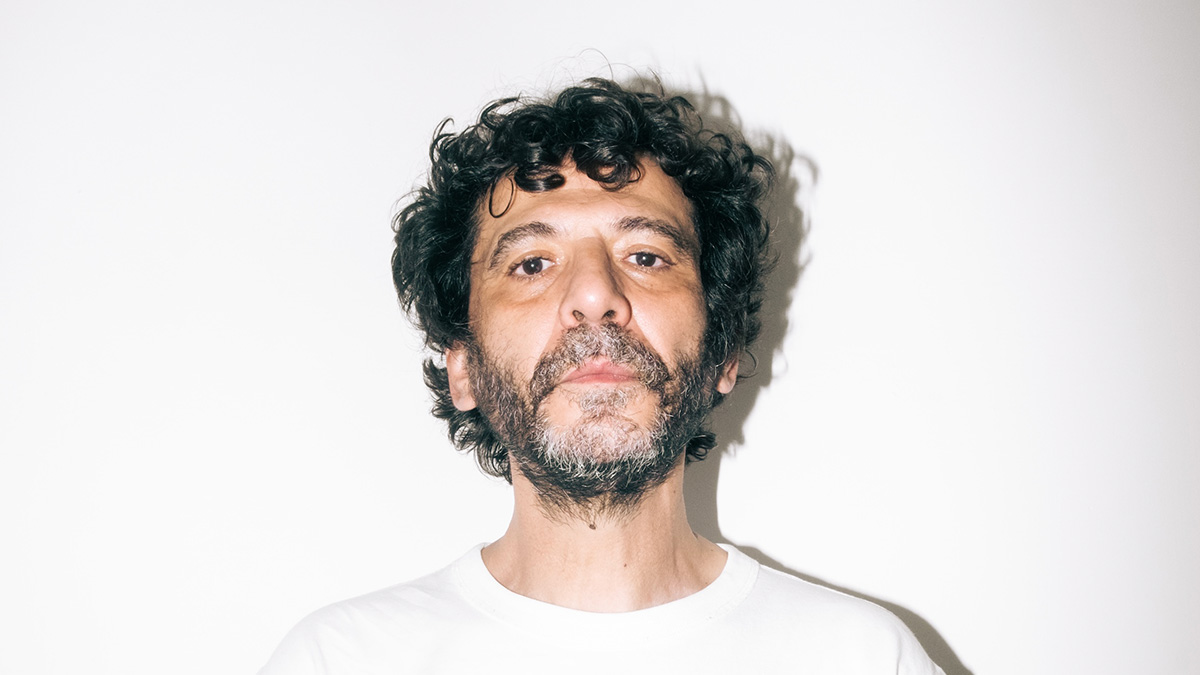
 Andrea Visani, known to audiences as Deda or Chico MD, is an Italian DJ, rapper and record producer born in Ravenna. He made his debut with Isola Posse All Stars, continuing on with Sangue Misto and, in a more peripheral role, in the subsequent side projects of Neffa and Dj Gruff. His contribution was also crucial to the career of Kaos One. It's with this latter and Sean that he set up the Melma & Merda project, which eventually resulted in the sole album Merda & Melma (1999). The record is an excellent way to appreciate the depth of the third member of Sangue Misto, too often overshadowed by his two former bandmates.
The productions by Ahmad & Pritt, Deda, Kaos and Neffa move between hallucinated funk and anxiety-ridden hardcore hip-hop, in a general climate of tension. Sung in Italian and English, the album shines especially on the long, Orientalist-tinged "Trilogia del tatami", a three-part colossus that trades off the three rappers on the mic and serves as the ideal center of gravity for the whole tracklist.
Certainly less essential than the masterpieces of the other two members of Sangue Misto, Merda & Melma remains nonetheless a work of aggressive, imaginative hip-hop outside the mainstream, one that highlights the depth of all three protagonists on the mic.
Little else remains of the last, often-forgotten member of Sangue Misto. He produces his friend Kaos One's debut "L'Attesa" (in '99), collaborates with Fritz Da Cat on "Novecinquanta" ('99) and with Gopher D (in 2000 and 2005). By the time he starts a genuine solo career, he's already drifted far from hip-hop, utterly smitten instead with the funk of Italian crime cinema (poliziotteschi) and blaxploitation: thus begins the Katzuma.org project, fully in a revivalist spirit, with Moonbooty ('04) and Rituals Of Life ('08), before opening up more to electronics on Dr. Know ('11) and later releases. His story, confined to a wild underground and very far removed from hip-hop, now seems almost entirely marginal. His last gasps as a rappuso (rapper-producer) come in 2010, producing Rischio's "Sogni d'oro", and in 2011, producing Mastino's "Ipnosi collettiva". Since 2016 he's also been part of Oké, who offer up atmospheric electronic music with an ethnic flavor.
Surprisingly, a debut under his own name doesn't arrive until 2022, with the producer album House Party, not exactly groundbreaking but capable of conveying a clear idea of hip-hop according to Deda, in dialogue with soul, funk and electronics. A bit of a letdown from such a talented artist, especially given its short runtime and a tracklist whose density isn't exactly overwhelming, but we can hope it marks the start of a lasting return to the scene.

After 25 years, it's possible to reconstruct the towering family tree whose ideal root lies in Sangue Misto. The distant descendants, as always happens in these cases, have grown ever more different from their parents, to the point of disowning them, betraying them, badmouthing them, ignoring them. With a touch of malice, or melodramatic flair, we could even cry parricide, fratricide, or murder-suicide — in artistic terms, of course. But toning it down and getting back to the facts, we can also look at the twenty-five years separating us from 1994 with the eye of a music historian, or at least a passionate music fan, in order to trace the various paths and sketch an overall picture.
In reconstructing the prehistory, history and legacy of Sangue Misto outlined above — however effectively, that's for you to judge — a viral quality of SxM emerges. Nothing to do with social media or marketing: we mean the biological entity itself. Many of those who came into contact with the album indeed went on to pursue music, often leaving behind significant traces that proved valuable in turn for later generations. It's not just a matter of Neffa, Deda and Dj Gruff, whom we've discussed at length, but of a small army of artists who can't be examined here, but who would nonetheless deserve a closer look of their own.
For anyone wishing, then, to follow the branches of this sprawling tree, it's impossible not to think of Kaos One, an institution of Italian hardcore hip-hop tightly bound to the trajectory of Sangue Misto. Another name definitely worth considering is Fabri Fibra, whose "Turbe giovanili" (2002) was produced entirely by Neffa. These two cases are clear cases of descent, if not by blood then certainly by proven affinity. Granted, they belong to two different generations of rappers, but it would be reductive to think the virus was wiped out in under a decade. Instead, it mutated, inexorably, to the point where distant descendants can no longer recognize themselves in their ancestors.
So it happens that after the rebirth of Italian hip-hop at the turn of the millennium, and the subsequent drift back to the margins of popular music, a new wave of homegrown rappers arrived to pick up the thread of a conversation that can, with reasonable accuracy, be traced back to the days of Sangue Misto. A cohort of millennials and post-millennials who often, as Sfera Ebbasta candidly admitted, know nothing of that "climate of tension", yet still represent its distant heirs. And if, among that army of new rhymers, we also find one of the most talented of all, Tedua, naming a song "Sangue Misto", then it seems clear that the virus never went extinct — it has simply adapted to its new hosts.
Add OndaRock to your favorite sources on Google Discover. Don't miss our reviews, milestones and latest news straight in your feed.
This article is an English translation of the original Italian text, published on OndaRock.it. It was translated with the help of artificial intelligence, under the editorial responsibility of OndaRock's editor-in-chief, Claudio Fabretti.
| SANGUE MISTO | ||
| SxM (Century Vox Records, 1994) |  |
|
| Live Padova (self-released, live, 2000) | ||
| NEFFA | ||
| Neffa & i Messaggeri della Dopa (Black Out Records, 1996) | |
|
| 107 Elementi (Polygram, 1998) | |
|
| Chicopisco (Universal, EP, 1999) | ||
| Arrivi e partenze (Mercury, 2001) | ||
| The many worlds of Giovanni, the singer Neffa (Sony, 2003) | ||
| Alla Fine Della Notte (Sony Music, 2006) | ||
| Saturno Contro (Sony Music/RCA, soundtrack, 2007) | ||
| Aspettando il Sole (Sony BMG, compilation, 2007) | ||
| Sognando contromano (Sony Music/RCA, 2009) | ||
| Molto calmo (Best Sound/Sony Music, 2013) | ||
| Resistance (Pisco Music S.r.l/Sony Music, 2015) | ||
| AmarAmmore (Numero Uno/Sony, 2021) | ||
| Canerandagio - Parte 1 (Numero Uno/Sony, 2025) | |
|
| Canerandagio - Parte 2 (Numero Uno/Sony, 2025) | |
|
| RADICAL STUFF | ||
| Jazzy Rap Night Live (Flying Records, 1992, live) | ||
| Hardaswallow (UjaMM'n, 1994) | |
|
| DJ GRUFF | ||
| La rapadopa (Century Vox, 1993) | |
|
| Zero stress (Zero Stress NVN, 1996) | ||
| The sound of the street (Black Out, 1998) | ||
| Tre tocchi vol. 1 (Antibemusic, 1998) | ||
| Tre tocchi vol. 2 (Antibemusic, 1998) | ||
| Tre tocchi vol. 3 (Antibemusic, 1998) | ||
| All or nothing (Suonidistrada/Antibe Music, 1999) | ||
| An example of the sound (2000, with Alien Dee) | ||
| Scientific Experiment (2001, with Dj Tay-One) | ||
| Kaedaman (Puruchan Music, 2002) | ||
| Premeditated ramblings (2002) | ||
| The Worst Hits Of Gruffettalco (Puruchan Music, 2002) | ||
| Karasau Kid (Puruchan Music, 2002) | ||
| Wonderful Thaaa (Caseificio Nvn, 2002) | ||
| Tiffititaff (Puruchan Music, 2002) | ||
| Lowdy '82 / '03 (2003) | ||
| Frikketonism (PM Recordings, 2004) | ||
| Uno (Portafoglio Lainz Records, 2005) | ||
| Bastard (Sinfonie, 2008) | ||
| Dai la loma pt.2 (2008, with Dj Tay-One) | ||
| Sandro O.B. (Sinfonie, 2009) | ||
| Viene e va (mixtape, 2009) | ||
| Phonogruff (Looperatorialiani, 2011) | ||
| ALIEN ARMY | ||
| Il contatto (1996, mixtape) | ||
| Orgasmi meccanici (Royality Records, 1999) | |
|
| The End (Bomb Hip-Hop Records, 2003) | ||
| The Difference (ThisPlayMusic, 2014) | ||
| Quattro Turbo (ThisPLay Urban, 2016) | ||
| Goodmorning Worldwide (ThisPlay Music, 2018) | ||
| OGM (ThisPlay Music 2021,) | ||
| MELMA & MERDA | ||
| Merda & melma (Kappa Management, 1999) | |
|
| KATZUMA.ORG | ||
| Moonbooty (Katzuma, 2004) | ||
| Rituals Of Life (Katzuma, 2008) | ||
| Dr. Know (Katzuma, 2011) | ||
| OKÉ | ||
| Tree Of Life (Original Cultures, 2016) | ||
| Deserto (Original Cultures, 2020) | ||
| DEDA | ||
| House Party (Universal/Virgin, 2022) |
 MilestoneRecommended by OR


