


It's called Nueva Escena Chilena (new Chilean scene), but it might not really be a scene at all. The bands associated with it range across such a wide variety of genres and inflections that it's worth asking: is there really a coherent phenomenon behind the name, or just a vague geographical intuition combined with a healthy dose of hype?
Initially, when only a handful of bands were linked to it, people spoke of pop de guitarras. Now that this new indie-rock fever has spread to an ever-growing number of acts, the influences at play have multiplied too — reducing it all to guitars would be an oversimplification. That's probably why, across the web, on aggregators like rateyourmusic.com and in a foreign press increasingly paying attention to the phenomenon, the current name has taken hold — one that foregrounds the place name without committing to any particular musical style.
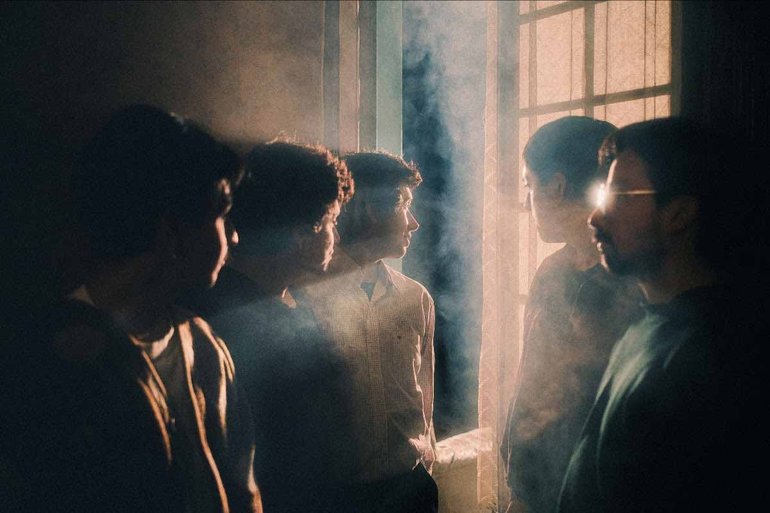
According to the local press, the record that could be said to mark the start of the Nueva Escena is "Nonato Coo" by Niños del Cerro, released in 2015. Other albums often cited as crucial to its development are "Enola Gay" by Asia Menor and "Apoyo Emocional" by Estoy Bien, both from 2023. These are, in truth, three records that are musically quite far apart from one another: the first leaning towards indie pop and neo-psychedelia, the second clearly descended from post-punk, and the third rooted in hardcore–emo. Guitars aside — and even those are used in very different ways — the closeness between the scene's bands is above all a matter of attitude. If it can be called a scene at all, it's precisely because of the spirit that unites these bands, and because the various groups have managed to build a creative ecosystem of venues, festivals and labels that lets them record and perform in an atmosphere of genuine kinship.
The common denominator, if there is one, should be sought on an emotional rather than a stylistic level. And the perspective that emerges is revealing: at the heart of Nueva Escena's music are feelings — sketched, whispered or screamed as they may be. The names of several bands alone (Estoy Bien, Todos Mis Amigos Estan Tristes, teodioteodio) are enough to show how central friendship, confidence and introspection are to the thematic and emotional development of this music. In terms of reference points, these young bands, largely formed around the universities and underground venues of Santiago, seem to start out from the "heart and guitars" formula that defined part of Nineties alternative rock — but reducing everything to that matrix would be limiting. It's only the starting point for a much broader range of aesthetics, one that opens up to post-punk, post-rock, Midwest emo, at times held together by a progressive attitude that draws its very impulse from the breadth of that palette.

Candelabro, Asia Menor and Hesse Kassel are today three of the scene's most prominent names, and they share a taste for intricate structures, broken rhythms, and a rock aesthetic that blends art-punk, post-rock and obliquely progressive leanings.
Their synthesis closely recalls that of London's Windmill Scene — the constellation of bands that grew up around the Brixton pub and launched Black Country New Road, Black Midi, Squid — and the parallel isn't accidental: it accounts for much of the international attention the Chilean scene has enjoyed for the past couple of years.
But it's a stylistic centre of gravity that has shifted over time: the scene's earliest releases, between 2014 and the early 2020s, remained more anchored to a jangle and indie-pop sensibility. The change of pace — and of visibility — comes in 2023 with the scorching debut of Asia Menor and Candelabro's "Ahora o Nunca" (2023), which fuses folk, chamber rock and emo with a formal ambition previously absent.
Then again, it's a trajectory that recurs regularly in scenes able to survive beyond their first wave: the more progressive component takes longer to be processed and given back, and tends to surface once a new generation of musicians — having grown up listening precisely to the scene's earliest releases — starts to filter that sound through everything else they've encountered in the meantime, broadening the perspective and making it their own.
Among the influences absorbed and reworked by this new generation, none weighs as heavily as emo, especially in its Midwest strains descended from American Football and Sunny Day Real Estate. Estoy Bien carry forward above all its more punk and melodic side, tied to emo-pop and hardcore-pop: the scream and the distortion become a form of catharsis, but one bound more to a South American tradition of representing pain than to a copy of the American reference scenes — an emotional urgency that translates into anxiety, exhaustion, a malaise that often widens to include the environment and the future as a collective category.

The deeper you dig into the detail, the more the categorization falls apart. FrioLento deconstruct reggaeton through a Joy Division lens, a “post-punk perreo” that flips the imagery of the most-listened-to genre at home from the inside out. Mitimitis operate in fragile, homespun bedroom pop territory. Phuyu y la Fantasma fuse math rock and Chilean folklore, dragging the cueca into jagged rhythmic structures. Chini.png oscillates between psychedelic dream-pop and art-pop. Holding all this together takes a network rather than a genre: independent labels like Sello Fisura and Uva Robot, self-run spaces like Centro Cultural Rojas Magallanes, a diffuse collaboration that counts for more than any sonic affinity.
It's worth being clear about what the Nueva Escena Chilena actually is — and what it isn't. It's not a portrait of contemporary Chilean pop, which remains dominated by reggaeton and trap acts operating on an entirely different scale of audience. It's more a case study in how musical attention works in the age of aggregators, shared playlists and viral trends. These bands do find space thanks to the distinctiveness of what they do, sure, but also — and above all — thanks to the partiality of the lens through which the Western alternative music world looks at the rest of the planet: a lens that, from Pitchfork to RateYourMusic, from AlbumOfTheYear to sites like Earfeeder with its genre and scene maps, amplifies attention toward certain identity-defining strands, post-punk and post-rock among them, which enjoy a wildly outsized prestige. For every Nueva Escena that — deservedly — gets its moment in the light today, how many rock bands remain in the dark entirely, not for lack of originality but precisely because they don't conform to the dominant canons?
And yet, in these very years when rock itself increasingly looks like a genre pushed to the margins of the music ecosystem, it's precisely from the periphery — geographical periphery included — of the empire that some of the most exciting music is coming. The hope is that the Nueva Escena won't be, for fans around the world, a dead end, but the first step of an exploration that finally pushes the gaze beyond the usual borders. There's still a lot out there, off the map.
Tus Amigos Nuevos – Triunfo moral (2015)
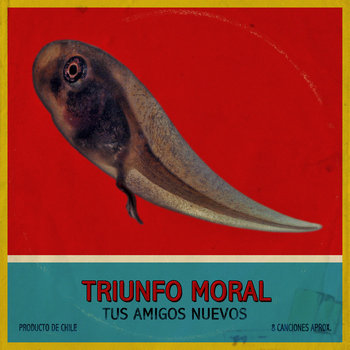
Older than the other outfits in the Escena, the Santiago dance-punk quartet was drawn into it by shared festival and club circuits, when it wasn't singled out as a forerunner of the whole phenomenon. Leo Salinas's bass triggers a danceable, razor-sharp post-punk, more sinuous than its Anglophone forebears. On its high point, “Triunfo moral”, the band grafts Balearic grooves (“Tehcno rengo”), space disco expansions (“Los hombre-masa no bailamos”) and Caribbean touches (“T.A.N. avergonzada”) onto the genre's proverbial circular guitar riffs and punk chants. (Michele Corrado)
Niños del Cerro – Lance (2018)
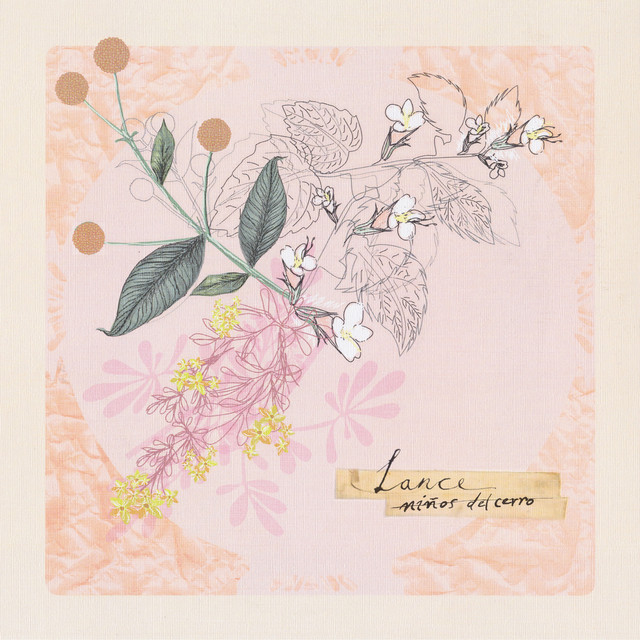
Three years after the record that effectively kicked off the Nueva Escena, the band from La Florida returned with a sophomore effort that refines the formula somewhere between neo-psychedelia and dream-pop. Muffled drumming, jangle arpeggios as fresh as an Andean breeze, and melancholy and nostalgia pouring down like rain are the main ingredients of “Lance”. A record that can drift dreamily through memories (“Sufre”), embroider Eastern-tinged melodies (“Flores, labios, dedos”), buckle under blows of dissonant piano and distorted guitars, and then settle back into a serene, endless inner spring (“Melisa / Toronjil”). (Michele Corrado)
Tortuganónima – Imago (2019)

Math-rock in today's fashion: bright, multicoloured, a long way from the noise-driven roughness that marked its origins in the Nineties. The Santiago quintet's third album isn't short on sharper, more direct jabs, but what dominates are quiet/loud dynamics, Midwest emo tangles, and even the odd hip-hop inflection, as on “Penumbra”. Amid constant shifts in perspective and a hyperkinetic, combinatorial style of songwriting, tracks like “Ukiyo”, “Aleph” and “Tiön” show how a progressive voice today can speak many languages without losing its Chilean accent. (Marco Sgrignoli)
Hiperlaxo – Sur (2021)
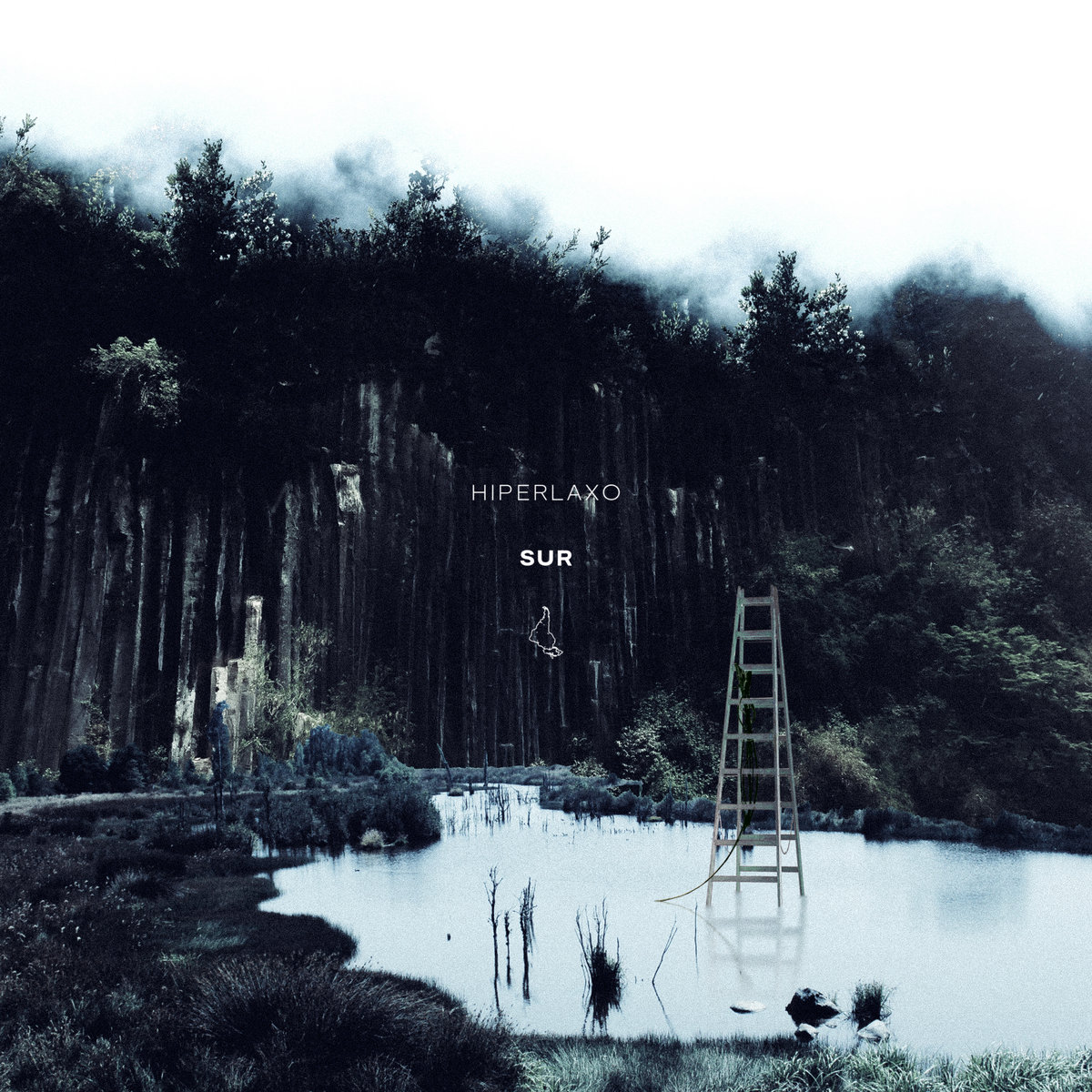
An EP? And a rap one at that? Including “Sur” on this list is, admittedly, a bit of a stretch. But listening to the record's four “movements”, it's impossible not to notice a resonance between its leaden mood and the defining traits of the Nueva Escena. The cinematic, layered build of the first track recalls Godspeed You! Black Emperor and their swelling crescendos. The second track picks up, in a more jagged form, the broken gait of Flying Lotus, while the horns on the closing track tie the sound closer to post-rock than to hip-hop as commonly understood. A surprise. (Marco Sgrignoli)
Asia Menor – Enola Gay (2023)

From the opener alone, “Patio”, it's clear this isn't just another entry in the post-punk revival. Not only does the band's nationality add local names to its web of influences, but it genuinely manages to soak the jingle-jangle guitar interplay and vocal melodies in its Latin spirit and thoroughly South American melancholy. With a recipe that looks fairly simple on paper, Asia Menor have managed to put together a handful of instant classics. It's a romantic, twilit record that can still claw with real conviction, and it fades out in the phantasmagoric dissolves of “Buenos noche”. (Michele Corrado)
Estoy Bien – Apoyo emocional (2023)

Estoy Bien from Santiago are the scene's quintessential Nineties-revivalists, and “Apoyo emocional” is their sole, iconic self-released record. The emotional support offered by the trio takes the shape of granite-solid, thunderous emo pop, which, driven by Matías Sandoval's phenomenal bass, often veers off onto winding post-hardcore paths (think Fucked Up territory). But the strength of these fifteen songs also lies in the intimate, direct language of singer-guitarist Benjamín De la Fuente, whose blunt, emphatic delivery sounds like he's singing straight to a close friend. Still without a follow-up, it remains one of the scene's cornerstone albums.
Pablo Vostok – Autorretrato de un ave rapaz (2023)

Math-rock, breakcore, dub, ska-punk, jazz: every track seems to move in a different direction, yet the fifth album by Santiago musician Pablo Vostok, already known for his work in garage-rock outfit Pequeños Antares, never loses its center. The glue is a lucid, jittery post-hardcore, at times extreme but never savage, driven by a progressive streak closer to Refused and At The Drive-In than to canonical prog. The punk roots are plain to see, blending with a psychedelic streak that expands the sound without scattering it – reaching its peak on the closing "La Picá de Clinton," hypnotic and enveloping.
Chini.png – El día libre de Polux (2023)

María José Ayarza – born in 1991, known as Chini.png – sounds as if Garbage had junked their synthesizers for acoustic guitars while staying true to that same alt-pop calling. The approach is lazy, homespun, yet it's effortlessly shot through with baggy rhythms drawing on both Madchester and drum'n'bass. Her voice, fragile yet surprisingly versatile, scatters blue notes as much across near-emo chants as through the lounge-jazz/trip-hop of "No midas las palabras!" A precarious balance that works precisely because it never tries too hard.
Phuyu y la Fantasma – A| Tetralogía de bichos y setas (2024)

The third album by this Chillán quartet moves between razor-sharp post-hardcore, piercing guitars and a jagged bass that wedges itself among the other instruments, with a few female vocal incursions – more unsettling than sweet – that crack an already tense atmosphere from the very first bars. Nerves stay on edge until "Bioluminescencia" opens up a suspended, almost avant-prog passage built around the piano – the bridge to an unexpected turn: the final two tracks embrace the airy triple-time swing of the cueca, a dance from the Pacific coast of South America. And the record finally seems to find room to breathe.
Cristóbal Avendaño & Silvia Moreno – Lancé esto al otro lado del mar (2024)

Progressive folk and spoken-word poetry: an unusual combination that conjures up a singular atmosphere. Credit goes to two musicians from Valparaíso: the singer of minimal-synth trio Tyrell and the guitarist of prog/alt-metal band Emexis. Here, though, their formula is a world away from their parent bands: just acoustic guitars and voice, in a play of layering and release that seems to overlay everyday reality with a further plane of meaning. A place where light and melancholy, tenderness and a quiet solemnity reveal the turning points hidden even in the simplest moments.
Todos Mis Amigos Estan Tristes – Carne (2025)

With their Americanized take on shoegaze, adding touches of emo and grunge, Nothing are the English-speaking band closest in spirit to Todos Mis Amigos Estan Tristes. The Temuco outfit, however, adds to this muscular nu-gaze the more distorted experiments of Soda Stereo, a few ethnic touches ("Arrebol"), and detours toward Neutral Milk Hotel ("Directo"). Antonio Quinata, aptly nicknamed zapatogaze, thus leads a band devoted to a kind of shoegaze pantheism that bears fruit on "Carne" – to date his only work, an album so stunning and emotionally charged it can leave you reeling.
Hesse Kassel – La Brea (2025)

The best thing about Hesse Kassel is that they never stay where you left them. A jagged riff drifts into a chamber-music passage, sax bursts in right where the climax should hit, and post-rock veers toward jazz instead of catharsis. Somewhere between the rawness of Slint and the sprawling constructions of Godspeed You! Black Emperor, "La Brea" thrives on constant transformation without ever hardening into a recognizable formula. When the songwriting turns more ambitious, it doesn't reach upward: it crumples, contracts, refusing any epic foothold. And that's exactly why it leaves a mark.
Candelabro – Deseo, carne y voluntad (2025)

Seven musicians from Santiago and a wholly distinctive sound: airy yet capable of density and murk, weaving voices and horns into a choral quality that holds together order and centrifugal pulls. Somewhere between emo, indie-folk and progressive ambition, they recall the new-look Black Country, New Road, but perhaps even more so Adjy, the US collective the band also shares similar Christian references with. The variety is striking: "Pecado" is a sweeping balkan-ska romp; "Tierra Maldita" is near post-sludge with horns. And on "Cáliz" the circus-like swirls build into a crescendo not just of intensity but of spiritual cohesion – to the point where the emotional core seems to lie not so much in the musicians themselves as in the bond that unites them.
Teodioteodio – Echaremos el cielo abajo a patadas (2026)

"Echaremos el cielo abajo a patadas", we'll kick the sky down. It's an imaginative, powerful title. Backed by a charge that was previously latent, in the scratchy post-hardcore arpeggios of tracks like "Lejos de México" and "Pantera", which then often detonate into powerful blasts of noise and feedback. "Amar" is by far the most stunning explosion. Theatrical, disjointed, raw, nervous, Felipe Baraona's spoken word prowls through this treacherous musical landscape like an animal fleeing a fire. The vocalist often draws on the words of the greats of Latin American poetry, using them as fertile ground from which to grow new, evocative images. Another arrow in the band's quiver is their creative, versatile use of backing vocals, which adds further emotional depth to the sound.
Inundaremos – Tanquemante (2026)

It only takes the sixty-two seconds of the intro "Intromision" and the following track to place the band on the Cartesian plane of influences. An electronic flicker, then an acoustic arpeggio, and soon distortion and big-family folk choruses appear too, before the inevitable horns swell everything up with epic emotion. Early Arcade Fire on the x-axis, then, while Los Prisioneros and other historic Chilean names, along with good old C86, sit on the y-axis. Inundaremos's songs are often populated by broken hearts, missed chances and loss, yet their approach is always light, playful. Inundaremos don't just give an Andean flavoring to the genres they explore: they reinterpret them decisively, bending them to their own needs.
Nando Garcia – Lover Man (2026)

Chamber pop, warm without ever tipping into the saccharine, and capable at its best of pairing intimacy with an almost power-pop sturdiness. Crescendos and passages with a bold folk swagger recall early Arcade Fire, but the choral sweep is often broken up by jagged, abrupt indie-rock flourishes, almost borrowed from Slint or June of 44. Beneath the surface lies a vulnerable, aching record: the relationship with his father and mother, gay love lived in times that still struggle to accept it – told with a direct writing style that makes the personal legible without watering it down.
Add OndaRock to your favorite sources on Google Discover. Don't miss our reviews, milestones and latest news straight in your feed.


