


The rapper from Houston, Texas, has managed in just a few years to find a hallucinated, melancholic and dreamlike take on late-2010s hip-hop. Through a string of hugely successful singles and albums, he has become a new star of global music. His new way of making hip-hop, often edging close to trap, builds on the intuitions of other contemporary artists
When I was little, my grandmother stayed in the neighborhood, so I saw some crazy shit out there. I saw crazy homeless people and messed-up motherfuckers, I saw people who looked strange, starving and filthy. I kept thinking 'I've got to get out of this fucking shithole'. That gave me an edge… it made me who I am now.
(Travis Scott talking to Complex about his childhood)
Jacques Berman Webster II was born in 1992 in Houston, Texas. For his first six years he lived with his grandmother in South Park, a rundown, very poor neighborhood with an overwhelmingly African-American population (81%). From 1993 onward, the district was essentially abandoned by the city administration, since none of its residents were wealthy or influential enough to count as a political priority. The sewers started rusting, the pipes burst: decay set in. Calls for immediate action were ignored, and the 1994 flood forced 10,000 residents to relocate, leaving many homes no longer fit to live in. By 2000, a sizeable Hispanic minority had joined the African-American population, fueling an underclass powder keg where poverty rhymed with crime. The area was extremely dangerous, and young Jacques was marked by what he witnessed there at a very early age.
The move to Missouri City, a middle-class suburb of Houston, marked a rebirth. Prospects there weren't exactly rosy, but at least the risk of being attacked or robbed dropped drastically. His parents — his father a professional and his mother an employee at tech giant Apple — allowed him to graduate high school and even enroll at the University of Texas at San Antonio, which Jacques dropped out of in his second year. With a jazz-composer grandfather and a soul-singer father, he felt his path lay in music: he moved to New York right after dropping out, but in doing so lost his parents' crucial financial support. He chased his dream anyway.
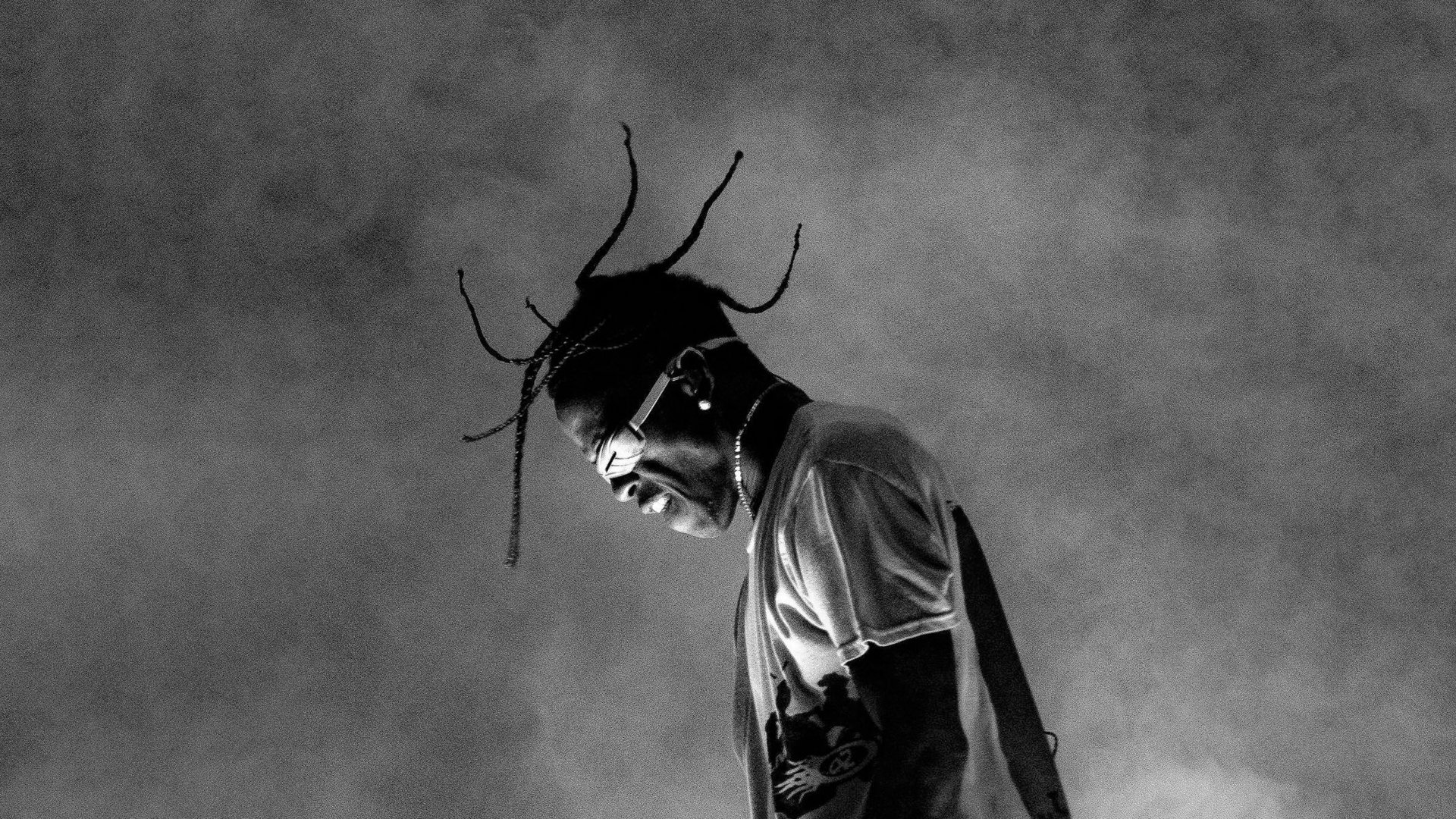
His first attempt at breaking through as a musician came even before the move to New York: a duo with longtime friend Chris Holloway, trying to make a name for themselves on Myspace. They called themselves The Graduate and lasted just long enough to put out an EP. He tried again with a schoolmate, this time choosing, in a flash of inspiration, the name The Classmates. That lasted from 2009 to 2012, giving Jacques a chance to cut his teeth as a producer. Things only got serious, though, once he moved to New York — although even that didn't bring the career breakthrough he was hoping for: he worked with Mike Waxx of the site Illroots but remained penniless, sleeping on friends' floors and getting by day by day while living out of the Just Blaze recording studio.
He couldn't keep that up for long, so after just four months he moved to Los Angeles. He couldn't find anywhere to sleep there either; tail between his legs, he went back to Houston. The unpleasant surprise was that his parents, feeling betrayed by his dropping out of college and moving to New York, threw him out of the house: he flew back to Los Angeles, where he finally found a couch to crash on. It looked like a lost cause, but he was finally noticed by an Atlanta rapper and godfather of trap, T.I.: it was the proverbial ray of sunshine, the turning point in a career whose first four years had brought nothing but disappointment.
Dropped out, got signed, got mom house all in the same year
(from "Upper Echelon")
The calling card he wanted to present to the world was the mixtape Owl Pharaoh, released under the name Travis Scott: a tribute to an uncle who had been a role model for Jacques. He announced it in 2011, but his meeting with T.I. and, shortly after, the interest shown by a giant of world rap like Kanye West forced him to rethink the project. Pushed back to 2012, then to February 2013, also due to some legal issues over sampling, it finally came out in May of that year.
Born out of his collaboration with the aforementioned Kanye West, but also thanks to the contribution of Justin Vernon, it's a mixtape that also features T.I., 2 Chainz, Wale, Toro y Moi, Theophilus London, ASAP Ferg, James Fauntleroy and Paul Wall. Far from naive, it's an eclectic sampler of hip-hop that owes a great deal to "My Beautiful Dark Twisted Fantasy" and its omnivorous spirit. Whether it's the tense, eighties-tinged mood of "Bad Mood Shit On You", closed out by a gospel interlude, or the by-the-book trap of "Upper Echelon" (with T.I. and 2 Chainz), or the more modern kind found on "Uptown" (with A$AP Ferg) and "Quintana" (feat. Wale), everything sounds like something more than just another mixtape of the era.
Psychedelic streaks seep into soul and gospel-indebted passages, a hook takes flight on "Dance On The Moon" (with Theophilus London & Paul Wall): all elements that seem to steer the music away from the most obvious alignment with trap and hip-hop conventions. On "Blocka La Flame", the first single of his career, Popcaan's dancehall slots into a beat co-produced by Young Chop at the height of his powers, still fresh off the explosive drill hits he produced for Chief Keef. An ambitiously assembled project, bringing together top-tier rappers and producers.
It's the start of the collaboration with Mike Dean, who would go on to shape the sound of his major works, but also the first step toward building a network of collaborations that places Travis Scott at the center of the global hip-hop scene, with some important openings into the wider urban world as well. What's most sorely missing is precisely Mr. Webster's own stylistic signature, which gets crushed under the weight of so many collaborations and guest contributions. It's a criticism that will keep haunting him, keeping good company with Drake.
The second mixtape, Days Before Rodeo (2014), serves as the prelude to his proper debut. It features a collaboration with the English pop band The 1975, the trap stars Migos, mentor T.I., and rappers Peewee Longway, Young Thug, Big Sean and Rich Homie Quan. It's mainly a device for keeping attention high ahead of a long-awaited album, and indeed it doesn't replicate the star-studded roster and exceptional collaborations of Owl Pharaoh. Even so, it's one of the most interesting works of the period for the middle ground between mainstream and underground that Travis Scott moves through. Opened by samples of Philip Glass, it still drowns in hazy, hallucinated atmospheres (“Drugs You Should Try It”, the visionary “Skyfall”), even if just to frame more conventional hip-hop moments (“Don't Play”, with Big Sean and The 1975).
The original trap vocabulary melts, at times, into violet, sticky compositions where the production flair of reverb, vocal distortion and much-maligned Auto-Tune become new expressive tools, dueling with rhymed verses for the leading role. Rather than amphetamine-fueled street anthems, things slide toward dazed dirges like “Zombies”, which lay bare the dark side of the trap wave: desolation, emptiness, melancholy, nostalgia. It's precisely this dreamlike, lethargic, hallucinatory and introspective direction that will take center stage on his debut.
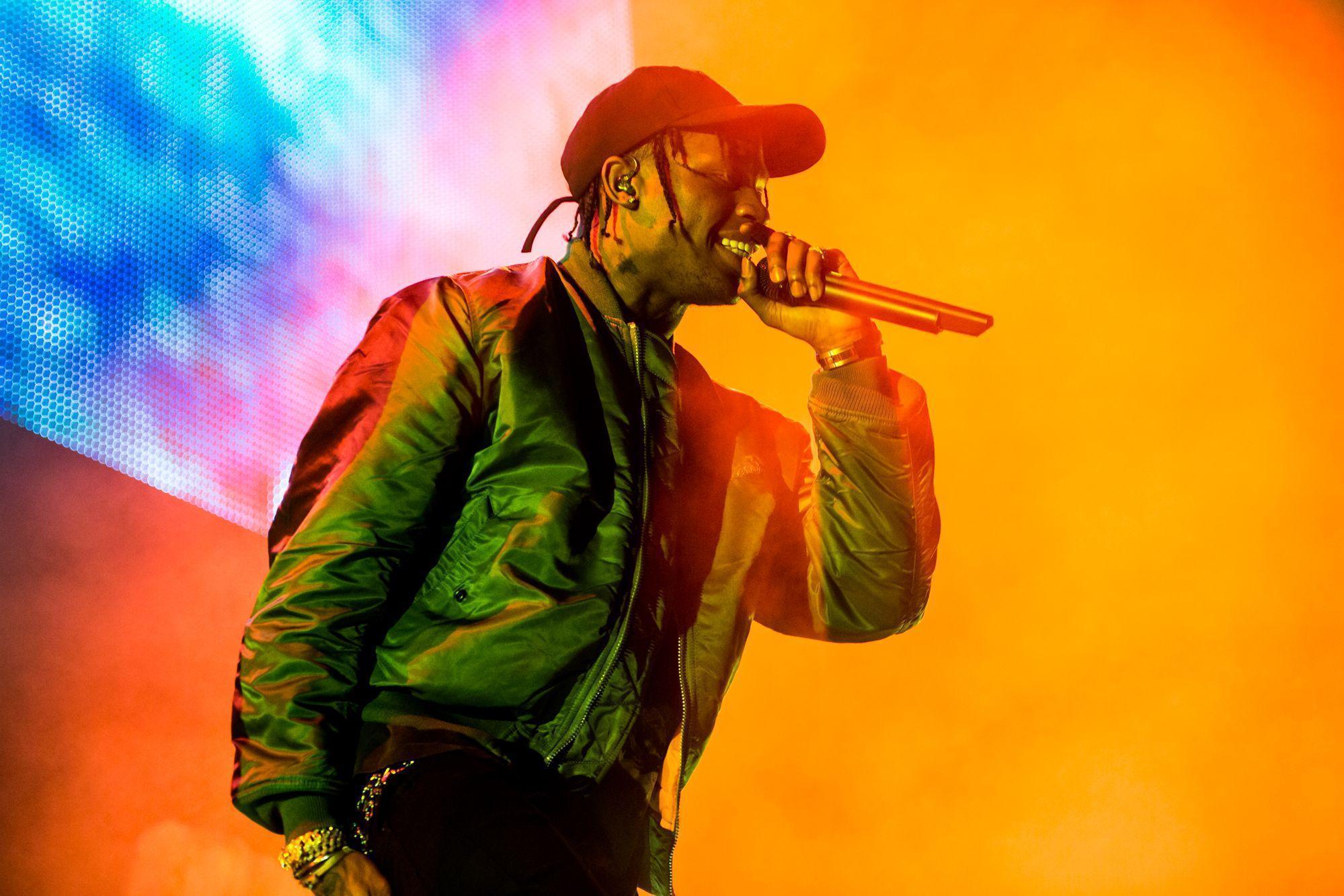
No monogamy, ménage with me
Pornography surrounding me
You get high with me, you come down with me
That’s all I need in my fantasy
(from “Pornography”)
The first single released to the public is the futuristic trap track “3500”, featuring Future and 2 Chainz and produced by Metro Boomin, Zaytoven, Mike Dean, Mano and Allen Ritter. There's one obvious detail that catches the attention even of the most casual listener: the track runs almost 8 minutes, an eternity for a single, especially from an artist operating in the trap lane. Hit play, and you're faced with an elaborate composition that rivals the shimmering hip-hop fantasias of peak Kanye West, sketching out a menacing collage made melancholic by a liquid, inhuman music-box melody dripping with Auto-Tune. It's one of the most disorienting tracks you could hear in 2015, and it foreshadows the ambitious album that drops in September, Rodeo. Opened by “Pornography”, it turns the hallucinated brushstrokes of the past from timid sketches into something else entirely: here everything is submerged in a cloud of reverb and sonic alterations, and it feels like moving from thought to thought inside Scott's mind.
Even Quavo of Migos's contribution, usually so inclined toward simple, direct trap, doesn't clip the wings of “Oh My Dis Side”, which liquefies halfway through, pulls itself back together, and finally closes with a deeply sad, warped melody. If Drake and Future have narrowed the gap between singing and rapping, ideally merging the soul and hip-hop strands of Black music, then in Travis Scott's work that continuum stretches even further: from mumbling to wheezing, from prayer to confession, all the way to the eulogy.
The sci-fi “Wasted”, driven by a haunted, warped beat, finds its ideal conclusion in the hook lifted from Pimp C's “Havin' Thangs '06”, capping off a melancholic, codeine-spiced bender. The fact that Pimp C died at 34 only wraps the whole thing in an extra layer of desperation, one that bleeds through the entire record anyway. On “90210”, Rodeo's take on a hip-hop love song, the track floats on an ethereal female vocal line while synth drones poison the atmosphere: rather than a sunny coastal road, we find ourselves in the middle of a psychological drama. A psych-rock guitar solo sends the track swerving toward a twilight funk, over which an anguished tension lingers.
A similar claustrophobia, dreamlike and sleepwalking, also animates “Pray 4 Love” (featuring The Weeknd), though it offers far fewer surprises, while “Nightcrawler” (with Swae Lee and Chief Keef) shifts toward a more conventional trap-drill hybrid.
It seems the album is doomed to stop surprising us, but “Piss On Your Grave”, a venomous, digital blues track with Kanye West, forces a rethink. Still, it's one of the record's last moments of real originality, since “Antidote” and the following “Impossible”, “I Can Tell” and “Apple Pie” do little more than retread the same psych-trap path.
The overall sense that we're exploring the depths of a fragmented, clouded, slightly schizophrenic mind is sharpened by “Maria I'm Drunk”, featuring a guest spot from Justin Bieber, and “Flying High”, which features Toro Y Moi.
The novelty Scott brings with his Rodeo is the result of work by a platoon of producers, including Mike Dean, Metro Boomin, Jason Geter, Allen Ritter, Frank Dukes and WondaGurl, co-stars alongside the various rappers and singers who step in to support Mr. Webster. The record's most obvious weakness — the dwindling number of memorable moments in the second half of its overabundant 65 minutes — shouldn't obscure the innovative sound that eclectically pieces together a vast sonic puzzle, with Scott himself acting as the glue, as he'll put it a few years later ("Sicko Mode," which would arrive in '19). With him, as had already happened with Drake and Future, but only partly with West, an ambiguous figure of the artist-entrepreneur begins to take shape — someone who coordinates his own projects, weaving together collaborations and connecting styles, personalities and worlds that would otherwise be far apart. It's genuinely surprising that Scott could aspire to such a role on his official debut, but it's the result of a long apprenticeship: Rodeo brings to fruition an idea that had been dreamed, imagined and refined over the years.
The long-awaited success finally arrives: third on the Billboard 200, selling over a million copies. The single "Antidote" earns 4 platinum certifications in the United States and another 2 in Canada, selling over 4 million copies. The kid from the notorious South Park, who crossed America to chase his dream, sleeping on floors and living in the studio, had made it.
Okay, I been up for some days, I ain’t got time to lay
Just to drown out all these thoughts, I tried all kind of things
(from “Stargazing”)
What to do now? Make the most of this moment of fame. In January 2016, just four months after the release of his debut, Scott announces a second album. He titles it Birds In The Trap Sing McKnight, and it seems set to come out early in the year, but it's pushed back a full three times. In September, a year after Rodeo, the world can finally hear the 14 new songs that make up the tracklist, including the two singles "Wonderful" and "Pick Up The Phone" used to promote the album. Those two tracks alone hint at the shift that's occurred since the debut: the dreamlike, hallucinatory dimension no longer tears apart the songs' structure, but instead accompanies or bends it, except in the curious "Sdp Interlude." On "Wonderful" (with The Weeknd) it's the force that turns the outro into a dirty-sprite nightmare, while on "Pick Up The Phone" (with Young Thug) it merely tints the arrangement.
There are no sprawling tracks here, the kind whose generous runtimes once allowed for unpredictable detours, but this still isn't a string of ordinary trap songs. "The Ends" (with André 3000) is notionally split into three sections, moving from robotic soul toward grim hip-hop before landing on an anxious, claustrophobic finale. "Way Back" is what's left of a trap lullaby once it's been filtered through a hypnagogic, depressive haze. "Coordinate" bounces a weary rap verse over heavy reverb and a spectral melody. When one of Scott's idols, Kid Cudi, shows up on "Through The Late Night," the danceable, festive energy gets sucked into unsettling voids and the usual anguished reverb; on "Guidance" a skipping Latin rhythm clashes awkwardly with the foggy Auto-Tune. "Goosebumps" is a drowsy, half-conscious mumble, out of which an off-kilter trap song barely emerges, with Kendrick Lamar delivering the album's most successful collaboration.
In hindsight, Birds In the Trap Sing McKnight is an album that completes Rodeo, steering the conversation back toward more traditionally hip-hop territory. It lacks its predecessor's explosive ambition, but it remains a record well worth knowing for anyone who loves the genre. On the production side, alongside the ever-present Mike Dean and many others, the name James Blake raises a few eyebrows. Despite the delays in its release and the scant months spent making it, commercially it's another hit: platinum certification in the United States confirms a million copies sold, and the album climbs all the way to number one on the Billboard 200.
After founding his own label, Cactus Jack Records, Scott announces a collaborative album with Quavo of Migos, as well as a third solo record. Not content with that, in 2017 he teams up with Drake on "Portland," which reaches number 9 on the Billboard Hot 100. He also joins Kendrick Lamar on the "DAMN." tour.
Titled Huncho Jack, Jack Huncho (2017), the Scott-Quavo duo's album — the two rebranding themselves Huncho Jack for the occasion — is a tour de force of producers (Buddah Bless, C4, Cardo, Cubeatz, Frank Dukes, Mike Dean, Murda Beatz, OZ, Pas Beatz, Southside, Supah Mario, TM88, Vinylz, Wheezy, Yipsy), also featuring the other two Migos members, Takeoff and Offset. It represents the state of the art for trap as a now-global language, but for that very reason it sounds rather impersonal: in trying to make their own quirks stand out, the two headliners end up, at times, parodying themselves, their tics and their clichés. It flows smoothly, soaked in lean from head to toe, and stumbles over the sterile beats of tracks like "Dubai Shit," "Saint Laurent Mask" (closed out by a rather psychedelic synth solo) and "Best Man." It sounds like an answer to other collaborative albums, an alternate-universe version of Drake and Future's "What A Time To Be Alive" ('15), riding the long wave set off by Jay-Z and Kanye West's "Watch The Throne" ('11).
Unsurprisingly, the collaboration also helps pave the way for the release of his third solo album, Astroworld (2018). It's preceded by the single with Kanye West and Lil Uzi Vert, "Watch," which is later left off the final tracklist. The album is a resounding success, with few precedents in hip-hop and trap. It debuts at number one on the Billboard 200, also topping the charts in Australia, Belgium, Canada, the Czech Republic, Denmark, Germany, Italy, New Zealand, Norway and Sweden. In the following months, it posts exceptional numbers, boosted by the second single, "Sicko Mode." The latter spends an astonishing 30 weeks in the Billboard Hot 100's top 10, a record for a hip-hop song.
The album sells 537,000 equivalent copies in its first week, racking up an exorbitant total of 349 million streams; it tallies over 3 million copies sold as of February 2020. Literally all 17 songs charted on the Billboard Hot 100, proof of the American public's interest in the album as a whole. To find names that can match or surpass these numbers, you have to bring up Drake or Eminem.
For the first time, after years of lukewarm reviews, mainstream critics praise the album too, so much so that it earns a solid 85/100 on the aggregator Metacritic and 8.1/10 on the similar AnyDecentMusic?.
This time, the hallucination of Rodeo meets the more cohesive Birds to deliver a loose concept themed around Six Flags AstroWorld, the Texas amusement park that opened in 1968 and closed in 2005. Desperate and melancholy right from the opening "Stargazing," which fades into ghostly moans before shedding its skin for an obsessive beat, it's a psych-trap manifesto with no real precedent, one that seems intent on confirming Scott's role as an innovator within the scene. The aforementioned "Sicko Mode," a hip-hop track that bounces around in zero gravity, disoriented by monstrous voices and unsettling music-box chimes, is the quintessence of the sprawling tracks found on Rodeo.
It's easy to surrender to this drowsy, drugged-out parade, which with "R.i.p. Screw" seems to connect back to quiet-storm, and which in the following "Stop Trying To Be God" steeps a Kendrick Lamar-style reflection in gospel, before flirting with pop-rock on "Skeletons" and r'n'b on "Wake Up". With the grammar of dreamlike hallucination, and the framing device of the amusement park, every stylistic swerve is made easy, even an unsettling cabaret turn like "5% Tint" or the faintly western twang of the lullaby "Yosemite".
Unfortunately there's a noticeable dip in the final third of the tracklist, but the reward for the more patient listener is "Coffee Bean", where the psychedelic treatment is applied to a far more traditional beat, one that seems to harken back to the early 2000s: it's a nostalgic closer, perfect for an album that lives in the sweet bitterness of memory.
The usual sprawling list of collaborators: Kid Cudi, Frank Ocean, Drake, The Weeknd, James Blake, Swae Lee, Gunna, Philip Bailey, Nav, 21 Savage, Quavo, Takeoff, Juice Wrld, Sheck Wes, Don Toliver. Same goes for the producers: alongside the ever-present Mike Dean, we find Allen Ritter, Hit-Boy, WondaGurl, Tay Keith, Tame Impala, Frank Dukes, Sonny Digital and Thundercat. As Travis himself would put it, "I'm the glue".
To promote his own label, Scott also releases the self-titled JackBoys (2019), featuring contributions from the other rappers signed to the imprint: Sheck Wes, Don Toliver, Luxury Tax and DJ Chase B. Guests include Rosalía, Lil Baby, Quavo and Offset of the usual Migos, Young Thug and Pop Smoke. It debuts at number one on the Billboard 200, but it feels more like a matter of hype than merit: the short, seven-track lineup is bookended by two cuts that could easily have come from a Scott solo album, while the rest is weaker, forgettable filler. "Highest In The Room" appears in a Spanish-tinged version, slightly different from the single Scott had already released in October 2019, while "Gatti", a genuine new track, sounds like a steroid-pumped version of the Huncho Jack project.
It's just 21 minutes of material, functional as a promotional showcase, but absolutely not comparable to the depth of Travis Scott's solo albums.
In 2020 five virtual concerts inside the video game Fortnite Battle Royale make headlines, drawing more than 12 million attendees. The same year also brings "The Plan", the track he contributes to the soundtrack of Tenet.
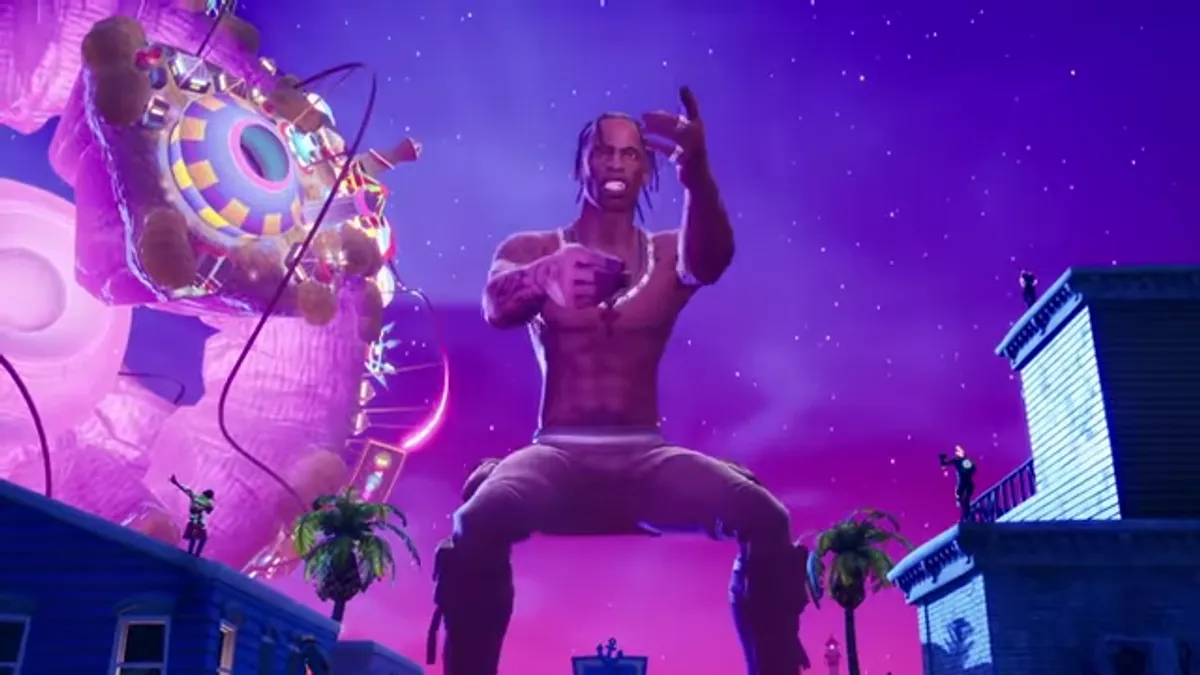
Anticipation for the fourth album starts to build, while the "Astroworld Festival" he organizes, after the 2020 edition was cancelled due to the pandemic, returns in 2021 with a schedule spread across several days. Tragically, what was meant to be an edition of grand celebration instead goes down in music history for the tragic incident of November 5th, when the crowd spiraled out of control, crushing together to the point of causing ten deaths and hundreds of injuries. The album finally arrives at the end of July 2023, accompanied by a film, "Circus Maximus", made for American cinemas.
To approach Utopia, consider its sheer scale: 19 tracks across nearly 74 minutes, with 19 guest vocalists and an even greater number of producers. Among the many worth mentioning are Bon Iver, Drake, Kanye West, James Blake, Future, Pharrell Williams, Guy-Manuel de Homem-Christo of Daft Punk, Beyoncé and Metro Boomin'. At the time of its release, Travis Scott is among the most-streamed artists around, and the fact that "Utopia" arrives five years after "Astroworld", which has racked up 22 platinum certifications worldwide, only ramps up the hype.
International critics remain lukewarm, either because the album mimics the grandeur of Kanye West to the point of looking like an imitation, or because, within the tracklist, his own personal contribution — his bars on the mic — don't measure up to this or that rapper of the past. These are fair criticisms, along with those aimed at the thinness of the lyrics, though they shouldn't overshadow the richness of sound the album flaunts across a tracklist that could use trimming but still goes down easily enough.
The opener, "Hyaena", built around an extended sample of Gentle Giant's "Proclamation" (1974), is stadium-sized hip-hop of a kind few can pull off, complete with a psychedelic-cosmic coda (a more liquid take on the Lil Yachty of "Let's Start Here"). "Modern Jam" will even satisfy fans of '80s sound, here recontextualized with unsettling echoes and menacing distortion, following the blueprint of Kanye West's "I Am A God" but also recalling some of the creative reinterpretations drawn from Pusha T.
And then there's "My Eyes", an auto-tune poem that only in its closing moments builds into a more typically trap beat. Even more curious is the tribal rhythm of "Sirens", built on a sample from Zambian (!) outfit Amanaz layered over a vocal sample from New England, exponents instead of the more progressive side of adult-oriented rock. "Circus Maximus" is stately and foursquare yet also torn open by screams and enriched by grandiose synths. "Parasail", featuring Yung Lean and Dave Chappelle, is emo-rap dissolved in a pool of psychedelia.
Many of the most high-profile collaborations, at least in commercial terms, turn out to be half or total disappointments: "Meltdown" with Drake isn't half as good as "Sicko Mode"; "Fe!n" with Playboi Carti is a deafening slab of trap that chases an identity by piling on vocal filters; the aforementioned "K-Pop", trying to please everyone, ends up colorless, a blender of trendy sounds. Better is "Delresto (Echoes)" with Beyoncé, a fusion of jungle sounds and robotic clangs.
Utopia contains a remarkable number of different sonic landscapes, assembled into a collective work in which Travis Scott doesn't always seem like the main protagonist, but rather an excellent curator, as was already the case on Astroworld. The production effort is truly impressive, but the tracklist is so long that the whole thing loses cohesion, weakening in the final third and in the longer tracks (why do "Skitzo" and "Telekinesis" go on for so long?). Overall, it's the hip-hop event album of the year, a sprawling work that winks at those looking for (relatively) experimental and crossover elements without turning its nose up at the odd hit, but like Nolan's "Tenet", on which Travis Scott collaborated, it's worth more for its sheer scale than for the depth of its message, which is in truth rather modest.
In 2025 JackBoys also return for a second, more substantial compilation: JackBoys 2. From 2019 to 2025 the label's evolution has been rather modest: no collective project, no identity, no shared imagery has emerged. This is particularly serious given the numbers the founder manages to move in the music business, backed by an enormous audience that makes him one of the most listened-to rappers in the world. Travis Scott, Don Toliver, Sheck Wes, SoFaygo, Chase B, Wallie The Sensei and Luxury Tax 50 return to pick up the threads of a conversation that, essentially, never really began.
Following the gigantism of Utopia, this time the compilation reaches twenty tracks, counting the bonus tracks, and piles up guest after guest along with a staggering forty-four (!) producers. Too often, though, this collective work flattens out into well-worn formulas that Travis Scott himself has been chewing over for years. Instead of a rainbow of colours, much of the compilation drifts into a confused succession of ideas, in the worst cases blended into a mush of hip-hop that's part southern, part trap. Really not enough.
Add OndaRock to your favorite sources on Google Discover. Don't miss our reviews, milestones and latest news straight in your feed.
This article is an English translation of the original Italian text, published on OndaRock.it. It was translated with the help of artificial intelligence, under the editorial responsibility of OndaRock's editor-in-chief, Claudio Fabretti.
| TRAVIS SCOTT | ||
| Owl Pharaoh (mixtape, Grand Hustle, 2013) | ||
| Days Before Rodeo (mixtape, Grand Hustle, 2014) | ||
| Rodeo (Grand Hustle/Epic, 2015) |  |
|
| Birds In The Trap Sing McKnight (Grand Hustel/Epic, 2016) | ||
| Astroworld (Cactus Jack et al., 2018) | |
|
| Utopia (Cactus Jack et al., 2023) | ||
| HUNCHO JACK | ||
| Huncho Jack, Jack Huncho (Cactus Jack et al., 2017) | ||
| JACKBOYS | ||
| JackBoys (Epic/Cactus Jack, 2019) | ||
| JackBoys 2 (Epic/Cactus Jack, 2025) |
 MilestoneRecommended by OR


