


One of the great names of the new school, James Todd Smith aka LL Cool J marked the history of hip-hop, transforming it forever
James Todd Smith isn't exactly the shy type, and he chose to become famous as LL Cool J, short for Ladies Love Cool James — talk about restraint. Then again, a less brash choice would have been out of step with what he put out over the course of his rap career, since even when he made his entrance onto the hip-hop scene he opted for a bold, unapologetic vocabulary. In that garish, immodest nickname you can already read his stylistic signature: that adrenaline-fuelled, street-hardened musical language, self-assured to the point of arrogance, pompously direct and brazenly shameless, which made James Todd Smith one of the greatest rappers of that new school that LL Cool J himself helped christen alongside Run-DMC. But that over-the-top nickname also carries the other side of the story, the sly, wisecracking grin, the cartoonish side of braggadocio, which for this ladies' man becomes a self-glorification so relentless it occasionally borders on stand-up comedy.
This split soul, caught between aggression and irony, between the genuine and the theatrical, places LL Cool J's early albums at the crossroads between hip-hop's past and its imminent future. Well emancipated from the school of founders like Afrika Bambaataa and Grandmaster Flash, with their disco echoes, synths, live bands and the central role of the deejay over the emcee, James Todd Smith is nonetheless not the chronicler of first-hand ghetto experience either — a role instead filled by the likes of Nas, Notorious B.I.G. and Tupac in the following decade. In the first, exceptional albums of his career — which would go on to span more than 35 years — we can see some more traditional elements merge gloriously with solutions of remarkable originality, without either ever overpowering the other. Because of this hybrid nature, listening to that first trio of albums today feels like looking at snapshots of a genre caught in the throes of mutation, an organism in full adolescence, eager to break free from its forebears and urgently searching for an identity of its own.
Put less poetically, LL Cool J's first three albums can sound rather dated if heard today, especially on a first listen, but placed within the genre's evolutionary flow they come across instead as precious frames of a moment of great change. Radio (1985), Bigger And Deffer (1987), Walking With A Panther (1989) and Mama Said Knock You Out (1990) each serve as a bridge between two very different generations, among the most distant from one another in the whole history of hip-hop's many incarnations.
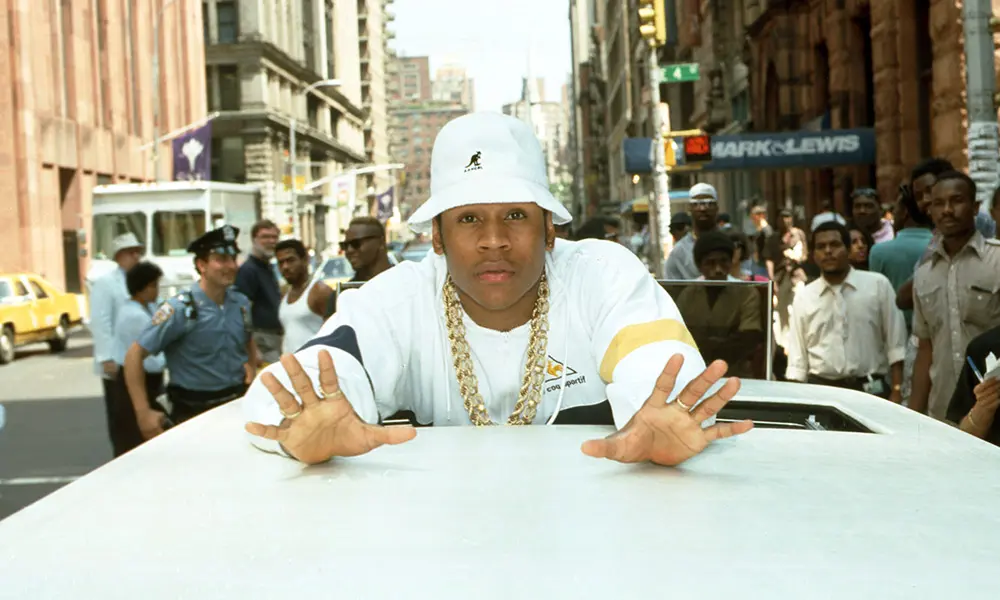
LL Cool J's first great innovation is what in technical terms is called delivery, the way a rapper handles his verses, the spirit with which they're rattled off one after another. Stripped of jargon, it's the combination of tone, timbre and volume a rapper uses. Before the arrival of the messiah of flow, Rakim, very little had been done to develop the rhythmic and metrical complexity of hip-hop. Later on — we might venture from "Illmatic" (1994) onward — flow would become the most studied and distinctive trait of rappers, but in the mid-Eighties few rappers worried much about the complexity of their own flow.
As for delivery, in the early scene there was very little room in the arrangements to imagine wide swings in volume and tone, which would easily have made the lyrics harder to follow. Back when hip-hop was music for neighbourhood block parties, making the lyrics in any way less intelligible or chantable would have seemed like sheer self-sabotage. Even once the message began to matter, tracks were still built by the deejays rather than around the emcee's verses. For these reasons, when Radio (1985) came out, the way LL Cool J delivered his verses to listeners' eardrums sounded revolutionary — loud and clear, hammered out with vehemence and completely in command of the whole arrangement: it's a vibrant voice that holds nothing back, full of roars and scratches, keeping the listener on edge by constantly pulling attention back to itself. Like the nickname James Todd Smith chose for himself, his delivery is egocentric and immodest, and the listener is at its mercy for the album's entire duration. The rest of the arrangement is built around the rapper's powerful, virile voice. More than that, it's practically all just a pretext to hear the young James's next over-the-top line, his next boast, his next killer one-liner.
The album's production is a story unto itself, one that has only grown into legend over the years. The name Rick Rubin alone would be enough to make anyone who's ever read a bit about music sit up and take notice. Rubin is a pivotal figure for a certain strand of hip-hop, and we're talking about hugely important names such as Beastie Boys, Public Enemy, Ghetto Boys and Run-DMC. But Rubin is also one of the most influential names in pop from the Eighties to today, with a production output spanning, in the broadest sense, all of popular music of the last few decades: his résumé includes, among others, Adele, Audioslave, Linkin Park, AC/DC, Kanye West, Johnny Cash, Tom Petty, Justin Timberlake, Metallica, Slayer, System of A Down, Rage Against The Machine, Red Hot Chili Peppers, The Strokes, Limp Bizkit, Kendrick Lamar and Slipknot. In 2007 MTV crowned him "the most important producer of the last 20 years," and Time named him one of the 100 most influential people in the world.
Well, producing Radio was none other than him: a young and inexperienced Frederick Jay "Rick" Rubin, with a brief punk-rock past behind him and a burning new passion for New York hip-hop. He had his own label, Def Jam, which only became a proper company once Russell Simmons came aboard as promoter-manager. For their first release they set their sights on a then-sixteen-year-old born in Queens in '68, who was making amateur tapes on a $2,000 home setup and sending demos to anyone who might be even vaguely interested. It was a perfect match: a young talent was exactly what was needed to launch the new label in the best possible way.
In 1984 came the single "I Need A Beat," and it's the kind that shakes up a whole scene: bare and raw, percussive and jagged, simple and direct, it's a straight punch to the face written by an exhilarated, exhilarating teenager. The first shows were a triumph, and the record sold over a hundred thousand copies. It was the turning point for Def Jam, alongside the explosive "Rock Hard" by the Beastie Boys, also from that same year. The production work happened by trial and error, since Rubin's experience was still quite limited, with the rapper flanked by Jay Philbot, aka deejay Cut Creator, who had the humility to step back and leave the spotlight to the unstoppable James Todd Smith. To sum up the outcome of that production process in a single phrase, it's enough to quote what's printed on the record itself: instead of the usual "produced by," we find a far more fitting "reduced by." That's because Rick Rubin's minimal, raw, deafening approach, backed by Cut Creator's well-timed and often explosive interjections, is a memorable example of hip-hop stripped to the bone, a thrilling rhythmic journey charged by LL Cool J's cocky flourishes.
What's more, Rubin's rock background must have helped shape a style close, in attitude, to the immediacy and urgency of punk, building a bridge between rap and rock whose effects would keep reverberating throughout the Nineties. Considering that Rubin himself would go on to produce "Raising Hell" (1986) by Run-DMC and "Licensed To Ill" (1986) by the Beastie Boys just a few months later, it's easier still to appreciate the impact that this skeletal sound — one that flirts easily with rock while remaining gloriously hip-hop — had on the music of the period.
Radio is therefore a watershed moment, one that would go on to unleash a new way of making hip-hop, destined to have major repercussions on the scene and well beyond its own microcosm.
Then, of course, there are the songs on Radio: a parade of classics that still hit with their full force today, without skimping on sheer fun. There are eleven tracks that grab the listener and hold them prisoner for 47 minutes, leaving them dazed and craving another listen. "I Can't Live Without My Radio," the lead single and the stylistic manifesto of the album, is an anthem to the boombox, also known as the ghetto blaster, the portable radio-cassette player that was a symbol of hip-hop culture of the time and is prominently featured, front and center, on the cover (it's a JVC RC-M90, to be precise). The rapper turns it into a fetish object, a tool he can't live without and can't party without, proclaiming his favorite music to the whole neighborhood. The beat is square, distorted and raw, while Cut Creator's contributions are limited to a few effective touches. There are plenty of memorable lines, but here we'll just quote the opening of the first verse:
My radio, believe me, I like it loud
I’m the man with the box that can rock the crowd
Walkin’ down the street, to the hardcore beat
While my JVC vibrates the concrete
I’m sorry if you can’t understand
But I need a radio inside my hand
Don’t mean to offend other citizens
But I kick my volume way past 10
My story is rough, my neighbourhood is tough
But I still sport gold, and I’m out to crush
My name is Cool J, I devastate the show
But I couldn’t survive without my radio
(da “I Can’t Live Without My Radio”)
A powerful statement of intent, this opener is one of those tracks that has gone down in hip-hop history, thanks to an expressive force that was unprecedented at the time. Next comes "You Can't Dance," which mocks the clumsiest b-boys on the dance floor, over a slightly more buoyant beat. Here too, it's a triumph of arrogant, exhilarating lines, such as:
You dance like a fat old lady
Not sayin’ that fat old ladies ain’t nice
But every time you try to get one move right
The old lady done did it twice
You can’t dance!
(da “You Can’t Dance”)
We move toward comedy-rap with "Dear Yvette," a track that would fit right in on a Slick Rick album. It's a song dedicated to a girl who's decidedly generous with her sexuality, whom LL Cool J tears apart line after line, in a roasting that leaves you breathless and draws more than a few cynical laughs ("Like Santa Claus said, you're a ho-ho-ho"). The fourth track on the album, "I Can Give You More," is another landmark song, one of the very first attempts at a hip-hop ballad with a romantic-erotic theme, which became the blueprint for a future, and far more famous, LL Cool J ballad, "I Need Love." The powerhouse "Rock The Bells," the second single, is on the same level as the opening track, an aggressive anthem of street hip-hop that earns its place in history right from the intro:
L.L. Cool J. is hard as hell
Battle anybody I don't care who you tell
I excel, they all fell
I'm gonna crack shells, Double-L must rock the bells
(the intro of "Rock The Bells")
In the rest of the track, we find other lines typical of his style: "I'm not a virgin so I know I'll make Madonna scream" or wordplay like "You bring the wood pecker, I'll bring the wood." Next up is "I Need A Beat," in a remixed and very spectacular version, built around loops and effects. Also taken down are the braggarts who pretend to be successful rappers in "That's A Lie," a track that contains the line "You lied about the lies that you lied about" and which was even used by CNN to attack Donald Trump. Among the other lines worth quoting — and there would be dozens if we wanted to be thorough — at least the couplet "I disintegrate rappers I can and I could/The great Edgar Allen Poe couldn't write this good," from the third single "You'll Rock," deserves a mention.
Radio is one of the first major commercial successes in hip-hop, and Def Jam's first hit: it sold half a million copies in five months, topping a million by 1988. The debut reached number 46 on the Billboard 200, doing even better on the equivalent R&B/hip-hop chart, where it reached number 6. It would return to that chart at the end of '85, staying there for 47 weeks, and it spent 38 weeks on the pop chart. Critics also recognized the album's classic status, to the point that it's cited both by The Source among the greatest rap albums of all time and by the far more rock-oriented Rolling Stone in its "The Essential 200 Rock Records" list.
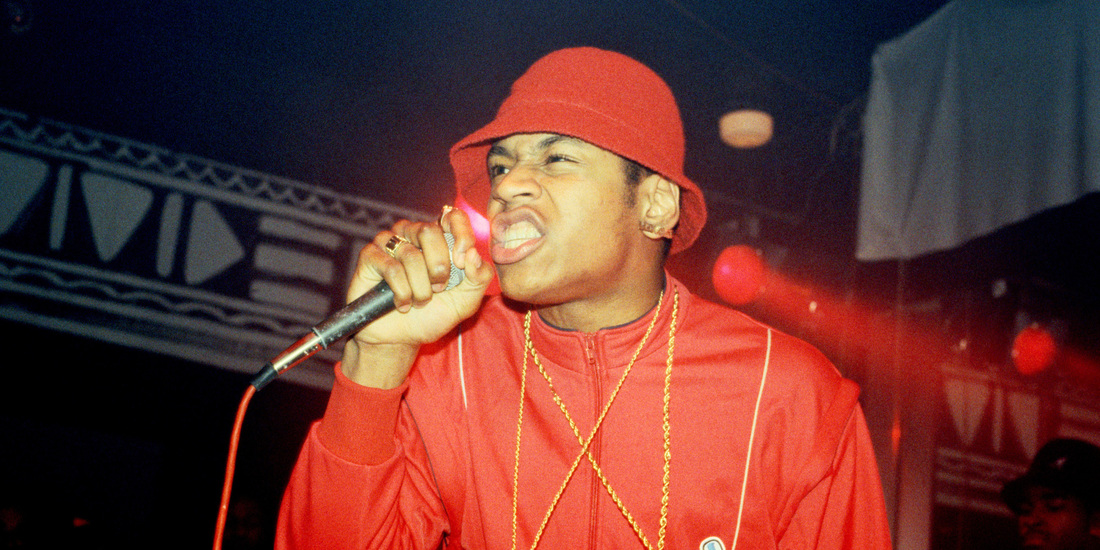
The second album, Bigger And Deffer (1987), is remembered above all for the aforementioned ballad "I Need Love," where LL Cool J not only perfects the idea of a hip-hop ballad but also shows he has broadened the range of his rapping, now more inclined toward sensual, supple nuances.
The other classic is "I'm Bad," a blast of street hip-hop that opens with a legendary line like "No rapper can rap quite like I can," the ideal summary of the whole rap persona at the heart of LL Cool J's early albums.
Another track worth remembering is "Go Cut Creator," dedicated to his longtime DJ and packed with rock references. Sound-wise, the album, produced by the L.A. Posse and DJ Pooh, sounds richer and more varied than the debut, closer to the multiform collage approach of Public Enemy on tracks like "Ahh, Let's Get Ill," while still honoring that direct, adrenaline-fueled communicative model that made Radio a piece of history.
Included among The Source's 100 greatest rap albums of all time, though with a less enthusiastic critical reception, it's a far less explosive work than the debut but an even bigger commercial success: in the US alone it sold more than two million copies, reaching number one on the Billboard R&B/hip-hop chart and peaking at number 3 on the Billboard 200, while also doing well in Germany, New Zealand, the UK and the Netherlands.
For the third album, Walking With A Panther (1989), LL Cool J brought in the Public Enemy production team, the Bomb Squad, directly. With only Dwayne Simon left from the L.A. Posse, DJ Cut Creator and Rick Rubin returned to help put the album together. It's a turning point, a watershed moment for his career: full of romantic ballads, the record marks a shift away from the monolithic style of old toward a softer, more flirtatious strain of hip-hop, increasingly colorful in its arrangements and flirting with the pop and rock worlds.
As many as five singles were pulled from it: among them, "Going Back To Cali" stands out as one of the essential tracks of his career, blending rap-rock and jazz and standing alongside Run DMC and Aerosmith's "Walk This Way" (1986); the sultry "I'm That Type Of Guy" is a tribal dance through a percussive jungle, and the hilarious "Big Ole Butt" proves the old charmer still has what it takes to make conquests.
While longtime fans turned up their noses at the mainstream compromise, the album still went platinum in the United States, awarded for a million copies sold.
Before closing out the most important period of his career, there's room for one last proverbial blow with Mama Said Knock You Out (1990), which recaptures all the explosive energy of the debut and reminds listeners that James Todd Smith is still ready to assert himself on the scene, without a trace of hesitation. The participation of veteran Marley Marl is a nod to the more conservative fans, a way of winning them back and regaining their respect. The gorgeous funk-rap of "The Boomin' System" reveals an elegance in spitting rhymes never heard before in his discography, while "Around The Way Girl" refines his old salacious declarations, blending them with the romantic ballads that had irritated some fans.
LL Cool J also throws himself into rapid-fire rapping on "Mr. Good Bar," another showcase for his charming ego, while "Murdergram" goes back to challenging Public Enemy on their own turf, and "Illegal Search" returns to the colors of comedy-rap.
The main course is the title track, a battle cry delivered with yet another example of a decidedly hardcore flow:
Don’t call it a comeback, I been here for years
Rocking my peers and putting suckas in fear
Making the tears rain down like a monsoon
Listen to the bass go boom
(da “Mama Said Knock You Out”)
Certified double platinum in the United States, the album ignites critical enthusiasm and even earns a Grammy Award for Best Rap Solo Performance thanks to the title track.
It's dizzying to think that at just 22 years old LL Cool J had already achieved so much, both artistically and commercially: and to think it had all started with home recordings barely six years earlier. With hindsight, though, the album also marks the beginning of an unstoppable decline, one that leads him to imitate the new generation in increasingly dispiriting fashion for a hip-hop giant.
These clumsy attempts at reinvention begin with 14 Shots To The Dome (1993), clearly inspired by West Coast gangsta rap. The stylistic closeness to Ice Cube, at the time at the peak of his powers and riding high on two exceptional albums like "AmeriKKKa's Most Wanted" (1990) and "Death Certificate" (1991), greatly diminishes the album's distinctiveness. Elsewhere, he's imitating the hazy tracks of Cypress Hill, the kind already heard on "Cypress Hill" (1991) and "Black Sunday" (1993).
Derivative as it is, though, LL Cool J remains a wizard on the mic and adapts effortlessly to the new trend, as shown by "How I'm Coming", "Buckin' Em Down" and another fun moment like "Pink Cookies In a Plastic Bag Getting Crushed By Buildings", where he good-naturedly pokes fun at the hip-hop scene by namechecking 30 different artists.
Reggae touches are among the elements that liven up the tracklist, with "Diggy Down" expressing a style that seems to point toward a possible Jamaica-bound future. The album closes with the furious "Crossroads", which seems to be the only track able to carry the old roar over into a gangsta-rap context.
The album, which irritates fans with the way it courts the mainstream, goes gold, marking a significant step down from its predecessor.
Rather than rethinking his artistic direction, as he had done with the fourth album, the following Mr. Smith (1995) is far more pandering, soft and radio-friendly than anything he'd released before. "Make It Hot" is a statement of intent, an overwrought product embracing the polished sound dominating the charts. It's no surprise to find Trackmasters among the production team, the duo behind hits for Nas, R. Kelly, Mary J. Blige, Will Smith, Jay-Z, Jennifer Lopez, Mariah Carey, The Notorious B.I.G. and 50 Cent. "Hey Lover" is another polished ballad, featuring Boyz II Men, that wins a Grammy and sells a million copies, pushing the album past double platinum. He's a top-tier talent struggling to stay current, though, no longer the explosive rapper of years past. And, good grief, even for a hip-hop album there are far too many references to his explosive sexuality.
That the first and most important period of his career had ended, giving way to that of the rap star and aspiring sex symbol, as well as an increasingly sought-after actor, seems confirmed by All World: Greatest Hits (1996), a collection running from the brilliant, incendiary early days to the accommodating, formulaic chart singles.
Produced by another successful hip-hop giant, Sean "Puffy" Combs, Phenomenon (1997) is a work split between pandering numbers and ghosts of the street hip-hop of old. With originality dispersed and the unmatched energy of the past shelved, all that's left is sheer craft. It seems incredible that the rapper lent to the R&B of "Candy" is the same one behind Radio. Despite this writer's reservations, the album sells a million copies.
G.O.A.T. (Greatest Of All Time) (2000), whose title recalls the swagger of fifteen years earlier, relies more and more on guests to liven up the tracks. The trio of guests on "Forget About It" — DMX, Method Man and Redman — is the kind to make any fan's mouth water, but the lineup of Snoop Dogg, Xzibit and Jayo Felony on "You Can't **** With Me" also deserves attention.
The title track is among the best moments on a bloated, sprawling album that by now survives on the tricks of an old rap fox. It's yet another platinum record for the rapper, as well as his first number one on the Billboard 200.
For his ninth album, called 10 (2002) because he also counts the 1996 greatest hits compilation, comes the single with Amerie, "Paradise", a strong chart performer, along with production from The Neptunes, who once again polish up the now-mature New York rapper and send another romantic track, "Luv U Better", into the upper reaches of the charts. There's even a song dedicated to his grandmother.
The DEFinition (2004), produced mainly by Timbaland, opens with the danceable assault of "Headsprung" and veers toward the southern scene on tracks like "Apple Cobbler". There's a fresh danceable energy in moments like "Feel The Beat", alongside the by-now predictable romantic ballads that have made him a chart regular. These last two albums nonetheless mark a significant sales dip, hovering around 500,000 copies: too little for a rap celebrity of his stature.
For the album bearing his own name, Todd Smith (2006), he surrounds himself with plenty of guests, including R&B celebrities like Jennifer Lopez, Pharrell and Mary J. Blige. Production, handled by Lyfe Jennings, the aforementioned Pharrell, and old friend Trackmasters, guarantees an on-trend sound, but can't work miracles.
Having scored yet another gold record, but with international critics growing ever more skeptical about the worth of his music, LL Cool J keeps churning out albums every two years, and in 2008 comes Exit 13, his final work for Def Jam and a substantial commercial failure for a rap star of his standing. The large production team and numerous guests desperately try to keep him current, some of the old energy even returns and there's no shortage of fun, but there's really no reason to pick this uneven, overcrowded album over one of the classics in his discography. At the very least, "Feel My Heart Beat" features a guest spot from 50 Cent, who wouldn't write an album like Radio even by the end of the millennium, proving that LL's career also influenced the man behind one of the decade's bestsellers, "Get Rich Or Die Tryin'", a 12-million-selling album that owes more than a little to Todd Smith.
After the compilation All World 2 (2009), which partly rehashes the first volume while watering it down with newer hits, his career seems to hit a dead end. When he returns with Authentic (2013), once again surrounded by guests, even guitar hero Eddie Van Halen and funk giant Bootsy Collins, he seems to have lost touch with the scene and simply sounds dated. The tragicomic thing is that many of the guest stars are themselves far removed from their most creative periods, and it shows.
Since October 2014 fans have been waiting for the follow-up, album number 14: it was initially supposed to be called G.O.A.T. 2, but the project is shelved soon after. In 2016 the rapper gets a star on the "Walk Of Fame", quits social media and then reverses course shortly after, retreating back into the shadows, only to resurface in the news in 2017, when he becomes the first rapper to receive the "Kennedy Center Honors", awarded to those who have distinguished themselves through their contribution to art and culture. In 2021 he's inducted into the Rock And Roll Hall Of Fame.

In September 2019, LL Cool J announced he'd re-signed with Def Jam, teasing a new album that, who knows, might never even arrive. In 2024 it finally does: it's called The FORCE (an acronym for "Frequencies Of Real Creative Energy"), and it finds a 56-year-old rapper behind the mic still managing to sound credible. A lot of the credit goes to the choice of blending Eighties and Nineties sounds with a handful of more contemporary touches, plus a run of guests who drop by to pay tribute to a giant of the scene: from Snoop Dogg to Nas, from Busta Rhymes to Eminem. The record is made especially enjoyable and cohesive by Q-Tip's impeccable production, which scatters electro, funk, rock and above all jazz references through a hip-hop fabric that isn't afraid to draw on noise and lo-fi grit to turn more aggressive and powerful.
The FORCE doesn't betray LL Cool J's history, but it avoids the embarrassment of playing young at all costs: this isn't a fiftysomething aping the kids, but a big bad motherfucker who's come back to prove he still has something to say behind the mic. No trap, no reggaeton, and certainly no single built for the international mainstream — instead, the drive to reconnect with hip-hop diehards and get known by anyone who, back in the Eighties and Nineties, either wasn't around yet or had their mind on other things. To pull this off, he delivers fourteen tracks in barely 44 minutes, released on his own label and distributed by the storied Def Jam, forty years after his debut single "I Need A Beat" (1984).
Not since Mama Said Knock You Out (1990) has Cool James sounded this sharp, a fact that makes The FORCE an unexpected and welcome surprise for hip-hop lovers of every generation.
Add OndaRock to your favorite sources on Google Discover. Don't miss our reviews, milestones and latest news straight in your feed.
This article is an English translation of the original Italian text, published on OndaRock.it. It was translated with the help of artificial intelligence, under the editorial responsibility of OndaRock's editor-in-chief, Claudio Fabretti.
| Radio (Def Jam, 1985) |  |
|
| Bigger And Deffer (Def Jam, 1987) | |
|
| Walking With A Panther (Def Jam, 1989) | ||
| Mama Said Knock You Out (Def Jam, 1990) | |
|
| 14 Shots To The Dome (Def Jam, 1993) | ||
| Mr. Smith (Def Jam, 1995) | ||
| All World (compilation, Def Jam, 1996) | ||
| Phenomenon (Def Jam, 1997) | ||
| G.O.A.T. (Greatest Of All Time) (Def Jam, 2000) | ||
| 10 (Def Jam, 2002) | ||
| The DEFinition (Def Jam, 2004) | ||
| Todd Smith (Def Jam, 2006) | ||
| Exit 13 (Def Jam, 2008) | ||
| All World 2 (compilation, Def Jam, 2009) | ||
| Authentic (Def Jam, 2013) | ||
| The FORCE (LL Cool J/Def Jam, 2024) | |
 MilestoneRecommended by OR


