


Unanimously celebrated by critics and audiences alike, he has become more of a legend than a mere rapper. We retrace the turbulent life and tragic death of this kid from the ghetto, also outlining his invaluable legacy on the music of the turn of the millennium
When I die, fuck it, I wanna go to hell
‘Cause I’m a piece of shit, it ain’t hard to fuckin’ tell
(from "Suicidal Thoughts")
On May 21, 1972, at St. Mary's Hospital in Brooklyn, the only son of two Jamaican immigrants is born. His name is Christopher George Latore Wallace, and he gets to enjoy both his parents for barely two years: while his mother Voletta Wallace, a teacher, stays by his side, his father Selwyn George Latore, a welder with a passion for politics, abandons them in a state of financial hardship. Voletta ends up working two jobs, but at least Christopher gives her no trouble at school. Quite the opposite: he's a little genius who wins numerous awards in his early school years, becoming one of the most talked-about kids at "All Saints Middle School". The fact that he's already decidedly overweight at age 10 earns him the nickname that will follow him for the rest of his life: "Big", a bit ridiculous for a schoolboy but perfect for the man he would become, a six-foot-three giant weighing around 330 pounds.
At just 12 years old, Christopher starts dealing drugs, but his mother is too busy working to notice. He switches high schools, ending up in the same one as DMX, Jay-Z and Busta Rhymes, and around the same time he starts rapping, on the street and in the early groups he's part of, the Old Gold Brothers and the Techniques. The balance, however, is precarious: he remains a good student, but the lure of crime wins him over at 17, when he drops out of school. In 1989 he's arrested for weapons possession and sentenced to 5 years' probation, which he violates in 1990. In 1991 he's caught in possession of crack, and gets 9 months in prison.
When he gets out, he releases his demo, Microphone Murderer, and picks the nickname Biggie Smalls, referencing the character from the all-Black-cast comedy "Let's Do It Again" (1975), by Sidney Poitier. It's meant to be a demo released just for fun, but his talent is palpable and catches the attention of several industry insiders, chief among them Sean "Puffy" Combs, who is destined to become one of the central figures in his life. He officially debuts on Heavy D & The Boyz's single "A Buncha Niggas" (1993), and naturally Christopher becomes one of the artists on Combs's new label, Bad Boy Records. In hindsight, this is the turning point.
Biggie Smalls is destined to become one of the most important artists on the label and in all of 1990s hip-hop. Founded in late 1993, the label makes its name with Craig Mack's "Flava In Ya Ear" and above all with his debut album "Project Funk Da World" (1994). Shortly after, as we'll see, it will become one of the most famous labels in the world thanks to Christopher's first successes.
In late '93 Biggie Smalls becomes a father, even though his relationship with his girlfriend at the time, T'yanna, has ended. Combs forces him out of the drug game, promoting his artistic rise through a feature on Mary J. Blige's "Real Love" (#7 on the Billboard Hot 100). It seems he's not the first person who wants to become famous as Biggie Smalls, so he opts for a re-naming that will make him unquestionably unique: The Notorious B.I.G. For his most devoted fans, though, he will remain, unmistakably, "Biggie" or at most "Biggie Smalls". Various guest appearances on other singles keep the hype alive, in particular the remix of "Flava In Ya Ear" with LL Cool J and Busta Rhymes, which reaches #9 on the Hot 100.
In August '94 Christopher's life starts to resemble a dream come true: he marries r&b singer Faith Evans and scores his first solo hit, the single "Juicy/Unbelievable", which reaches #27 and promotes his highly anticipated solo debut.
"Juicy" is one of the most important tracks in '90s hip-hop. It describes the arc of someone born into poverty who becomes rich through music, following a template that will recur endlessly in hip-hop in the decades to come, and that is still served up today by people who've only seen ghetto life in the movies. The lyrics are a manifesto of Biggie's persona, his epic of social redemption and good times, of drama and carefree joy, of nostalgia and optimism. Being the track chosen to introduce his debut album, it's a true statement of intent for his entire career, and it opens with a witty dedication to the teachers who didn't believe in Christopher's potential.
Yeah, this album is dedicated
To all the teachers that told me I’d never amount to nothin’ to all the people that lived above the buildings that I was hustlin’ in front of
Called the police on me when I was just tryin’ to make some money to feed my daughter (it’s all good)
And all the niggas in the struggle
You know what I’m sayin’? It’s all good, baby baby
(from "Juicy")
The first verse is a trip back in time, to when hip-hop still wasn't taken very seriously, not even in the United States. It's a parade of references to an era that was already gone by the time the single came out, and which today is simply legendary. "Word Up!" was the only magazine consistently covering hip-hop in the Eighties, when Salt-n-Pepa and Jamaican rapper Heavy D were all the rage. "Rap Attack" was the first hip-hop show to air on national radio. Biggie recalls those childhood days with a classic "rosy retrospective," fantasizing about the past and playing up its serenity and positivity, remembering his first joints and the clothes of early adolescence, and even the fake John Wayne who climbed the charts with "Rappin' Duke," back when the genre's musical credibility was roughly on par with a campaign promise two days before an election.
This parade of sweet memories is contrasted, however, with the poverty of his childhood ("Remember when I used to eat sardines for dinner"), destined nonetheless to be redeemed by the success that was taking shape right around that time.
The second verse has a similar structure, setting the past as a "common thief" against his present comfort built on "Moët and Alizé," brands very much in vogue among music-world VIPs of the era. Women arrived too, along with the success, the money, the peace of mind, but our man doesn't forget the hard youth and the racial inequalities that success, perhaps, can at least soften.
After these verses, as effective as they are communicative, comes a third verse that's even more nostalgic and touching: the image of a poor kid, unable to celebrate Christmas or birthdays, who can finally surround himself with gadgets, luxury cars and comforts, after a time when the family worried about how to pay the bills. How can you not love a rapper whose first concern is making sure his mother Voletta gets a luxury car too, after so many sacrifices? And to think that behind the microphone is a 22-year-old kid...
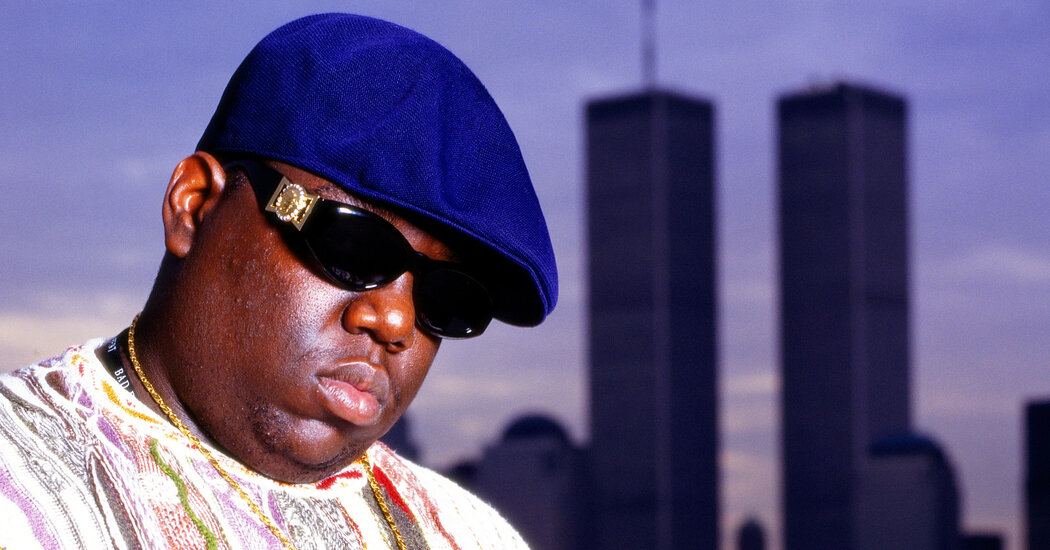
Over time, "Juicy" would come to be regarded as one of the greatest hip-hop songs ever, with its geometric funk and intricate rhythmic interlocking. The album that contains it, Ready To Die (1994), is in turn one of the genre's essential works. Produced by a team that includes the omnipresent Sean "Puffy" Combs alongside Easy Mo Bee, Chucky Thompson, DJ Premier and Lord Finesse, it tells the story of Christopher becoming "Biggie" with an almost cinematic sensibility. It remains the only album the rapper released in his lifetime, as we'll see in more detail later.
Reaching #15 on the Billboard 200, it was driven by three singles: the aforementioned "Juicy," but also the signature song "Big Poppa" (#6 on the Hot 100) and "One More Chance." In 2018 the Recording Industry Association of America (RIAA) certified the album six-times platinum, a testament to its huge commercial success. Rolling Stone placed the album on its list of the 500 greatest albums of all time, at number 134: a recognition worth double if we consider how few hip-hop albums make the list, and proof of the respect the record commands in the wider world of popular music.
Musically, it's a one-man show for Christopher, with his supple, precise rhymes. The flow is varied but never obscure, the lyrics direct but rarely trite. His ability to conjure an entire social reality through a handful of details and plain language would be matched by very few other hip-hop albums. There's a great abundance of references to violence, crime and drugs, and a sinister, even funereal aura hangs over some moments, but while all this might seem like just another case of romanticizing illegality, as so many films have taught us to expect, Biggie Smalls counterbalances these references with an emotional honesty that feels sincere and deeply communicative.
This isn't some cold, cynical, ice-eyed dealer, but a heavyset kid who had to scrape and struggle just to keep from drowning in the mire American society has chosen as a prison for young Black men. In this story, hip-hop music is an escape strategy, a tool of redemption and freedom unavailable in other contexts: Ready To Die, like the other hip-hop masterpiece of '94, Nas's "Illmatic," reminds us that making hip-hop in the United States, as a Black American born poor and surrounded by crime and drugs, is not exactly the same as imitating it in Milan or Paris or Berlin. The triumph is all the more epic when it belongs to someone discriminated against for the color of his skin and the place of his birth, in the very cradle of global capitalism.
My shit is deep, deeper than my grave, G
I’m ready to die and nobody can save me
Fuck the world, fuck my moms and my girl
My life is played out like a Jheri curl, I'm ready to die!
(from "Ready To Die")
After the intro, "Things Done Changed" tells the story of life in the ghetto, before the more aggressive "Gimme The Loot" steals the show with its spectacular two-voice dialogue between young Biggie and the adult Biggie: hearing him play two versions of himself is a must-hear performance, Jamaican accent included.
The sultrier “Machine Gun Funk”, Biggie's favorite song, is one of the most iconic funk tracks of the period, including its obsessive sample in the chorus, which pledges loyalty to music until death. It's the Grim Reaper herself who takes centre stage in the masterpiece “Ready To Die”, one of those songs that sends chills down your spine when heard with hindsight.
The life he wants to leave behind is one of crime, drugs and desperation, because no one could have imagined, at the height of his national success in 1994, that Biggie Small's arc was destined to come to such an abrupt end. The violence and anger with which he describes the hardship of ghetto life is more a cry of pain than criminal bravado.
On a technical level, the track contains some of Christopher's most elaborate verses, such as the tricolon - the rhetorical figure built on rhythmic-syntactic equivalence between three elements - of “Mic ripper, girl stripper, the Henny sipper”. It closes with a goodnight prayer recited by Sean Combs, carrying an unmistakably funereal subtext. After his untimely death, the track would take on a meaning as questionable from a philological standpoint as it is sadly prophetic.
The duet with Method Man from Wu-Tang Clan, the only collaboration on an otherwise solo showcase, is called “The What”, another moment of sultry sounds, which precedes the already discussed “Juicy” and, above all, “Everyday Struggle”, the album's ideal synthesis with its nostalgic, funky, geometric sound - a hypnotic nursery rhyme in which further moments of technical rapping are delivered without sacrificing any catchiness.
“Big Poppa”, one of Christopher's signature tracks, is a perfect example of the balance between melody, rhythm and message that he achieves with such ease. “Respect” shuffles the deck with a small guest spot from Jamaican singer Diana King and an electric guitar loop. It closes once again on a dramatic note, with the letter of “Suicidal Thoughts”, a track that sounds grotesque in light of the rapper's untimely death.
I love it when you call me Big Poppa
Throw your hands in the air if you’s a true player
I love it when you call me Big Poppa
To the honies getting money
Playing niggas like dummies
I love it when you call me Big Poppa
If you got a gun up in your waist
Please don’t shoot up the place!
‘Cause I see some ladies tonight
That should be having my baby, baby
(from “Big Poppa”)
A pivotal album for the rebirth of East-Coast hip-hop, it was promoted by Biggie by handing out copies to passers-by outside his own house. Listened to today, it carries a bitter sadness, but above all it proves to be a record of vivid contrasts: real and cinematic; cynical and emotional; immediate and technical; nostalgic and forward-looking. At the time, no one could have imagined it would become the epitaph of a career destined for worldwide success.
In the evolution of hip-hop, Ready To Die is one of the last works belonging to the so-called golden age, that period of creativity and expansion the genre experienced from the mid-Eighties through roughly the following decade. It was precisely its success, both critical and above all commercial, that would turn this kind of music into the ideal battering ram for breaking down pop's doors, with unprecedented effectiveness.

Having become friends with Tupac Shakur, the West Coast rap star, as well as with basketball star Shaquille O'Neal, Biggie Smalls also founded the group Junior M.A.F.I.A., which went gold with “Conspiracy” thanks to the singles “Player's Anthem” and “Get Money”. This project, a handful of collaborations, and the momentum of Ready To Die turned the former ghetto kid into the best-selling male artist in the US r'n'b and pop world that year. In 1995 he landed on the cover of The Source, which declared for him: “The King of New York Takes Over”. He seemed unstoppable: also named rap artist of the year by Billboard, he was the new musical personality everyone was talking about and one of the reference figures for hip-hop on the Atlantic's other side, a scene that was actually in crisis at the time. Unfortunately, the criminal life he had hoped to leave behind with the start of his music career kept haunting him, and it would ultimately exact its terrible price.
The notorious feud between the two coasts, Pacific and Atlantic, is the most famous in hip-hop history, and it would go on to shock music fans and the general public alike. What started out as simple insults, traded through songs or statements, would later take a dramatic turn. Let's briefly recap what happened, starting from 1993...
There was no love lost between Sean Combs' Bad Boy Records and Dr. Dre's Death Row Records, locked in a battle for dominance over the thriving hip-hop scene of the era. Since both labels were hugely influential, with heavyweight artists under contract, this split the audience into two camps, and what began as a corporate and musical spat turned first into tension and then, tragically, into a war marked by deaths and casualties.
New York had given birth to hip-hop the previous decade, but N.W.A. had shifted the spotlight to California, and Dr. Dre could now rival the East Coast veterans with rap stars like Snoop Dogg, riding the success of "Doggystyle", and Tupac Shakur, destined for global stardom with "Me Against The World" (1995) and "All Eyez on Me" (1996). Tupac himself nearly lost his life on November 30, '94, when he was shot five times at a New York recording studio. Biggie, by then his former friend, was accused of having known in advance and failing to warn Tupac, who could have been saved from near-certain death.
From here, things spiral out of control: Dr. Dre's partner Suge Knight mocks Sean Combs at public events; in September 1995 a friend of Knight's is shot, and the Bad Boy Records camp is the prime suspect; in December, Snoop Dogg's camper is riddled with bullets, though luckily no one is hurt. In 1995 Notorious B.I.G. releases "Who Shot Ya?", pouring more fuel on the fire. In June 1996, Tupac's "Hit 'Em Up" threatens his rivals with death and claims he slept with Biggie's wife, Faith Evans. Meanwhile, many other names get dragged in, including Jay-Z. In March 1996, Bad Boy and Death Row come within a hair's breadth of a shootout in a parking lot. In September, Tupac is killed in Las Vegas, possibly by a Compton gang, while in March 1997 it's Christopher's turn: four bullets fired from a moving car in Los Angeles, one of them fatal.
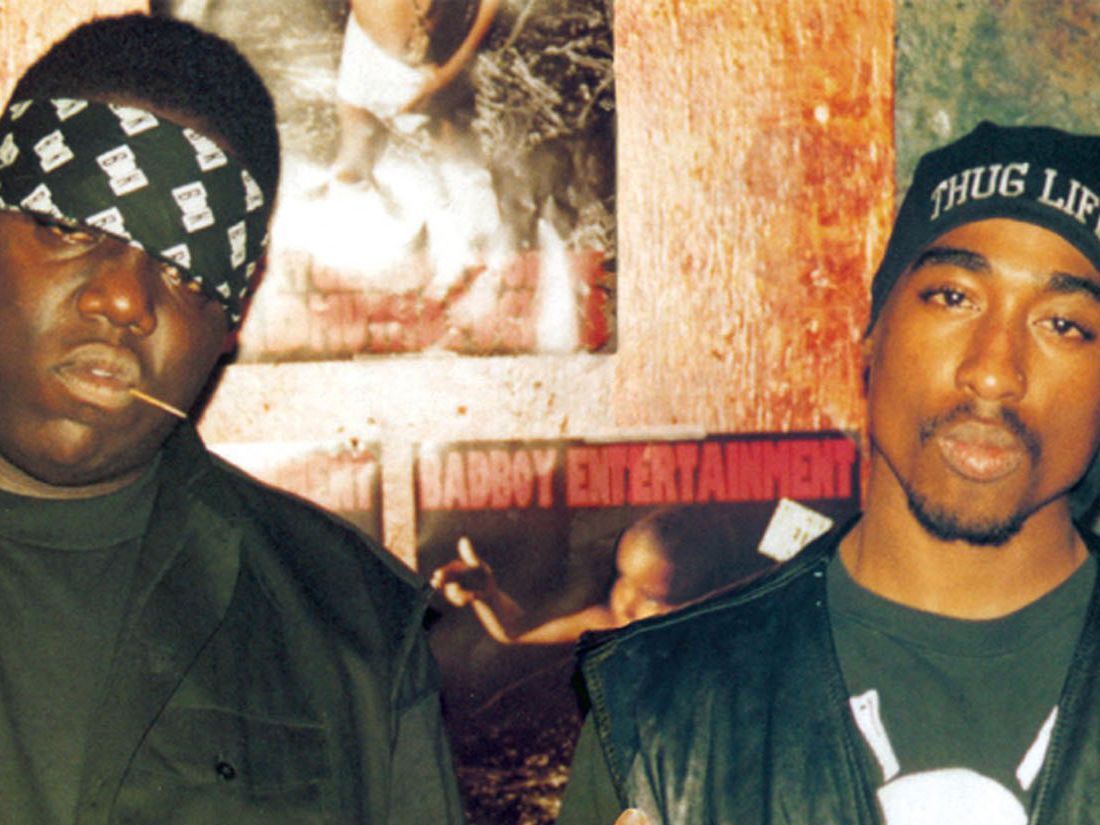
It's hard to untangle this legal mess, to work out whether the two murders are truly connected, whether the second was revenge for the first. In the period leading up to his death, Biggie had also displayed very violent behavior, including death threats against some fans, which at the very least speaks to the intense tension of the time. What is certain is that Biggie, in Los Angeles to shoot the video for "Hypnotize" and promote his second album, would never get the chance to conquer the music world while still alive. In this context, the funereal imagery of his debut and of the posthumous follow-up Life After Death (1997) glow with bitter irony.
Sixteen days after his death, the album — a double record like Tupac's "All Eyez On Me" — hits stores: 120 minutes that bring to a close the story begun with Ready To Die. Commercially, it's a massive success, earning 11 platinum certifications in the US alone and topping the Billboard charts. Critics hail the album as a lavish stylistic testament, the arrogant, exhilarating coronation of one of the greatest rappers of his generation. This time, the entire hip-hop scene bows to Biggie, coming together to contribute to a work that very nearly became posthumous. The guest list, remarkably sparse on the debut, now includes, among others: 112, Jay-Z, Lil' Kim, Mase, Bone Thugs-n-Harmony, Too $hort, Angela Winbush, D.M.C. of Run-D.M.C., R. Kelly, The LOX, and of course Sean "Puff Daddy" Combs. After all, the opportunity was too good to miss: this was the writing of the history of gangster hip-hop, of the ghetto, and of dreams of redemption.
Darker and ultimately less fun than the debut, it's an album of a full 24 tracks, condensing many of the themes, tricks and future clichés of hip-hop later borrowed by the pop world. While "Somebody's Gotta Die", "Niggas Bleed" and "Last Day" (featuring The Lox) breathe a violent tension, a grim sense of menace, "Hypnotize" is a gem of swaggering funk, fat basslines and that relaxed, self-assured flow that sets Christopher apart from every other rapper.
Even more pleasurable is the soul-funk-rap fusion of "I Love The Dough", with Jay-Z. The brazen sexuality of "Fuck You Tonight" (featuring R. Kelly) is that mix of vulgar and erotic that Ja Rule would turn into a cash machine just a few years later. There's also room for dazzling displays of rap technique, like on "What's Beef". "Mo Money Mo Problems", the second single and the album's second #1 on the Billboard Hot 100 (an unbeaten record for posthumous material), offers a chance to highlight the fantastic variety of rich, vividly colorful productions that run through this sprawling double album.
In this specific case, it's a gem courtesy of Stevie J, multiplying vocal layers into a hip-hop maximalism that Kanye West would later watch closely. The fact that the track knocked Sean Combs' "I'll Be Missing You" — dedicated to the late Biggie himself — off the top spot is just one more cruel irony. At the end of the first disc, nostalgia takes center stage again with "I Got A Story To Tell", revealing the rapper's more human, empathetic side.
I don’t know what they want from me
It's like the more money we come across
The more problems we see
(from "Mo Money Mo' Problems")
The second disc opens with the choral r'n'b of "Notorious Thugs" (featuring Bone Thugs-n-Harmony), with flow shifts fast enough to give you a heart attack. It continues with the eclectic pot-pourri of the first half, drifting here and there: through the fragile, if not downright off-key, vocals of "Another" (featuring Lil' Kim), the unlikely ballad of "Playa Hater", or the overly long intro to the otherwise dazzling g-funk hit "Going Back To Cali", his own "California Love".
Thankfully, "Nasty Boy" — geometric funk-rap in the vein of the debut — and the following melancholy, dusky r'n'b of "Sky's The Limit" (featuring 112), with its splendid Clark Kent production, both shine within the tracklist. The album closes with a gangsta-rap gem in "Long Kiss Goodnight" and the powerful statement of "You're Nobody (Til Somebody Kills You)", a fitting farewell track.
Less original than the first album — one of the decade's most electrifying debuts — Life After Death is nonetheless the completion of a musical narrative that fuses hip-hop, crime and hooks into a style that Sean Combs himself would later turn into a goldmine. The schizophrenic blend of violence and danceability, and the treacherous mix of the real and the fictionalized — which, thanks to Biggie's troubled personal history, never comes across as mere posturing — would become a constant of pop-rap between the two millennia. If Jay-Z inherited the mafioso-rap mantle and built an empire on it, Eminem took up its swagger and radio-friendly spirit, and Kanye West its idea of sprawling, sample-and-producer-packed epics. It's hard, though, to imagine that his influence wasn't just as crucial for the likes of 50 Cent, Ja Rule, Nelly and Lil' Wayne.
If Life After Death is a posthumous album, conceived while Biggie was still alive and therefore unimpeachable from the standpoint of commercial ethics, the material released afterward appears far more cynical. The earliest posthumous works are at least tolerable, but as time goes on things slide frankly into the ridiculous. Born Again (1999) is a collection of old recordings reworked, also leaning on high-profile guest appearances. Double platinum, the album went straight to the top of Billboard, but it's little more than a work for collectors. What's touching is the breadth of the tribute, involving the supposed "rival" Snoop Dogg and an Eminem riding high, about to become the most famous rapper of all time.
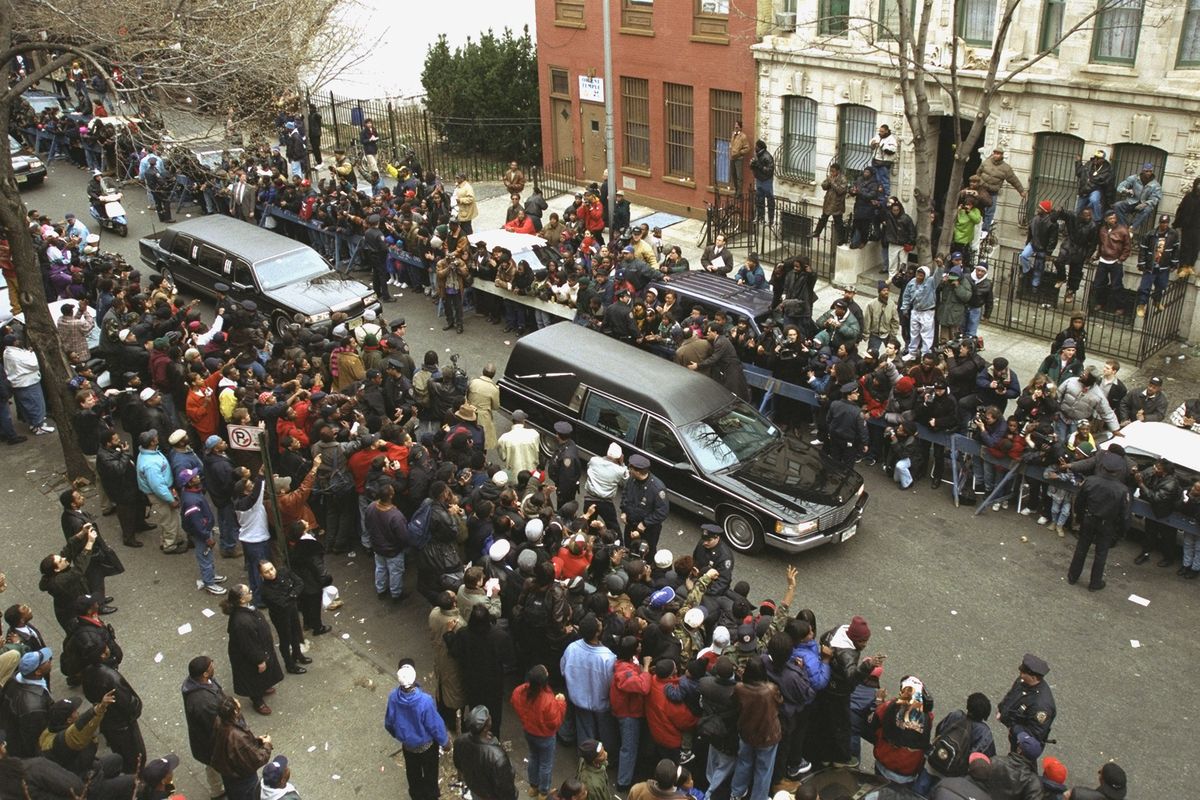
The exploitation of Biggie's tragic story continues with further posthumous appearances on singles by Michael Jackson, Ashanti and even on Tupac Shakur's own posthumous single, "Runnin' (Dying To Live)", which thus ends up being a collage of material released by two deceased rappers. With Duets: The Final Chapter (2005) the barrel is well and truly scraped, dusting off alternate takes, freestyles and Biggie leftovers to stage contrived duets.
After a dozen years of truce, it's Faith Evans who again disturbs Biggie's memory, with the posthumous duets on The King & I (2017). Equally unremarkable is the Greatest Hits (2007), useful only as an introduction to the artist and rather redundant given that his entire output while alive consists of just two albums. An Introduction To (2019) is yet another compilation of singles and hits, for completists only.
In 2009 a biopic also arrives, "Notorious", received rather coolly by critics and belonging to that strand of hip-hop hood movies that reached its commercial peak with Eminem's "8 Mile" (2002) and which more recently also produced the notable "Straight Outta Compton" (2015). Naturally, the film also spawns a soundtrack that once again recycles Biggie's tracks alongside a handful of genuine new additions: Jay-Z's "Brooklyn Go Hard" and Jadakiss and Faith Evans' "Letter To B.I.G."; three demos; and a song with his son Christopher Junior.
Not even this relentless exploitation after his death, however, has done much to diminish Christopher's work: nothing has dimmed the importance of his music. On the contrary, over the years the consensus has only grown more unanimous. If in 1995 he swept the awards organized by The Source (Artist of the Year, Lyricist of the Year, Live Performer of the Year), also dominating "Billboard"'s awards (Rap Artist of the Year, Rap Single of the Year, R&B Album of the Year), the accolades and recognitions kept multiplying afterward. Among the most significant: the award for Best Rap Video for "Hypnotize" at the 1997 "MTV Video Music Awards"; the prizes won at the "Soul Train Music Awards" in 1996 and 1998; and his induction, a particularly notable feat for a rapper, into the Rock And Roll Hall Of Fame in 2020, three years after his friend-turned-rival Tupac Shakur.
In retrospect, critics regard him as one of the giants of hip-hop: in 2002 The Source crowned him "the greatest rapper of all time". He also received the highest number of mentions in XXL's 2003 list, in which various rappers were asked to name the best MCs of all time; he ranked No. 3 on MTV's list of the greatest rappers ever, matching that same bronze-medal spot on the ranking compiled by About.com; for Rolling Stone he is the greatest rapper who ever lived, a claim Billboard agrees with. His commercial success, counting posthumous releases as well, adds up to something like 21 million albums sold in the United States alone.
With the perspective that only time can grant, Christopher's instinct to sound at once violent and emotional, technical and immediate — in short, both hardcore and radio-friendly — was one of the pivotal turns in hip-hop at the close of the millennium. What others have found far harder to inherit is the genuineness of his personal story, that deep nostalgia, melancholy and despair that remains, like a scar, on the skin of anyone who has always had to fight just to stay afloat.
Christopher George Latore Wallace, a three-hundred-pound giant, managed for a couple of years to fly away from the ghetto, from crime, from poverty, only to crash to the ground at twenty-four, right when he seemed able to finally shed his burdens. His personal story, together with his music, make him one of the key figures of hip-hop and of music in recent decades.
Add OndaRock to your favorite sources on Google Discover. Don't miss our reviews, milestones and latest news straight in your feed.
| Ready To Die (Bad Boy, 1994) |  |
|
| Life After Death (Bad Boy, 1997) |  |
|
| Born Again (Bad Boy, 1999) | ||
| Duets: The Final Chapter (Bad Boy, 2005) | ||
| Greatest Hits (compilation, Bad Boy, 2007) | ||
| Notorious (soundtrack, Bad Boy, 2009) | ||
| The King & I (with Faith Evans, Rhino, 2017) | ||
| An Introduction To (compilation, Rhino, 2019) |
MilestoneRecommended by OR


