


From the small town of Notodden in Norway comes a curious band that has expanded the boundaries of progressive metal from within, across seven different and creative albums. From the schizophrenic sound of their early days to the operatic and orchestral tendencies of their last twenty years, we retrace the history of Leprous
When the blueprint for a musical style is established, all manner of imitators tend to emerge – but copying Mastodon, Tool or Dream Theater means, obviously, missing the point of "progressive" entirely. Truly innovative bands simply play the music that comes naturally to them, listening with an eclectic ear and finding nothing strange in combining their influences. In doing so – whether by accident or by design – they create new musical hybrids, and for me this (together with the idea of the album as a musical journey) is one of the core principles of any music that wants to call itself progressive.
(Steven Wilson, foreword to Jeff Wagner's "Mean Deviation")
Notodden is a small town of just 12,359 inhabitants in southern Norway, sitting on the shore of Lake Heddalsvatnet, and it ought to be circled in red on the map of every black-metal listener, since it's the birthplace of Emperor, the legendary band that, together with Dimmu Borgir and Arcturus, founded the genre's symphonic wing. Ihsahn, the singer and multi-instrumentalist of Emperor, still active in numerous metal projects, still lives in the town today.
Since 2001, though, Notodden has also been the headquarters of a strange beast of heavy metal, Leprous: "strange" because they're hard to pigeonhole, forever slipping out of labels or forcing you to qualify them, soften them, melt them into new hybrids just to find the right words to describe a new song or album; "beast" because Leprous's music may enchant with its melodic flights, intrigue with its instrumental refinement and astonish with its poetic surges, but it never stops baring its teeth at the listener, revealing an untamed, tormented spirit. This streak of extreme metal is more than just a geographical kinship, too — it's practically a family matter: Leprous's singer, founder and keyboardist, Einar Solberg, is in fact the brother-in-law of Emperor's Ihsahn. The audience Leprous were first introduced to was precisely that of Ihsahn's concerts, since he used them as his backing band live. In return, the black-metal singer would go on to help the band with frequent collaborations throughout their career, often making all the difference whenever an extra dose of ferocity was needed.
Prog metal is a vast field, and its most interesting exponents are the hardest to pin down.
(Jeff Wagner, in “Prog Metal”)
Progressive rock in the Seventies was only "progressive" for as long as it kept pushing the stylistic and conceptual boundaries of rock.
(Edward Macan, in “Rocking the Classics: English Progressive Rock and the Counterculture”).
Having introduced the geographical and familial ties to extreme metal, it's only right to shed some light on Leprous's musical style before diving into their discography. What makes the band distinctive is that they belong to the small circle of acts playing a progressive metal that draws on the most disparate influences while still remaining a rock band and, almost always, exquisitely metal. So there's plenty of room for the guitars of Tor Oddmund Suhrke, co-founder alongside singer and keyboardist Solberg, and certainly for drums and bass, even if these have been entrusted to different musicians over time.
Leprous are indeed a highly unstable lineup, and only the two co-founders and guitarist/second vocalist Øystein Landsverk can be considered permanent members. And undeniably progressive, whether rock or metal, is also the form chosen on many of their albums: long, adventurous tracks structured as suites, such as “Disclosure” (11 minutes), “White” (11 minutes) and “Forced Entry” (10 minutes), betray the influence of English prog-rock, perhaps filtered through the lens of classic prog-metal.
However, their approach to the material is often unusual, open both to the violent excesses of death metal and black metal and to the otherness of classical music, both to the hair-raising jazz-rock of King Crimson and to the hypnotic geometries of Tool. If there really is a progression in Leprous's music, it's toward extending metal into a cross-genre music whose boundaries end up coinciding with the equally fluid borders of rock at the start of the twenty-first century. Indeed, Solberg himself cites Arvo Pärt, Radiohead, Massive Attack, Porcupine Tree, Susanne Sundfør, Behemoth, The Dillinger Escape Plan and The Prodigy among his favourite artists: all names you'd easily find in an encyclopedia or on a rock webzine from the start of the millennium, even though in some cases the connection to rock is tenuous.
Since Solberg, as we'll see, is Leprous's Roger Waters — the one who, over time, turned the band into a kind of personal creative project — naming these preferences is particularly useful for reading the band's history. Even more so if we set them alongside the preferences expressed in an interview by Suhrke, the other founder: Mars Volta, Opeth, Porcupine Tree, Dillinger Escape Plan. What clearly emerges is a divided, multiple soul, which becomes the ideal foundation for a discography in constant flux. The fact that, as happened with Opeth, it's easy to spot exquisitely prog-rock elements in their most recent output shouldn't distract from the fact that, overall, Leprous are a progressive band for whom the distinction between metal and rock matters little. Listening to them also means shedding narrow labelling concerns and embracing the band's creativity in all its explosive, multifaceted expressive power.
Thrasybulus led Periander's envoy out of the city and into a cultivated field: walking through the standing crops, he questioned and re-questioned him about the reason for his coming from Corinth, and all the while he cut off every ear of grain he saw standing taller than the rest, cutting them down and throwing them to the ground, until in so doing he had destroyed the finest and most flourishing part of the crop. Having crossed the field, he dismissed the herald without having given him any advice. When his envoy returned to Corinth, Periander was eager to hear the answer; but the herald told him that Thrasybulus had suggested nothing at all, and added that he was amazed he had been sent to such a man, a madman, one who damaged his own interests: and he recounted what he had seen Thrasybulus do.
(Erodoto, “Storie”, libro V)
Leprous's prehistory has two names, Silent Waters (2004) and Aeolia (2006), two demos that already contain tracks comparable in ambition and quality to those found in their official discography. In particular, Aeolia opens with the impressive "Disclosure" (11 minutes), which seems like an ideal meeting point between the South American rhythms of Mars Volta and the roaring spirit of prog-metal. Injections of hissing synths and brutal extreme-metal screams add to the variety, as does a choral section before the finale. The final minutes are a piano solo, an element that will often return on the debut album as well.
Hearing the way jazz and Caribbean flavours work their way into "Black Stains", alternating with towering death-metal onslaughts, operatic passages and demented dance breaks, is one of the most interesting things happening in the progressive field of the period, even though the band was still largely unknown.
"Aeolus Shadow" (7 minutes) alternates black metal and prog-metal, making room again for piano, while "The Great Beast" (8 minutes) opens with a long atmospheric introduction, lets loose into a hair-raising fusion passage, and alternates between a mawkish ballad verse and a murderous death-metal one. Steering away from many of the more obvious developments, the band manages here to upend the typical balance of its compositions into a schizophrenic, restless amalgam. Another extended composition, "Close Your Heart" (11 minutes), combines fusion and extreme metal. The closer, "Eye Of The Storm" (11 minutes), the third track to run past the ten-minute mark, keeps challenging the listener by fusing the geometric with the unpredictable, the majestic with the delirious. Though hampered by not-yet-top-tier technical means — resulting, for instance, in a thin drum sound — Aeolia makes it possible to gauge the band's depth.
The long-awaited debut Tall Poppy Syndrome (2008) brings the ideas of the second demo to fruition, thanks to professional production and a compositional talent that has by now matured. "Passing" (eight and a half minutes) opens like a Dream Theater track, only to launch into a visceral climax. At the seven-minute mark comes the explosion that lights up the whole album: a devastating scream that triggers an imperious march, a slow Opeth-style death-metal passage, where the vocals work between bestial roars and the high register typical of the English metal school. Even more turbulent, "Phantom Pain" (7 minutes) starts out melodic, mutates into the epic, then reveals its brutal side. As the keyboards swirl in the background, the track heads toward its finale amid ogre-like growls, before dissolving into atmospheric piano music.
After the long, almost entirely instrumental “Dare You”, another display of precision and multiplicity, “He Will Kill Again” (seven and a half minutes) opens in a dramatic, futuristic mood reminiscent of Ayreon, before pivoting first into a dance with South American echoes and then layering those over death-metal vocals.
“Not Even A Name” (nearly 9 minutes), steeped in black-metal urgency, is overwhelming in the dizzying "theatrical" two-voice exchange that drives its central climax. “Tall Poppy Syndrome” breaks the momentum with a long spoken-word section, but thankfully “White” (11 minutes) pulls together the creatively used keyboards, the stylistic pilgrimages and the imaginative juxtapositions, closing with an extended piano passage, the band's ideal signature and one of the few fixed points in this creative storm.
From this point on, Leprous shed their skin, beginning a process of continuous revision of their own style. While the pairing of Aeolia and Tall Poppy Syndrome retains a certain coherence — being tirelessly on the hunt for new, unexpected twists on the prog-metal canon — the rest of their career proceeds with greater elegance and restraint. The most spectacular, even dark-cabaret-like side that emerged from the schizophrenic soul of their early songs gives way to a less luminous vision, one that will eventually become purely introspective, even intimate and decadent. The explosive energy of their early period, which spilled over into restlessness and creative neurosis, marks the start of a path that will later develop into states akin to depression, where pain outweighs agitation.
Bilateral (2011) smoothed out many of the rough edges, giving more weight to melody and favouring less erratic developments. The adventurous jazz digressions were scaled back in favour of references rooted firmly in metal. Where before they moved within a spectrum that joined classically schooled metal with experimentation, now they focus their attention on the prog-metal model, reinterpreted here in a futuristic key (“Bilateral”), there tense and nervous (“Waste Of Air”), and elsewhere intimate and operatic (“Restless”). A formal peak is reached with “Forced Entry” (10 minutes), the mature, carefully reasoned version of the relentless transformations of Tall Poppy Syndrome.
Highly creative moments are not lacking, though, such as “Thorn”, with Vegard Sandbukt's shadowy trumpet and Ihsahn's terrifying black-metal vocals. The band also begins to edge closer to Meshuggah and their djent with “Cryptogenic Desires”, which packs much of their fury and compositional madness into less than three minutes: a crash course for anyone who can't stomach the extended tracks of the previous albums, also evoked here by the closing “Painful Detour”.
Usually hailed as their masterpiece, Bilateral represents a formal refinement of the debut, distinguishing itself by being leaner, more essential and more focused. It's their prog-metal album in the strictest sense, but it's also the one where they're most easily confused with the rest of the scene, despite their distinctive interest in rhythm, dynamics and vocal melodies. The creative storm of before has been reined in; now the band is ready for a new phase.

Coal (2013), whose striking cover features a skull adorned with diamonds, keeps experimenting, even more so than in the recent past. The labyrinthine stylistic collage of earlier days, however, is replaced by a less turbulent destabilisation of the songs. “Foe”, for instance, is built entirely on pauses and silences alternating with walls of sound, with clear, operatic singing and a long melodic coda of overlapping lyrical voices. The impetuous “Chronic”, a jewel of imposing, schizophrenic symphonic prog-metal, and the nine minutes of “The Valley”, a dystopian djent track with a futuristic mood, manage to distill their quest into music that is catchy, epic and creative all at once.
Two more nine-minute tracks close out the record: “Echo”, majestic and distinctly 80s-indebted in its central section, sends the guitars chasing each other at a disco pace before whirling the rhythms into an overwhelming climax that dissolves into a colossal, epic, triumphant midtempo passage, leaving the coda to the vocal interplay; “Contaminate Me” goes even further, with a death-metal-and-djent steamroller that sets off a vortex of voices and rhythms before doubling down: it stops, rasps through an extreme doom passage à-la Khanate, brings in violins (!) and closes in a pitch-black whirlpool of despair.
There's no need to dwell at length on the band's skill, tight and virtuosic as it is, but at least a mention is owed to Einar Solberg's vocal performance, which on Coal begins a deeply personal quest that takes him far not only from metal, but from rock altogether. The more shouted, violent outbursts have been significantly scaled back compared to the early days, and this time Ihsahn's contribution on “Contaminate Me” proves essential to pulling them off. More and more, Solberg steers the compositions with his sinuous, acrobatic vocal lines, hinting at future developments in which his role will become ever more central. It's no coincidence that this is the last Leprous album to feature drummer Tobias Ørnes Andersen, later replaced by the tentacular Baard Kolstad, and bassist Rein Blomquist, succeeded by Simen Daniel Børven.
Congregation (2015) doesn't rest on what was achieved with Coal, forging a new brand of prog-metal that dodges the genre's typical clichés. Gone are the schizophrenic, unpredictable early days; now the compositions have an internal narrative that makes every shift in mood, intensity and speed feel plausible. The band focuses its attention on a few key pillars: rhythm, often the protagonist with its surgical syncopations, the complexity of its evolution, its fractures and restarts; the vocal melody of an ever more excellent Solberg, who guides many tracks through adventurous ups and downs, lending catchiness to the songs even at their most daring; the sonic blend, which rarely lets one instrument outshine the others, favouring instead a tight ensemble sound heightened by strong dynamics; and the absence of many prog-metal clichés, or at least their sparing use — solos, individual instrumental showmanship, pyrotechnic endings, spasmodic accelerations, climaxes.
Building on these fundamentals, the band strings together a remarkable run of songs that rival not only the best of their own career, but the best that other metal acts produced in that decade. While “The Price” is in line with what we heard on Coal, “Third Law” is staggering: a jaw-dropping opening with every instrument moving in unison over a fractured rhythm, vocals climbing the octaves with operatic flair, devastating rhythmic attacks, an epic midtempo section, a tense, vaguely jazzy pause, and an abstract, cacophonous coda.
“Rewind” (7 minutes) opens with dissonance and continues with an anxiety-inducing tom-tom pulse, grafting sweet vocal melodies onto restless music that only after a good three minutes finds a more stable footing, quickly shifting into a crescendo inlaid with baroque guitar flourishes, arriving at the five-minute mark at a long-awaited explosion that conjures up a symphonic black metal, screamed with irrepressible anguish by Solberg, fusing violence and surgical precision into a sonic monster of tremendous intensity.
"The Flood" (8 minutes) opens with an obsessive pulse, offering an uneasy transfiguration of the metal ballad, later injected with djent despite the expansive, dramatic vocal lines. Its development is a meticulous exercise in contrasts, above all the one in the fifth minute between operatic harmony and an obsessive, anguished mechanical grinding. In the sixth minute, an epic feel straight out of eighties metal, reworked in a djent key, props up a melodramatic crescendo: a postmodern short-circuit that will make fans jump out of their seats.
Two shorter tracks occupy the center of the record. First, the bare-bones majesty of "Triumphant", which sounds like a skeletal version of all-too-familiar, bombastic metal excess and bravely does without fast tempos, layered arrangements and other clichés, finding its strength in cyclical repetition instead; then, the jagged aggression of "Within My Fence", rhythmically a terrifying, absurd fusion of Shellac, virtuoso flourishes and operatic singing. Short as they are, these are among the most brazenly outlandish compositions in contemporary metal.
"Red" uses the rhythmic geometries of Meshuggah to shape a melodic, uneasy, melodramatic track, made melancholy by an atmospheric undercurrent: a rhythmic and melodic exercise whose creativity lies in the way operatic vocals merge with the muscular interplay of guitars and rhythm section, while the synths sketch desolate landscapes in the background. "Slave" recalls a textbook power ballad, but that's only on the surface: it borders on the colloidal pace of doom, draws on complex rhythms, and launches into a murderous black-death assault where Solberg's monstrous roar reigns supreme, before closing on symphonic flourishes. In cases like these, the band manages to upend metal's templates and recast them in a new, creative light.
"Moon" (7 minutes), unsettling in its precarious balance, once again opens with a melodic vocal line laid over a restless sonic blend, rounded off by symphonic gusts. The first minute and a half is built from sonic personas that only meet in the chorus. The coda is a puzzle of rhythms, timbral quirks, symphonic music and a metal charge. "Down" has a blistering start, all stop'n'go, before stretching out into long vocal melodies, reconnecting with extreme metal in its instrumental passage, and closing with intricate tribal patterns.
To close, a genuine ballad arrives, "Lower", giving Solberg the occasion for a standing ovation.
A creative and complex work, though rarely an inaccessible one, Congregation is a rare example of prog-metal breaking free from its own classics. Certainly, Einar Solberg's vocal performance is a tour de force few artists on the contemporary scene could pull off, and the musicians' ability to interact within scores that are at times extremely complex deserves attention too. What really makes the difference, though, is the reinvention of a few fundamental elements: the templates of the epic track and the emotional ballad; a new interplay between rhythm and melody, and between synths, orchestration and power trio; and the extensive use of dynamics, through stop-start rhythms, polyrhythms and ever-shifting arrangements.
Congregation draws inspiration from many sources, but reworks these elements with imagination, boldness and tremendous compositional creativity.
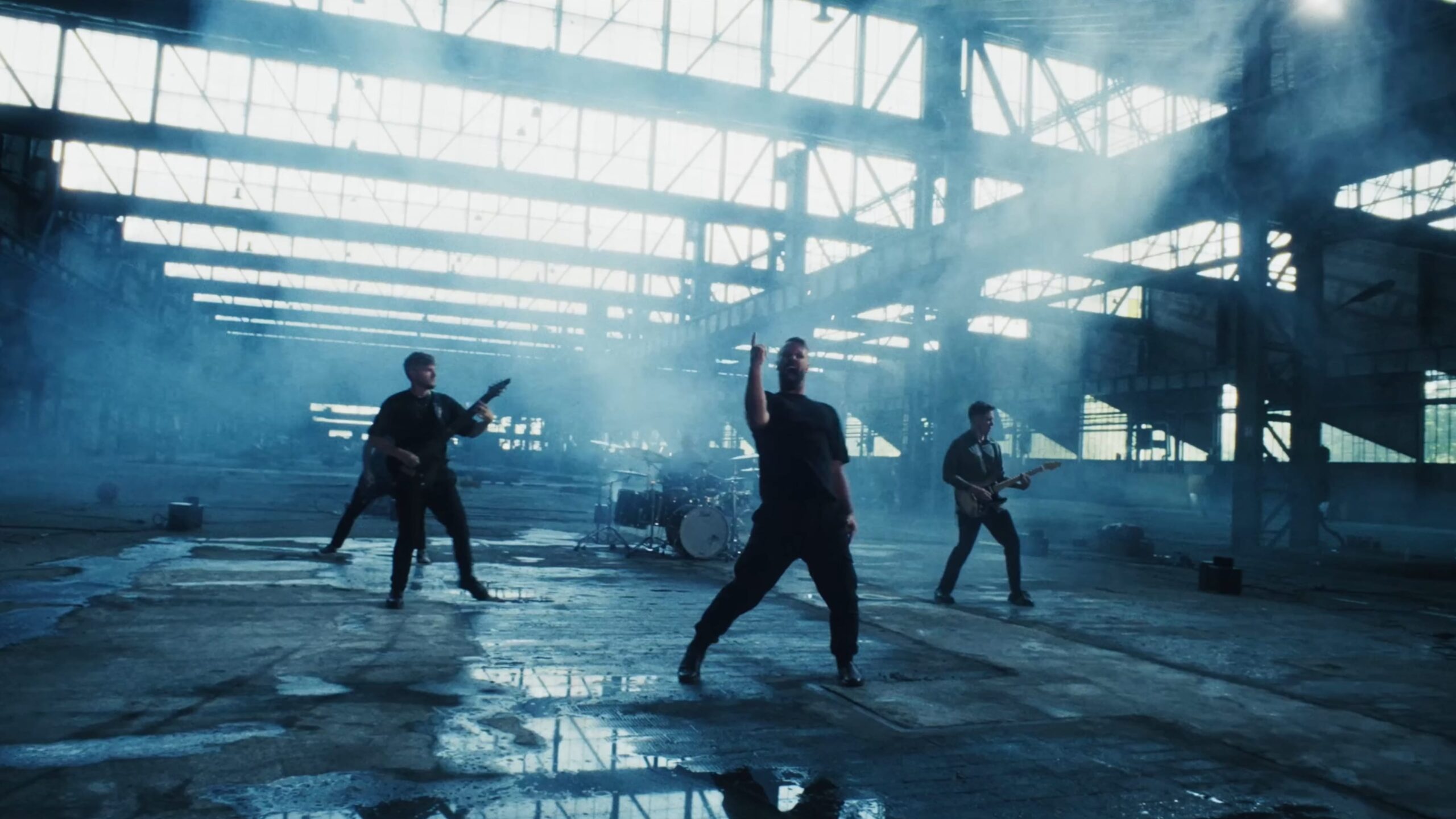
For the fifth album, Malina (2017), without even longtime guitarist Øystein Landsverk, the band starts drifting away from the metal world altogether. With Raphael Weinroth-Browne added on cello and Robin Ognedal stepping in, there's plenty of room for Solberg and Suhrke—by now the only remaining founding members—to boldly embrace melody on "From The Flame", fittingly chosen as the lead single. Solberg has ample space to explore his depressive states on the dramatic "Bonneville", with an arrangement that uses the instruments as expressionist counterpoint, on the tragic "The Weight Of Disaster", or on the airy "Illuminate"; he's also the sole protagonist of "Malina", a track where the rest of the band recedes almost to the point of vanishing, only stepping back in to drive the dramatic climax at its center and at the end.
At times this is still the Leprous of the previous two albums, as in "Stuck", "Leashes", the rhythmic interlocking of "Captive" and the turbulent "Mirage"; "Coma" at least echoes that same blend of complexity and immediacy found on The Congregation, with the interplay between the grinding guitar and the earth-shaking double-kick drumming that builds beneath the operatic melody Solberg belts out in despair standing as proof enough. Worth noting is the more pronounced presence of keyboards, again courtesy of Solberg, which lend a sci-fi, eighties-tinged tone to many of the tracks.
Not content with his now undisputed role as frontman, the singer delivers what amounts to his solo debut with "The Last Milestone", a solemn threnody for strings and voice in which the rest of the band is largely absent. Looking back, it's easy to see this closing track, and Malina as a whole, as a transitional work, one that above all expresses Solberg's need for greater creative control, matched by the ever-shrinking presence of Suhrke, the band's longtime composer and the ideal counterweight on the early albums.
For the sixth chapter, Pitfalls (2019), violins and even a choir join the cellist. By now the compositions are written chiefly by Einar Solberg, who spent 80 days in the recording studio to deliver a deeply personal work, its lyrics distilling a year and a half of depression and pathological anxiety. The move away from metal is unmistakable, and often from rock altogether. At its best, the record draws on the bleakest strands of contemporary classical music and art-rock. At its worst, the band veers toward danceable, eighties-style detours. The overriding impression is that this is effectively Solberg's solo album, so secondary is the role played by the other musicians.
The starting point is the aching ballads of The Congregation, here revisited in symphonic form on "Below" and "At The Bottom", but also drawing on unlikely gospel touches on "Observe The Train". Even on the rare occasions the band finds a bit more rhythm, it slips into danceable fare like "I Lose Hope", with its electro-pop-funk and violins, or "By My Throne", steeped in a disco-gothic atmosphere, tracks that seem to come from an entirely different band. The only moment where we really get to hear Leprous is "Foreigner": the price of continued exploration, one might say, but also a disappointment for anyone hoping for a true follow-up to Malina. Granted, even in an uneven album so sharply discontinuous with the past, there are two moments of genuine interest: the symphonic rock of "Alleviate" hints at a possible art-rock future for Solberg as a middle-aged singer-songwriter smitten with Brian Eno and David Byrne; "Distant Bells", meanwhile, draws on the rest of the band, strings included, to drive Solberg's thrilling vocal crescendo, at the very peak of his powers.
The closing, extended "The Sky Is Red" (eleven and a half minutes) deserves a paragraph of its own: a composition that has little to do with prog-metal in the conventional sense, managing to bring old and new elements into a coherent system, giving all the virtuosos the space they need while also letting the new orchestral arrangements come into their own.
Two years later comes the seventh album, Aphelion (2021), where the refined amalgam of Pitfalls has been stripped of a touch of its polish and replaced with the visceral energy of old, though still filtered three times over by a Solberg who avoids (almost) every excess. Notably, this sophisticated alternation of styles is once again paired with a more experimental spirit.
The final trio of tracks is dominated by two songs that stand out for different reasons. The first, "On Hold", is a psychodrama steeped in unsettling bass lines, which nonetheless opens up into a masterful, epic, heart-rending chorus, where Solberg sacrifices himself, soaring impossibly high and crystalline. It's a snapshot of the more reflective Leprous of recent years, minus the more clinical side.
"Nighttime Disguise", on the other hand, is a kind of hope: that of combining the singer's sophisticated, introspective poetics with songs that are once again devastating and multifaceted. The starting points were chosen by the fans, and it's no coincidence that the result is a highly dynamic track, one that preserves the band's current sound while fuelling it with a power that seemed lost. Towards the end, Solberg unleashes a growl absent for far too long, set within a majestic orchestration and underpinned by intricate rhythmic work.
An unexpected jolt, closing out an album that converses more explicitly with the ferocious soul of Leprous, without thereby disowning the path taken so far.
The return, however partial, to the prog-metal of old—combined with the post-Malina art-rock—is confirmed by Melodies Of Atonement (2024). The absence of cellist and violinist Raphael Weinroth-Browne is one of the major differences that define the Norwegians' eighth album. The absence of strings is offset by a greater role for electronics, pushing the sound towards darker, more brooding territory, but also by a rediscovered metal verve, albeit filtered through a refined, elegant style. The amount of orchestration and existential musing from Einar Solberg has been scaled back after a string of increasingly abstract, depressed and anxiety-ridden albums. Melodies Of Atonement is finally an album that belongs more to Leprous than to the singer alone, unlike the previous two. That said, this doesn't mean it should be accepted as perfect: a melodic framework that rarely becomes truly communicative or memorable, some vocal longueurs, and a certain tendency to revisit, albeit with some differences, moods already thoroughly explored in the past are all elements that diminish the album's depth. It is, then, a welcome return, but still the product of a second phase of the band's career that, between elegant compositional explorations and the singer's psychological struggles, has yet to find its true destination. Hopefully the atonement of the title has now been achieved—it's time to be reborn.
Add OndaRock to your favorite sources on Google Discover. Don't miss our reviews, milestones and latest news straight in your feed.
This article is an English translation of the original Italian text, published on OndaRock.it. It was translated with the help of artificial intelligence, under the editorial responsibility of OndaRock's editor-in-chief, Claudio Fabretti.
| Tall Poppy Syndrome (Sensory Records, 2009) |  |
|
| Bilateral (Inside Out Music, 2011) | ||
| Coal (Inside Out Music, 2013) | ||
| The Congregation (Inside Out Music, 2015) | |
|
| Malina (Inside Out Music, 2017) | ||
| Pitfalls (Inside Out Music, 2019) | ||
| Aphelion (Inside Out Music, 2021) | ||
| Melodies Of Atonement (Inside Out Music, 2024) |
 MilestoneRecommended by OR


