


The long and troubled career of the Swiss band led by Tom Fischer, the group that taught all of extreme metal what it meant to be avant-garde. From its origins in the much-maligned Hellhammer to the unexpected reunion album, an adventure full of unpredictable twists and welcome confirmations
The most terrible, aberrant and atrocious thing musicians have ever been allowed to record.(Rock Power's review of Hellhammer, 1984)
The story of Hellhammer is as brief as it is essential to understanding how Celtic Frost were able to release some of the most incredible albums in the entire history of heavy metal. Without retracing the band's origins, that creative spark would be incomprehensible. Devotees of Black Sabbath, Motorhead and Venom, this trio left behind an extremely scant body of work: three demos, an EP and, to fill precisely that gap, a compilation.
The sound of the very first release, "Death Fiend" (1983), is hobbled by a production that's approximate to say the least, unfortunately paired with instrumental chops worthy of a bunch of high-schoolers. Despite this, the demo retains a leaning towards the rottenest, most powerful sound, even in its embryonic state: it feels like listening to an intention to go beyond the New Wave Of British Heavy Metal, rather than a truly tangible achievement to hand down to posterity.
The second demo, "Triumph Of Death" (1983), and the finally more powerful "Satanic Rites" (1983), more effectively showcase the band's intentions: while critics considered them one of the musical scourges of the era, they won over the underground with their brazen determination to fuse all the power, speed and metallic heaviness then in circulation, with a strong leaning towards the English scene.
The long-awaited EP "Apocalyptic Raids" (1983) originally contained four tracks, later expanded to six in the 1990 reissue, and could already pass for a record by the future Celtic Frost: a dose of thrash metal in "The Third Of The Storm", a monstrous doom slowness adorned with anguished wails in "Triumph Of Death" (nine and a half minutes), and a Venom-style onslaught in "Revelations Of Doom" and "Massacra".
The buzzing guitar tone, the relentless use of double-bass drumming and Tom Warrior's dark, rasping growl are stylistic elements that would spawn countless disciples throughout the Eighties and Nineties. With all the caveats of a rough performance, a messy production and a brevity that keeps the four original tracks under 20 minutes total, "Apocalyptic Raids" remains an essential listen for anyone wanting to dig into metal extremism. That said, what comes shortly after is a trio of epoch-defining works.
On May 31, 1984, Hellhammer brought their adventure to a close. The aforementioned 1990 reissue of "Apocalyptic Raids" and the compilation "Demon Entrails" (2008), which gathers the three demos, are perfect for anyone wishing to retrace the prehistory of Celtic Frost. On paper, a fledgling band of kids had tried to surpass their idols, but a complete lack of funds and limited instrumental skill did the rest. The often-violent backlash from critics drained the enthusiasm of Fischer and Ain, who borrowed the title of a Cirith Ungol song and renamed their musical project Celtic Frost.
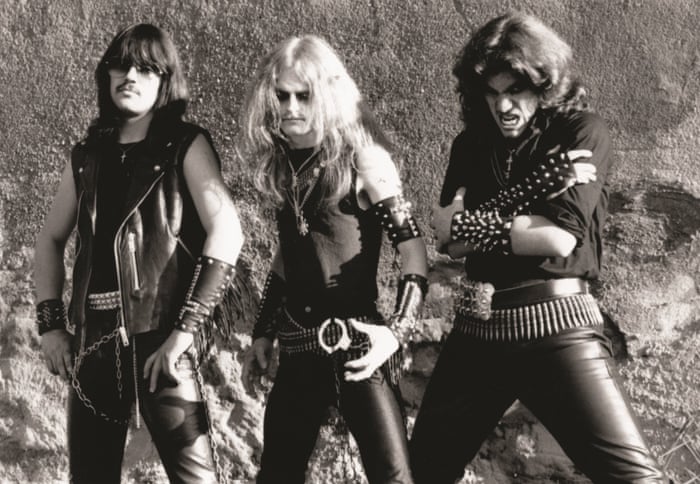
The debut Morbid Tales (1984) — essentially a mini-LP released in Europe with just six tracks, expanded to eight for the US edition — is the missing link between the inexperienced young band heard on the demos and the outfit that would later be hailed as the first avant-garde metal act in history. Warrior and Ain handle almost everything themselves, with additional musicians brought in for vocals, drums and violin. "Into The Crypts Of Rays" is furious thrash-metal, while "Vision Of Mortality" is a wild ride that springs from a Black Sabbath-style riff into ever more unhinged territory, ferocious enough to bring to mind Slayer of that same period.
Right from the start, Celtic Frost also show an interest in exploring the possibilities of slow and heavy, as demonstrated by "Procreation (Of The Wicked)". One track, however, reveals the experimental intentions that would soon take center stage: "Danse Macabre", a spectral melody worthy of a Dario Argento film, with unsettling, warped wails and a lysergic choir that would fit right in on the Residents' "Not Available" by the Residents.
Even in its original six-track version, Morbid Tales is a work that breaks decisively with Warrior and Ain's past, an impression that holds true even with the addition of the two tracks written for the US market. In 1999 a remaster drew on the tracks from "Emperor's Return" (EP, 1985) to bring the tracklist up to 12.
To Mega Therion (1985) is a work that turns those intentions into a milestone of all metal, a fundamental influence on both the black and death variants. Curiously, Ain did not take part in the recording and only rejoined the band after its release. In his place was Dominic Steiner, with Reed St. Mark handling drums and percussion, the latter quite elaborate on some tracks.
The majestic symphonic opening of "Innocence And Wrath" leads into the furious thrash/black-metal of "The Usurper", complete with unexpected operatic vocals and a limping gait that keeps the tension high throughout the track. "Jewel Throne" stands as one of the most credible examples of death-metal ante-litteram, released the same year as Possessed's own song "Death Metal". It's practically from this track that you can trace a line connecting Obituary to Slayer. "Dawn Of Megiddo" goes even further, combining doom's slowness with thrash-metal's violence, tinged with symphonic flourishes across nearly six minutes of sonic extremism. "Necromantical Screams" repeats that colossal fusion effort in a composition where the various stylistic souls wage war within themselves.
But beyond the sophisticated stylistic synthesis — not to mention the significant exploration of uncharted sonic territory — To Mega Therion also stands out for the sheer power of the music, a concentrate of razor-sharp riffs rounded off by Tom Warrior's furious vocals, one of the defining voices of that transitional era toward new metallic extremes.
Even after more than thirty years, a track like "Circle Of The Tyrants" or the hardcore-punk-tinged "(Beyond The) North Winds" still overwhelms the listener, and "Fainted Eyes", especially when it launches into its manic top speed, remains one of the masterpieces of metal from that period. Then there's the more experimental side, the one that would dominate the following album: here it surfaces forcefully in "Tears In A Prophet's Dream", an industrial, dark-ambient maelstrom.
Dedicated to Satan himself — the title being the Greek equivalent of "the great beast" — and presented with a lugubrious, diabolical, decidedly blasphemous cover, To Mega Therion has had an influence so vast it's almost impossible to map. Though born in the thrash-metal years, from which it borrows more than a few ideas, it's a landmark of experimentation within rock at large. The most elaborate compositions make considerable use of tempo shifts; an unusual instrument like the French horn appears (on three tracks), along with a second, female voice (also on three tracks), pointing the way for much of the metal to come. Not only does it contain many of the seeds of death-metal, as much as — if not more than — Possessed's "Seven Churches", released the same year, but it also offers good pointers for gothic-metal (though Paradise Lost's "Gothic" wouldn't arrive until 1991).
Celtic Frost were also among the first to introduce female vocals into metal, and they directly inspired the early work of groups like Paradise Lost and The Gathering in that regard. Their symphonic and experimental streak, meanwhile, would be developed above all by a subgenre of black-metal, which would turn orchestration first into an innovation and then, over the decades, into a cliché. Last but not least, Tom Warrior is the emblematic singer of this death-metal prehistory, the link between the still-polite style of the New Wave Of British Heavy Metal and a future that would be guttural and monstrous.
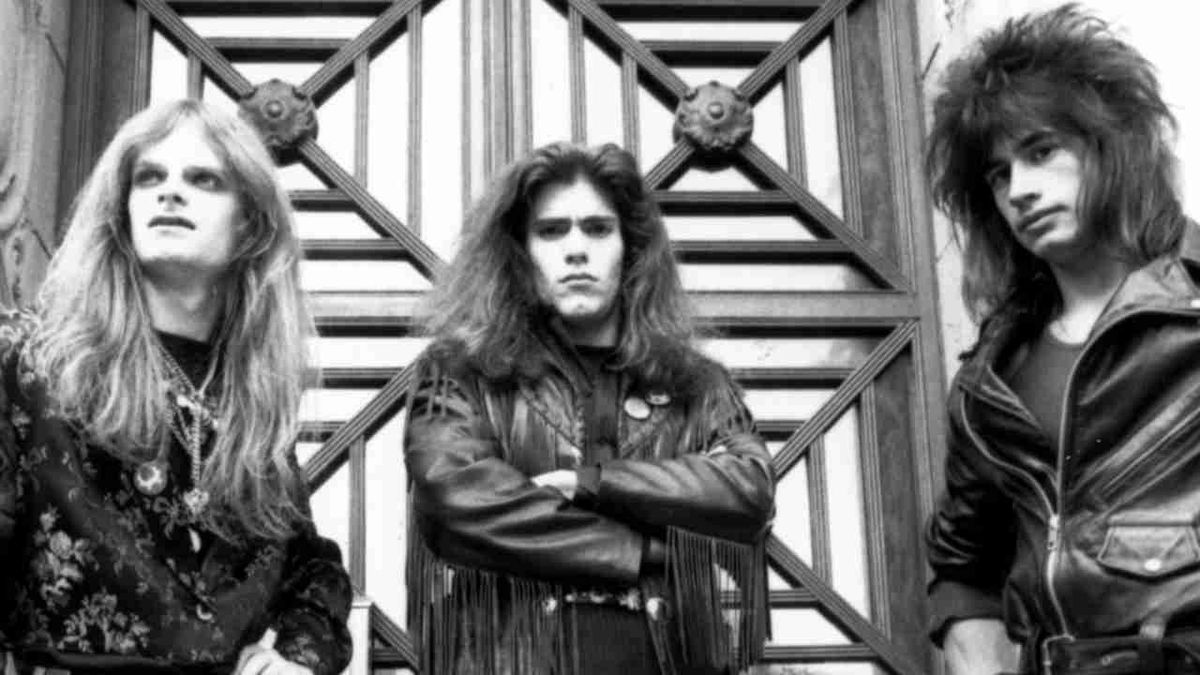
The EP Tragic Serenades (1986) is little more than a distraction during the most important period of the band's career, though it's remembered for an improbable "party mix" of "Return To Eve". With their third album, however, Celtic Frost made a choice that's hard not to find jarring.
Into The Pandemonium (1987) left disoriented critics with no choice but to coin a new label: avant-metal. The opening couldn't be more unexpected, with a cover of Wall Of Voodoo's "Mexican Radio". A 1983 hit, delivered with ferocity by one of the most extreme bands on the planet at the time, placed right at the front of the record. "Mesmerized" reveals the band's trademark ferocity, even though Tom Warrior's vocals are more plaintive than ever and the gothic aura is palpable.
As grand as the displays of power on tracks like "Inner Sanctum" and "Babylon Fell (Jade Serpent)" are worth noting, it's extravagances like the Middle Eastern chants opening "Caress Into Oblivion (Jade Serpent II)" that make history — a tormented doom track, as violent as death-metal but played at half the speed.
The real bone of contention, and perhaps the most influential track of their entire career, is "One In Their Pride", which fuses their metal spirit with electronic rhythms — a true blasphemy for purists, made even more sacrilegious by snippets of classical music. The track's cultural affront is still understandable today, but back in 1987 it must have sounded like a provocation with few parallels in the music history of the time. Thirty years on, black-metal bands make extensive use of electronic music, industrial-metal has found endless ways to make itself rhythmic and danceable, and the fences between genres and styles are increasingly the exclusive concern of conservatives.
Such a huge experimental exploit that the danceable anthem "I Won't Dance" ends up fading into the background, even though you can almost hear Slayer winking at the dancefloor after a bout of pop-metal indigestion. The orchestral spirit that was only timidly hinted at on To Mega Therion is here brought to full fruition. No longer just the odd extra instrument, but a six-minute track, "Rex Irae (Requiem)", performed with a full orchestra conducted by Lothar Krist and enriched by soprano Claudia-Maria Mokri.
Into The Pandemonium teems with extravagances, experiments and gambles. It has been argued, not without some justification, that the band must have been deeply uncertain about its future at the time, pulled this way and that by various ideas and a lack of experience. This would soon lead to a stylistic choice that brought fierce criticism down on them, but this album is also the origin of a series of visionary attempts to fuse, distort and rework the canons of heavy metal.
Like few other works in this field, Into The Pandemonium points to a new path, not just a newly elaborated style of making music. With omnivorous curiosity it pushes toward blasphemous fusions of musical worlds that are culturally worlds apart, proving that the boundaries in the minds of critics and audiences alike can be crossed — and that crossing them is precisely what leads to something new and thrilling. A founding work of avant-metal, this is an essential hinge-point on the heavy side of rock, with few rivals in terms of influence.
Following up such an experimental album is no easy task, but Celtic Frost make a move that alienates both fans and critics. A forceful swerve toward glam-metal with the album Cold Lake (1988). Tom Warrior, intent on breaking up the band, instead re-forms it with a drastically overhauled line-up featuring Oliver Amberg on guitars, Curt Victor Bryant on bass and Stephen Priestley on drums. Good old Fischer has little interest in the project and often gives up even on the songwriting side of things. The record is especially targeted for the name it carries on its cover, but tracks like the catchy “Petty Obsession” or the biting “(Once) They Were Eagles” are no less worthy than other, more celebrated bands working the same stylistic niche — first and foremost Faster Pussycat and Mötley Crüe, at times genuinely easy points of comparison. The structure of the songs is fairly classic, tightly bound to heavy-metal and speed-metal tradition, which also makes it possible to read the record simply as a moment of purging extremism from the band's sound. It's true, though, that after a handful of tracks inspiration seems to run thin, and that compared to the more famous glam-metal bands this ends up feeling above all like an imitative album, a decidedly minor entry in the rest of the discography.
It also remains undeniable that this is hard to consider a Celtic Frost album at all, and the fact that the line-up was promoted with teased-up hair only stoked the fiercest reactions from a fanbase that felt betrayed. The album, out of print for many years now, has become a collector's fetish object. Tom Warrior has called the record “probably the worst album ever made in heavy music.”
With Amberg — the main cause of the teased-hair turn — let go, Vanity/Nemesis (1990) marks a partial return to form. Celtic Frost step back from their role as founding fathers of death metal and a central influence on black metal: here the thrash-metal soul and the more traditionally heavy side of the band merge with the gothic tones that had already surfaced in the past. The violence of “Wine In My Hand (Third From The Sun)” and “Phallic Tantrum”, the sophisticated, Metallica-esque songwriting of “Wings of Solitude” and the eccentric cover of Bryan Ferry's “This Island Earth” show a band that, back under the guidance of Fischer and Ain, has also developed new ideas without coming across as a cheap imitation of some of the period's bestsellers.
The lengthy “Nemesis” (almost 8 minutes) is the ideal summation of the record, but it also exposes its main limitation: nothing on the album sounds half as experimental as the best tracks on Into The Pandemonium. The CD edition is also notable for an eccentric thrash-metal version of David Bowie's “Heroes”.
The rarities collection Parched With Thirst Am I And Dying (1992) would end up being the band's last word for many years. The planned follow-up, “Under Apollyon’s Sun”, never saw the light of day, though it did spur Fischer to found Apollyon Sun together with Erol Unala in 1995, a project that released just one proper album, “Sub” (2000).
Celtic Frost's troubled story only resumes in 2001, when Fischer and Ain start writing music together again, with Unala on guitar and, later, Franco Sesa added behind the drums. Self-produced, the long-dreamed-of new album finally arrives in 2006, 16 years after their last studio record, under the title Monotheist. The biggest surprise is that it's the most inspired the band has sounded since Into The Pandemonium, of which it stands as a true, ideal sequel.
In doing so, one of heavy metal's most painful stylistic U-turns is finally resolved, rewriting a discography that had grown confused in the wake of the much-celebrated album that first got people talking about avant-metal.
The mighty “Progeny” picks up right where that sulphurous death/black-metal blend left off, also the pulsing engine behind the industrial-tinged “Ground”. The gloomy doom of “A Dying God Coming Into Human Flesh” is a sonic torture steeped in malevolence down to the bone, before dissolving into a gothic psychedelia.
The band's most creative and daring streak returns on “Drown In Ashes”, an industrial-gothic hallucination with an ethereal female voice and dramatic spoken word, and above all on “Os Abysmi Vel Daath”, almost 7 minutes that open amid whistles and dark ambient before a devastating midtempo section leads into a toxic, dark cloud ahead of a stormy finale. With “Obscured” they write the unexpected gothic high point of their career, and with “Ain Elohim” they bury, with sheer devastating power, plenty of prejudices painting them as flabby, over-the-hill rockers.
Even running nearly 70 minutes, the album never lets up for a second — if anything, it saves a terrifying final triptych for the end, among the high points of the band's entire career: first the nightmare worthy of the most violent Einsturzende Neubauten on “Totengott”, then the most fully realized extended track in their discography, the fourteen-and-a-half-minute colossus titled “Synagoga Satanae”, which holds its own against any of the new generation, and finally the gloomy, classically-styled requiem of “Winter”.
Add OndaRock to your favorite sources on Google Discover. Don't miss our reviews, milestones and latest news straight in your feed.
This article is an English translation of the original Italian text, published on OndaRock.it. It was translated with the help of artificial intelligence, under the editorial responsibility of OndaRock's editor-in-chief, Claudio Fabretti.
| Morbid Tales (Noise, 1984) | ||
| To Mega Therion (Noise, 1985) |  |
|
| Into The Pandemonium (Noise, 1987) |  |
|
| Cold Lake (Noise, 1988) | ||
| Vanity/Nemesis (EMI/Noise, 1990) | ||
| Monotheist (Century Media, 2006) |
MilestoneRecommended by OR


